ENERGY & UTILITIES · DEPLOYMENT

“ How can a new generation of smart meters be deployed without reactivating historical opposition? ”

A European network operator is preparing to replace first-generation meters installed ten years earlier, across 3,8 million households over 48 months. The new system improves measurement accuracy, enables additional energy services and incorporates stronger personal-data protection.

The question is not whether customers understand the value of the new meter. It is how to launch infrastructure when part of the population still interprets the decision through the conflict triggered by the previous generation.

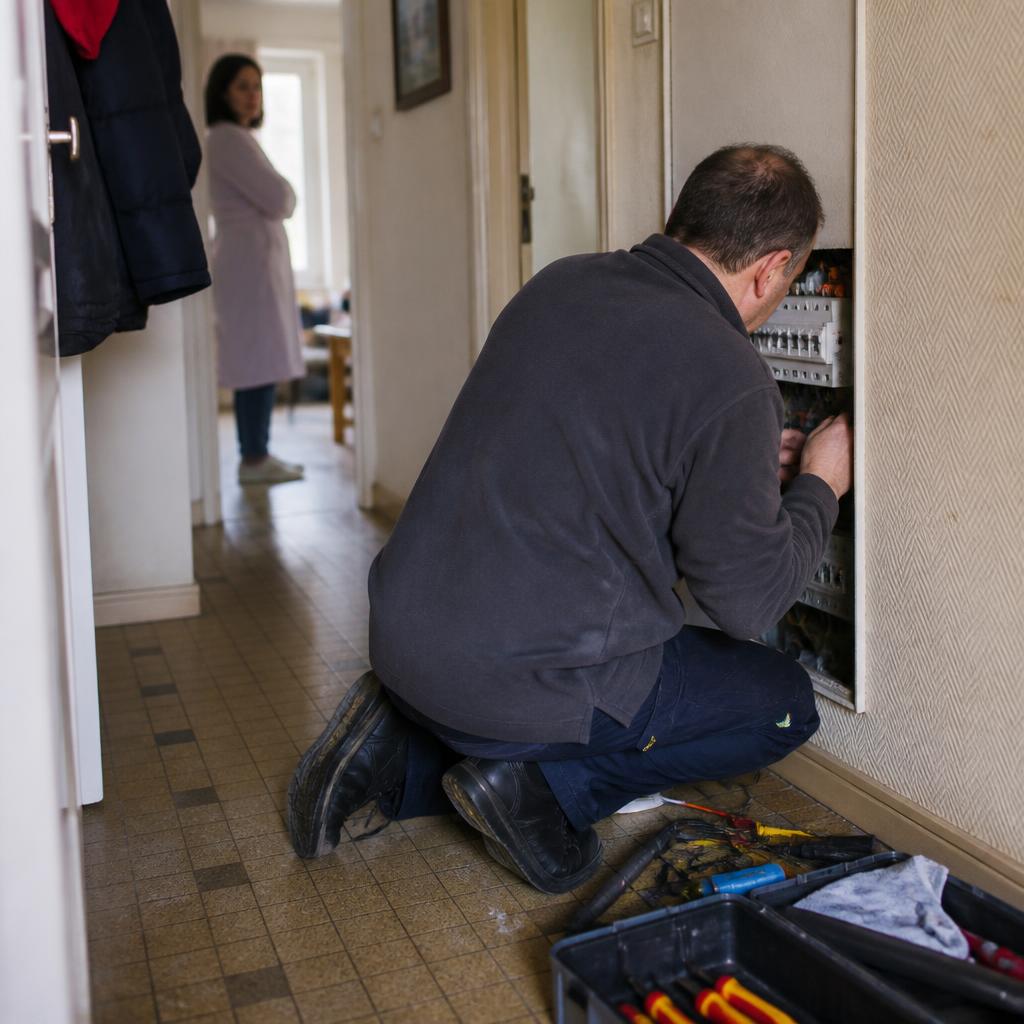
In the entrance to an ordinary home, a kneeling technician works on an open electrical panel; a resident watches from a distance in an adjoining room.
DECISION
Deploy a new generation of smart meters in a territory already marked by controversy
POPULATION
3,8 million households, 15 profiles of relationships to technology and institutions
WHAT IS TESTED
5 communication and deployment-support configurations
HORIZON
36 months of adoption and opposition trajectories

THE PROBLEM

A new technology
can arrive carrying the memory
of the old one.

The second generation is objectively different : improved technology, stronger data protection, new services, greater transparency. These changes are real and documented by the operator.

But the population does not start from zero. Some households already have an opinion, a narrative, a personal experience or one reported by someone close, institutional distrust, a media memory of the first deployment — which had generated sustained opposition and around 3 % installation refusal.

The decision therefore has to confront two objects at once : the current system, and the history of the previous one. On one side: modernization, performance, services and network management. On the other: memory of the first deployment, trust, data, autonomy and a sense of imposition.

WHAT IS THE SAME FOR EVERYONE

  • a European network operator and a base of 3,8 million households
  • replacement of first-generation meters installed ten years earlier
  • improved measurement accuracy and additional energy services
  • enhanced personal-data protection measures
  • a deployment planned over 48 months
  • sustained media controversy during the first deployment
  • around 3 % installation refusal during the previous deployment, with significant operational cost

WHAT DIFFERS FOR EACH GROUP

  • personal relationship to technology
  • sensitivity to personal-data issues
  • prior exposure to anti-electromagnetic-wave movements
  • length of residence
  • history of interaction with the operator during the first deployment
  • trust in the deploying institution

ONE VARIABLE : MEMORY OF CONTROVERSY

A controversy leaves a trace
even after its technical object
has changed.

  1. 01FIRST DEPLOYMENTTen years earlier, the first generation of meters is installed across the same base of households.
  2. 02CONTROVERSIESAnti-electromagnetic-wave associations, personal-data protection movements, individual refusals of installation.
  3. 03NARRATIVESMedia controversy becomes sustained and leaves narratives that remain available and reusable.
  4. 04MEMORYThese narratives do not disappear with the technical object: they remain within the population without being expressed.
  5. 05NEW DEPLOYMENTA new generation arrives, technically different, among households that already have a history with the previous one.
  6. 06REINTERPRETATIONThe decision is not received in isolation. It is read alongside what the previous generation left behind.

A new decision is never received in isolation. It is compared with an existing history that the population already carries before the announcement is even made.

PAST IS NOT PRESENT

An old reservation
does not say
a present position.

A person who expressed reservations during the first deployment may today have changed their mind, remain distrustful, accept the technology but not its mandatory nature, accept installation but worry about data, or have no concerns at all. Conversely, a household that had no difficulty at the time may develop a new concern.

WHAT PAST OPPOSITION MEASURES

A position expressed at a given moment, in a given context, about a given technical object.

WHAT IT DOES NOT MEASURE

Today's position. An old reservation may have disappeared, shifted, or become focused on a single issue.

WHAT CAN COEXIST

Accept the technology but reject its mandatory nature. Accept installation while remaining concerned about data.

WHAT CAN EMERGE

A new concern in a household that had none during the first deployment.

A binary segmentation between supporters and opponents makes the decision impossible to assess. The 15 profiles in the case combine relationship to technology, sensitivity to personal data, prior exposure to anti-electromagnetic-wave movements and length of residence.

WHAT IS TESTED

The same deployment.
Several ways
to announce it.

The deployment team had 5 communication and support configurations tested, with particular attention to acknowledging historical concerns and to transparency about changes in the new system.

  1. 01TECHNICAL CONTINUITYThe new generation presented as the natural evolution of the previous system, without revisiting past difficulties.
  2. 02MANDATE PRESENTED ON ITS OWNThe deployment presented through its regulatory framework: installation is mandatory, with no apparent choice mechanism.
  3. 03BENEFITS AND SERVICESPriority emphasis on measurement accuracy and additional energy services.
  4. 04DATA AND CONFIGURATIONThe system presented with several options: standard mode, enhanced-privacy mode, programmable shut-off mode.
  5. 05ACKNOWLEDGING THE HISTORYExplicit acknowledgment of difficulties during the first deployment, and transparency about the changes made in response.
  6. 06RESILIENT TIMETABLE AND LOCAL LISTENINGMedia monitoring, scenario-prepared response, local adjustment of pace, local listening in the areas with the strongest opposition.

4 200 synthetic households were interviewed about the 5 deployment configurations, using several communication registers and several formats for perceived choice. Projections were calculated over 36 months, modeling likely media cascades, association dynamics and territorial variations in adoption.

The same meter
does not enter
the same
story.

SIMULATED POPULATION

The reconstructed population covers 3,8 million European households affected by the deployment, calibrated on the operator's proprietary data — customer typologies, history of interactions around the first deployment, previous refusals — and on territorial perception studies.

It is structured into 15 profiles combining relationship to technology, sensitivity to personal-data issues, prior exposure to anti-electromagnetic-wave movements and length of residence.

  • ESTABLISHED ADOPTION

    first meter installed without incident, no unresolved issue with the operator for ten years

  • NEGATIVE MEMORY OF THE FIRST DEPLOYMENT

    a poorly experienced intervention, a dispute, an installation felt to be imposed: the episode remains available

  • DATA SENSITIVITY

    the technical object is not the issue: the question is what is measured, transmitted and retained

  • EXPOSURE TO ANTI-ELECTROMAGNETIC-WAVE MOVEMENTS

    proximity, even indirect, to the mobilizations that marked the first deployment

  • PRAGMATIC TECH ENTHUSIASTS

    interest in managing consumption, expectation of concrete services rather than narratives

  • LOW INSTITUTIONAL TRUST

    distrust that predates the energy issue and resurfaces when work is carried out in the home

  • SENSITIVITY TO MANDATORY IMPLEMENTATION

    the technology is not contested; what is contested is the perceived lack of choice

  • LOW INVOLVEMENT

    no established position, no expectation: the reaction will depend entirely on how the intervention unfolds

These configurations reveal part of the population's heterogeneity. The simulation operates on synthetic individuals, not a handful of persona types.

REACTIONS

It is not the meter
that varied the most.

  1. 01

    IGNORING THE PAST CONTROVERSY REACTIVATES IT

    Communication that ignores or minimizes concerns from the previous deployment structurally reactivates opposition. Conversely, communication that explicitly acknowledges past difficulties and details the changes made — stronger data protection, transparency on emissions, a shut-off mechanism — raises acceptance from 42 % to 68 %.

  2. 02

    PERCEIVED CHOICE MOVES MORE THAN EXPLAINED BENEFIT

    Presenting the mandate alone generates 42 % acceptance and 4 % actual refusal. The same system presented with several configuration options — standard mode, enhanced-privacy mode, programmable shut-off mode — generates 71 % acceptance and 1,2 % actual refusal. The regulatory content is equivalent: what changes is how it is read.

  3. 03

    MEMORY IS NOT UNIFORM

    The 15 profiles combine relationship to technology, sensitivity to personal data, prior exposure to anti-electromagnetic-wave movements and length of residence. The same announcement does not meet the same history in every household: in some, nothing reactivates; in others, the home intervention replays an earlier episode.

  4. 04

    A RIGID TIMETABLE IS EXPOSED TO SIGNAL EVENTS

    Three signal events have strong amplification power. A timetable designed to absorb them — media monitoring, scenario-prepared responses, capacity to adjust the pace — preserves the adoption trajectory. A rigid timetable is exposed to these events and may experience periods of lasting local rejection.

Two households can receive exactly the same announcement and draw opposite conclusions. For one, “ they are replacing a piece of equipment ”. For the other, “ they are coming back into my home ”. The reaction cannot be read from the content alone : it depends on what that content encounters.

THE TRIGGER

The question is not
that is opposed.
That is what reactivates.

Latent memory does not create opposition by itself. It creates sensitivity to certain elements of the deployment : vocabulary, mandatory implementation, an intervention in the home, the subject of data, a bill, a technical incident, a media statement. The source case identifies three signal events with strong amplification power.

  • A STUDY PICKED UP BY THE MEDIAPublication of a new study on electromagnetic waves, amplified by media coverage, is one of the three high-amplification signal events identified.
  • A REPORT ON PERSONAL DATATelevision coverage of the data issue shifts attention from the technical system to the question of what is collected.
  • A PUBLICIZED INDIVIDUAL CASEMobilization by a national association around an individual case gives visible, embodied form to a concern that had previously been diffuse.
  • WHAT THIS DOES NOT AUTOMATICALLY PRODUCEA trigger does not create opposition. It encounters a sensitivity already present in parts of the population, or it encounters nothing.

LATENT MEMORY

A history does not produce
automatically produce opposition.

LATENT MEMORYPOSSIBLE TRIGGERSUBSIDEREMAIN LATENTREACTIVATE

At the outset, the same state : a memory that is present but unexpressed. Depending on the deployment configuration selected and on what happens during the projected 36 months, that memory may subside, remain latent, or become visible again.

What the simulation makes legible is not a probability of opposition. It is each configuration's sensitivity to what might occur : a rigid timetable is exposed to signal events; a timetable designed to absorb them preserves the trajectory.

WHAT AN ACCEPTANCE RATE TELLS YOU

An average disposition to receive the new system. It indicates an aggregate level, not what makes it fragile.

WHAT A MEMORY OF CONTROVERSY TELLS YOU

Where sensitivities that may be reactivated are located, and by what. High acceptance can coexist with localized reactivation.

In a kitchen, a person sitting at a table reads a paper energy bill, with a cup and glasses beside it.
After the intervention, the infrastructure becomes a line on a bill, a number checked at home. That is where the decision continues to be judged.

SECOND-ORDER EFFECTS

A deployment does not change
only an installation rate.

ACCEPTANCE

it can increase across the installed base

REACTIVATION

while latent opposition can become visible again in a specific territory

STRUCTURE OF POSITIONS

a diffuse reservation can re-form into a firmly held position

OPERATIONAL COST

an installation refusal has to be handled household by household, long after the announcement

Making these effects visible does not indicate which deployment policy to adopt. It indicates where a configuration changes not only behavior, but the structure of positions already present in the population.

COMPARISON

Five configurations,
assessed across four dimensions.

CONFIGURATIONACCEPTABILITYTRUSTREACTIVATION RISKDEPLOYMENT ROBUSTNESS
01Technical continuity, without revisiting the pastlowlowhighlow
02Regulatory mandate presented on its ownlowlowhighlow
03Benefits and new services foregroundedmediummediummediummedium
04Configuration options and data protectionhighmediummediummedium
05Acknowledgment of history, configuration options, resilient timetable, local listeninghighhighlowhigh

Comparative reading derived from simulated reactions. No configuration is cost-free. Highly technical communication reassures profiles most familiar with the technology and leaves unanswered those whose concern is its mandatory nature. Strong transparency about the past improves trust, but places some controversies back at the center of attention. A local-listening strategy is robust, but heavier to deploy and sustain over 48 months.

THE MOST ROBUST

Acknowledgment of past difficulties configuration options timetable designed to absorb signal events local listening in the areas with the strongest opposition

THE MOST FRAGILE

Regulatory mandate presented on its own neither acknowledgment of the first deployment nor a choice mechanism

PROJECTION, THEN OBSERVATION

At twenty-four months,
a deployment sustained
without national reactivation.

The network operator selected a strategy combining explicit acknowledgment of difficulties during the first deployment in the launch communication, presentation of the system with several configuration options — standard mode, enhanced-privacy mode, programmable shut-off mode — a timetable designed to absorb media signal events, with monitoring and the capacity to adjust the pace locally, and a local-listening mechanism in the areas where the first deployment had encountered the strongest opposition.

Two media signal events were identified during the period : a scientific study picked up by the press and a local association mobilization. Both were absorbed by the monitoring system without damaging the national trajectory.

ACTUAL REFUSAL AT 24 MONTHS
1,4 %, above the projected 1,2 %, well below the 3 % in the first deployment
SIGNAL EVENTS THAT OCCURRED
2 during the period, absorbed without deterioration of the national trajectory
SCHEDULE
met within 3 months over the planned 48 months
METHODOLOGY
referenced by several European network operators engaged in comparable deployments

TAKEAWAY

The opposition
had not disappeared.
It had become latent.

Ten years after the first deployment, opposition no longer occupied public space. Yet it remained available within part of the population, in the form of narratives, experiences and established distrust. The problem was therefore not to explain the new meter : it was to show that the operator had learned from the old one.

This is confirmed by the measured difference : explicitly acknowledging past difficulties raises acceptance from 42 % to 68 %, and the perceived-choice mechanism raises acceptance to 71 % for equivalent regulatory content. A technical decision is judged not only on what it does, but on what the previous one left behind.

DECISION

What the decision
selected.

TO ACKNOWLEDGE
The difficulties of the first deployment, explicitly, in the launch communication.
TO PROVE
What actually changed: stronger data protection, transparency on emissions, shut-off mechanism.
TO MAKE VISIBLE
The configuration options: standard mode, enhanced privacy, programmable shut-off.
TO MONITOR
Media signal events, with a prepared response and the capacity to adjust deployment pace locally.

POSSIBLE FUTURES

The same deployment.
Three ways to address its history.

A

TURN THE PAGE

Treat the new generation as an entirely new system

  • simple, positive narrative centered on services and measurement accuracy
  • no recirculation of past controversies
  • 42 % acceptance when the mandate is presented on its own, 4 % actual refusal
  • risk of suggesting that nothing was learned from the first deployment

B

ADDRESS THE PAST

Communication strongly centered on guarantees and the corrections made

  • acknowledgment of concerns expressed during the first deployment
  • transparency on emissions, data and the shut-off mechanism
  • real gain in trust, but historical issues placed back at the center of attention
  • greater exposure to signal events if the timetable is not designed to absorb them

C

SHOW WHAT HAS BEEN LEARNED

Acknowledgment of the past, evidence of changes, configuration options, resilient timetable, local listening

  • acceptance raised from 42 % to 68 % by prior acknowledgment of the history alone
  • 71 % acceptance and 1,2 % actual refusal with configuration options
  • signal events absorbed through monitoring and local adjustment of pace
  • more complex deployment, requiring operational consistency throughout

METHOD

Before recommending,
we tested reactions.

  1. DECISION
  2. POPULATION
  3. STRATEGIES
  4. DYNAMIC REACTIONS
  5. COMPARISON
  6. DECISION

This case adds a capability to the library : integrating a population's history as a variable. A population is not only a present state ; it carries experiences, narratives and previous reactions. The sequence history → memory → new decision → trigger → reaction can be simulated, whereas an abstract question about acceptance of a meter would miss the essential point.

A real case.
An unnamed network operator.

This case is based on a simulation carried out for a European network operator. The company is not named, no personally identifiable data entered the system, and the detailed results remain the property of the commissioning client. The comparisons between configurations published here are qualitative ; the quantitative values cited are those documented by the commissioning client.

The simulation concerns behavioral reactions to different deployment configurations. It is neither a technical assessment of the system, nor a health expert opinion, nor a position on the controversies mentioned, nor an individual prediction.

Your next decision

Which decision do you want to explore?

Describe your need. We can point you to the right level of support.

What if you tested
your next decision?

State your decision. See the future it produces.

Explore the product