SCIENCE · PARTNERSHIPS & SCIENTIFIC TEAM
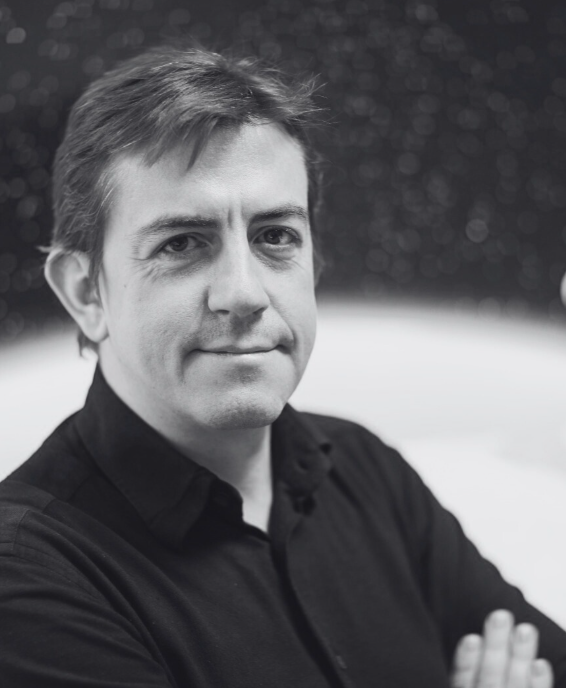
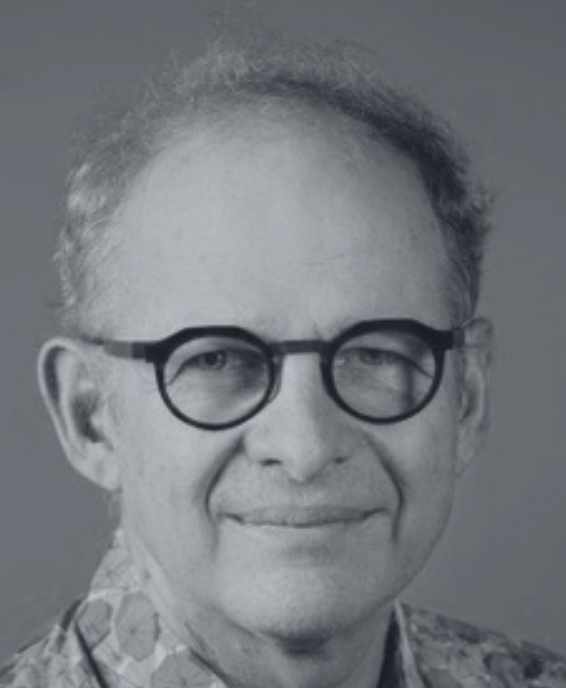
An internationally recognized scientific team: co-founder François Pachet, Principal Scientist Jean-Christophe Baillie, Scientific Advisor Jean-Daniel Zucker. Three research careers that embody the scientific grounding of Imagine All The People.
EMBODY RATHER THAN ANNOUNCE
The four previous pages of this section laid out our scientific approach: the mathematical core of Maximum Entropy Relaxation, the validation protocols, the published benchmarks, the referenced publications. That posture is carried by people whose careers form the intellectual matrix of our discipline.
Three researchers carry our approach: François Pachet, co-founder and chief technology officer, Jean-Christophe Baillie, Principal Scientist, and Jean-Daniel Zucker, Scientific Advisor. This page also presents our institutional affiliations, our scientific media presence and our openness to academic collaborations.
THREE LEADING SCIENTIFIC CAREERS
François Pachet is a French scientist internationally recognized in the fields of generative artificial intelligence and generation under constraints. A graduate of École des Ponts ParisTech and a doctor in computer science from Université Pierre et Marie Curie with a specialization in applied mathematics, he was director of the Sony Computer Science Laboratory Paris from 2014 to 2017, then director of the Spotify Creator Technology Research Lab. He is the inventor of Flow Machines, the first artificial intelligence system to have composed a commercially released pop album (Hello World, 2017), in collaboration with Stromae and many international artists. He is the author of more than 250 scientific publications and more than 35 patents, and a member of ECCAI since 2014. At Imagine All The People, he designs the architecture of our synthetic populations and carries our scientific output: notably the founding article Maximum Entropy Relaxation of Multi-Way Cardinality Constraints for Synthetic Population Generation, published in April 2026 on ArXiv with Jean-Daniel Zucker. His structuring scientific collaborations extend to Frédéric Kaplan (EPFL, Digital Humanities Laboratory) and Mirko Degli Esposti (University of Bologna), with whom he co-edits the Research Topic Synthetic Populations in Frontiers in Artificial Intelligence, and to Jean-Charles Régin (Université Côte d'Azur), a historical pioneer of constraint programming, with whom he is finalizing several methodological articles.
Jean-Christophe Baillie is a researcher and entrepreneur at the crossroads of robotics, virtual worlds and artificial intelligence. A former researcher at the Sony Computer Science Laboratory, he founded Gostai, a robotics company acquired by SoftBank Robotics, where he created the AI Lab. He then founded Novaquark, developer of the game Dual Universe, and later Developmental Labs, a laboratory dedicated to cognitive systems and developmental artificial intelligence. At Imagine All The People, he contributes to the architecture of the simulation frameworks and to the cognitive models that structure how our dynamic agents interview the synthetic populations.
Jean-Daniel Zucker is a research director at the IRD (the French National Research Institute for Sustainable Development) and an international reference in complex systems modeling, interpretable AI and individual-based simulation. He is attached to the UMMISCO laboratory (the mathematical and computational modeling of complex systems unit), hosted by Sorbonne Université. The author of more than 300 scientific publications, he safeguards the scientific robustness of our synthetic population models. He is co-author, with François Pachet, of Imagine All The People's founding article on Maximum Entropy Relaxation applied to synthetic populations.
OUR INSTITUTIONAL ECOSYSTEM
Our main academic anchor runs through Jean-Daniel Zucker, our Scientific Advisor, research director at the IRD within the UMMISCO laboratory hosted by Sorbonne Université. UMMISCO is a leading French public research laboratory in the mathematical and computational modeling of complex systems, with which our work is in structural dialogue.
François Pachet has been a member of ECCAI since 2014, a recognition reserved for European researchers who have contributed significantly to the advancement of artificial intelligence. ECCAI gathers Europe's main scientific players in the field and coordinates the major European AI conferences.
François Pachet is an associate researcher at LIP6 (Laboratoire d'Informatique de Paris 6), one of France's leading computer science research laboratories, hosted by Sorbonne Université. This affiliation embodies his continued grounding in French academic research alongside his commitment to Imagine All The People.
François Pachet attended the 2005-2006 session of IHEDN, France's reference institute for training senior executives in strategic, sovereignty and defense matters. This background informs our positioning on the French and European sovereignty of our simulation infrastructure.
Our scientific team is regularly invited to the field's major international scientific conferences: IJCAI (International Joint Conference on Artificial Intelligence), AAAI (Association for the Advancement of Artificial Intelligence), ISMIR (International Society for Music Information Retrieval), CP (Principles and Practice of Constraint Programming). François Pachet's work is cited in thousands of international scientific publications.
OUR PRESENCE IN THE PUBLIC DEBATE
Our scientific team is actively engaged in the public debate on the scientific, technological and societal stakes of artificial intelligence. François Pachet regularly appears in the specialized press, on television, at international conferences and academic symposiums.
François Pachet was invited by BFM Business on the show Tech & Co, hosted by François Sorel, as part of La Nuit de l'IA in November 2025, where he presented the stakes of AI music generation and Imagine All The People's positioning on synthetic populations. He also appears in many French and international media: print, radio, specialized podcasts.
Arte devoted an episode of Square Idée to François Pachet, titled Demain, devenir Wagner ou Daft Punk ?, in October 2015, exploring his research on modeling musical style with artificial intelligence. This presence in reference cultural media reflects a recognition that extends beyond the strictly scientific field.
Beyond one-off media appearances, François Pachet is the author of Histoire d'une oreille, published by Buchet-Chastel in 2018, which explores how digital technologies transform our relationship to musical listening. This dimension as an author informs the way he approaches the cultural and societal stakes of artificial intelligence.
Journalists wishing to request an interview with a member of our scientific team can contact our team, which will organize the introduction.
OUR OPENNESS TO COLLABORATIONS
Our scientific team is open to new collaborations with university laboratories, public research teams, sector institutes and independent researchers working on synthetic populations, generation under constraints, complex systems modeling, or the application of artificial intelligence to the social sciences.
We are open to co-supervising doctoral candidates with French and European university laboratories, on our team's priority research axes: theoretical and algorithmic extensions of Maximum Entropy Relaxation, sector applications of synthetic populations, validation and benchmarking methodologies, ethical and methodological stakes of large-scale simulations.
Our team takes part in French and European public research projects: ANR, Horizon Europe, regional programs. Organizations wishing to involve us in a project can contact us to explore the possible configurations.
We regularly publish as co-authors with academic researchers and are open to editorial collaborations on scientific articles, book chapters, special journal issues or Research Topics in the field's major academic editions.
Beyond formalized collaborations, we gladly welcome informal methodological exchanges: inviting our team to university seminars, participating in working groups, bilateral dialogues on specific methodological questions.
Academic researcher, PhD candidate, laboratory director, scientific journal editor, sector journalist: our team can organize an introduction to the member of our scientific team best suited to your request. Academic collaborations, interview requests, conference invitations and institutional partnership proposals are welcomed with attention.
Discover our scientific papers →