RETAIL · STORE-CONCEPT TRANSFORMATION

“ How can the store concept of a DIY retail chain be modernized without losing professional tradespeople who account for 40 % of revenue? ”

A European DIY retail chain with 240 stores and €4,2 billion in revenue was preparing to redesign a concept that had remained largely unchanged for 15 years.

The question was not which concept customers preferred. It was how to make the store more contemporary without degrading the uses that make it, for part of its customer base, a work tool.

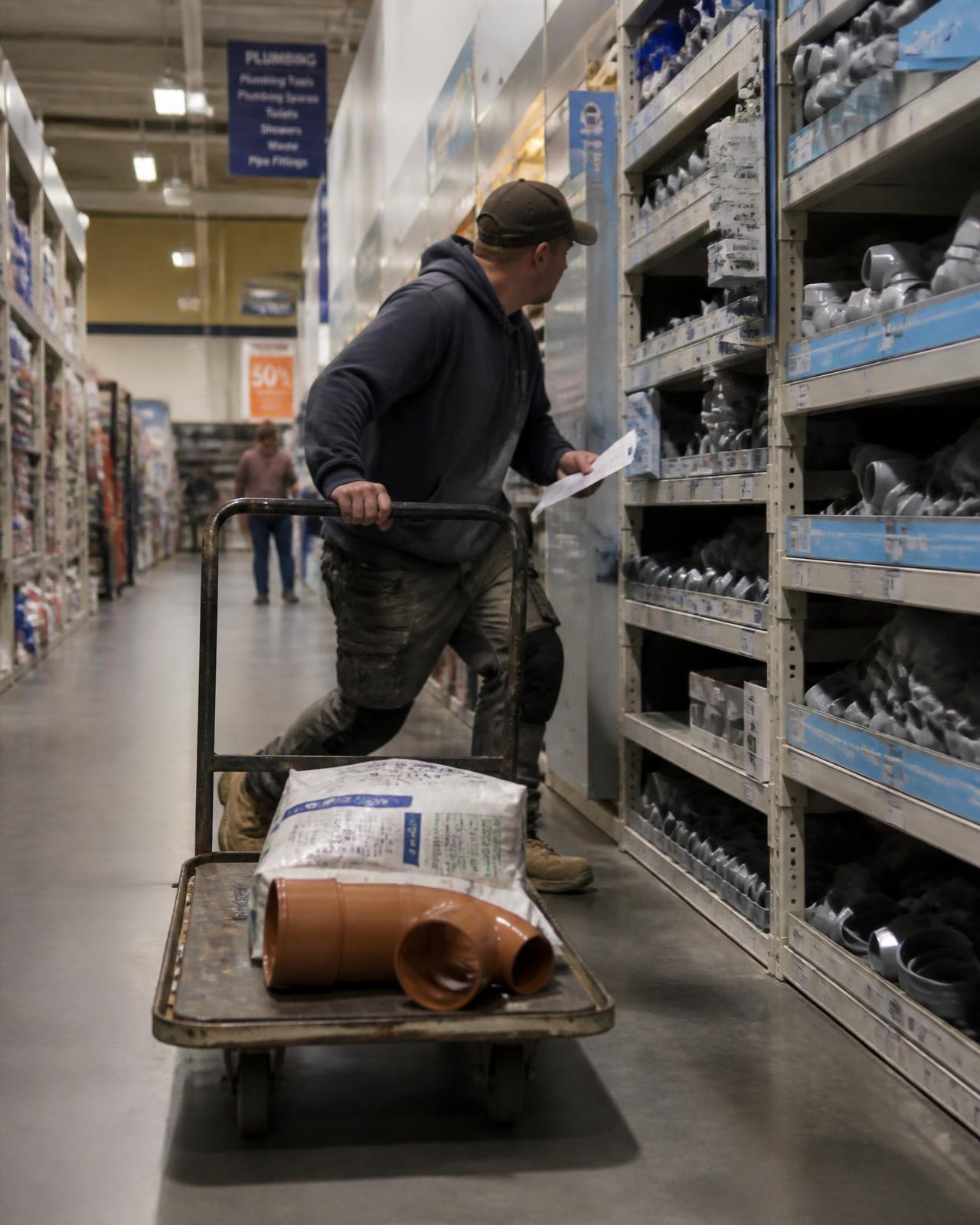
In the aisle of a DIY store, a tradesperson in workwear pushes a cart loaded with supplies and searches for an item on a shelf of fittings, list in hand.
STORE NETWORK
240 stores
REVENUE
€4,2 billion
PROFESSIONAL TRADESPEOPLE
40 % of revenue
STORE CONCEPT
Unchanged for 15 years

THE PROBLEM

The same store
does not serve
the same function
for all its customers.

Internal studies documented a gradual decline in attractiveness among consumer customers, who were switching to more modern competitors — streamlined concepts, simplified journeys, in-store digitalization — or to e-commerce. Management had projected a redesign inspired by specialist-retail standards : wider aisles, products grouped by use rather than technical category, versatile generalist staff.

The known risk was losing professional tradespeople, who accounted for 40 % of the retailer's revenue with significantly higher value per visit than consumer customers. Their relationship with the store was highly specific : precise technical landmarks, search by trade category, dialogue with technically expert staff, speed of execution during working hours.

Sales management used our system to test 6 differentiated redesign scenarios : full redesign, zoned modular redesign, partial redesign of the consumer area, with or without a dedicated offer for tradespeople.
WHAT IS ESTABLISHED

  • A store concept largely unchanged for 15 years
  • A documented decline in attractiveness among consumers
  • Competitors with streamlined, digitized concepts
  • A redesign project inspired by specialist-retail standards
  • Professional customers with high value per visit

WHAT DIFFERS BY CUSTOMER

  • The function the store serves in the customer's day
  • Visit frequency
  • Urgency of need
  • Level of technical expertise
  • Required assortment depth
  • Expectations of customer-facing staff

ONE VARIABLE : THE FUNCTION OF THE PLACE

Same place.
Not the same
product.

The useful segmentation here does not come from age or socio-professional category, but from the function the store serves in the day of the person entering it. The same category can serve a project, or serve a job site.

  • FOR A CONSUMER CUSTOMERThe store can be a destination: discovery, comparison, advice, project planning.
  • FOR A PROFESSIONAL TRADESPERSONThe store can be a stop between two job sites: precise technical landmarks, search by trade category, speed of execution during working hours.
  • WHAT IS BEING SOLD IS NOT THE SAME PRODUCTOn one side, a project experience; on the other, time, availability and technical dialogue.
  • WHAT THIS IMPLIES FOR THE DECISIONThe question is not “how to improve the store,” but what to improve, for whom, without degrading which use.

A MECHANISM : VALUE IS NOT DISTRIBUTED UNIFORMLY

Forty percent
of revenue.

AN AVERAGE CUSTOMER CAN BE ECONOMICALLY MISLEADINGRETAILER REVENUE40 %OTHER RETAILER CUSTOMERSPROFESSIONAL TRADESPEOPLEVALUE PER VISITSIGNIFICANTLY HIGHER THAN FOR CONSUMER CUSTOMERSTHE SOURCE CASE DOES NOT DOCUMENT THEIR SHARE OF FOOTFALL : IT IS THEREFORE NOT REPRESENTED

Conceptual diagram. It maps a single data point from the source case : professional tradespeople account for 40 % of the retailer's revenue, with significantly higher value per visit than consumer customers.

Their share of footfall is not documented by the source case : it is therefore neither displayed nor estimated. What matters for the decision can be stated in one sentence : a population can weigh little in a customer average and heavily in the economics of the model.

WHAT IS TESTED

Six architectures
of the same store.

The six scenarios differ not in decoration style, but in how the store is organized and whether or not there is a dedicated offer for professional customers.

  1. 01FULL REDESIGNContemporary standards applied throughout the store, with no dedicated offer for tradespeople.
  2. 02FULL REDESIGN + TRADESPEOPLE OFFERThe same redesign, supplemented by an offer dedicated to professional customers.
  3. 03ZONED MODULAR REDESIGN, GENERALIST STAFFTechnical zone retained in its trade-based organization, but served by versatile generalist staff.
  4. 04ZONED MODULAR REDESIGN, DEDICATED EXPERT STAFFTechnical zone retained with expert staff trained trade by trade; consumer zone modernized; clear physical transitions.
  5. 05PARTIAL REDESIGN, CONSUMER SCOPEModernization limited to the consumer area, with no dedicated offer for tradespeople.
  6. 06PARTIAL REDESIGN + TRADESPEOPLE OFFERSame scope, supplemented by an offer dedicated to professional customers.

2 800 synthetic customers were placed in a simulated store environment, with several concept configurations tested. Dynamic agents followed up with each customer on identified friction points : search time, dialogue with staff, perception of the store, intention to return. Trajectories were projected over 24 months, modeling retention dynamics and switching to competitors.

A population
is not
“ the pros
and the consumers ”.

SIMULATED POPULATION

The reconstructed population covers 1,4 million European customers of the retailer, calibrated on the chain's proprietary data — loyalty cards, transaction receipts, customer profiles — and on European DIY-sector surveys.

It is structured into 17 store-relationship profiles, distinguishing occasional consumers, enthusiastic self-renovators, self-employed tradespeople by trade, construction business owners and construction professionals.

  • SELF-EMPLOYED TRADESPEOPLE BY TRADE

    Search by trade category, expectation of detailed technical dialogue about the specifics of their work.

  • CONSTRUCTION BUSINESS OWNERS

    More planned purchases, trade-offs around assortment depth and actual item availability.

  • CONSTRUCTION PROFESSIONALS

    Store use embedded in a working day, high sensitivity to search time.

  • DIY ENTHUSIASTS, SELF-RENOVATORS

    Real technical expertise, long projects, need for rare items as much as inspiration.

  • OCCASIONAL CONSUMERS

    Infrequent visits, need for legibility and generalist advice, sensitivity to journey simplicity.

  • CUSTOMERS AT RISK OF SWITCHING

    Consumer customers moving to more modern competitors or to e-commerce.

These configurations reveal part of the population's heterogeneity. The simulation operates on synthetic individuals, not a handful of persona types : these are not representative figures, but distinct situations, constraints and options.

REACTIONS

What is rejected
is not
modernity.

  1. 01

    MODERNIZATION IS NOT REJECTED; LOSS OF LANDMARKS IS

    74 % of professional tradespeople do not oppose the principle of modernizing the store. What they reject comes down to three precise, isolated and documented operational elements: aisles that are too wide and slow movement during quick purchases, products grouped by use rather than technical category, and staff perceived as too generalist for detailed technical dialogue.

  2. 02

    THESE THREE FRICTIONS ARE THE ONLY DRIVERS OF SWITCHING

    Tradespeople switching to professional competitors does not depend on the concept's aesthetics or how contemporary it feels. It depends on these three operational frictions. A redesign that leaves them unchanged does not degrade the professional customer base; a redesign that introduces them does, regardless of perceived quality elsewhere.

  3. 03

    STAFF MATTER MORE THAN PHYSICAL ORGANIZATION

    Versatile generalist staff assigned to the technical zone generate 42 % satisfaction among tradespeople, regardless of the store's physical organization. Dedicated expert staff in that zone, trained trade by trade and offered career progression that values technical expertise, generate 78 % satisfaction.

  4. 04

    MODULARITY DOES NOT COST CONSUMERS

    The zoned modular concept produces 92 % tradespeople retention — above the 82 % projection — and +34 pts in attractiveness among consumers, with no apparent trade-off between the two audiences. Explicit modularity proved structurally more profitable than seeking a single unified compromise.

74 % of tradespeople do not oppose the principle of modernization ; 42 % satisfaction with generalist staff in the technical zone, versus 78 % with dedicated expert staff ; 92 % tradespeople retention with the modular concept, versus a projection of 82 %. It is the same store, the same population and the same redesign project.

TWO JOURNEYS IN THE SAME STORE

A destination
for some,
a stop
for others.

SAME PLACE, TWO FUNCTIONSJOURNEY A — A CONSUMER WITH A PROJECTENTRANCECATEGORY DISCOVERYCOMPARISONGENERALIST ADVICEPURCHASETIME SPENT IN STORE CAN BE PART OF THE VALUEJOURNEY B — A PROFESSIONAL TRADESPERSON BETWEEN JOB SITESENTRANCEPRECISE TECHNICAL ITEMDIALOGUE WITH AN EXPERTLOADINGEXITTIME SPENT IN STORE COMES OUT OF WORKING HOURS ON SITETHE SAME CONCEPT CHANGE DOES NOT HAVE THE SAME EFFECT ON BOTH JOURNEYS

Conceptual diagram. It represents neither a store layout nor a measured value : it shows that two different intentions move through the same place, and that time spent does not have the same meaning in each.

For a customer coming to design a project, time spent is part of the value. For a tradesperson visiting during working hours, it is taken out of productive time. The same concept change therefore does not have the same effect on both journeys.

A MECHANISM : MODERNIZING CAN SHIFT THE FRICTION

An improvement
overall can still contain
a deterioration
that is critical locally.

AN OVERALL IMPROVEMENT CAN CONTAIN A CRITICAL LOCAL DETERIORATIONWHAT THE REDESIGN IMPROVESSTORE LEGIBILITYSIMPLIFIED JOURNEYGROUPING BY USEPERCEIVED ATTRACTIVENESSWHAT THE SAME REDESIGN CAN DEGRADEMOVEMENT SPEED (WIDER AISLES)SEARCH TIME BY TECHNICAL CATEGORYDETAILED TECHNICAL DIALOGUE WITH STAFFTHESE THREE FRICTIONS ARE THE ONLY REAL DRIVERSOF TRADESPEOPLE SWITCHING TO COMPETITORS74 % OF TRADESPEOPLE DO NOT OPPOSETHE PRINCIPLE OF MODERNIZATIONWHAT IS REJECTED IS NOT MODERNITY, BUT THE LOSS OF OPERATIONAL LANDMARKS

Conceptual diagram. It contrasts what a redesign conceived for consumers improves with what it degrades for the professional uses documented by the source case.

The cost of a friction does not depend only on its magnitude. It depends on visit frequency and the value of time in the use concerned. This is why a moderate inconvenience for an occasional customer can become decisive for a tradesperson who integrates the store into the working day.

A MECHANISM : THE SUPPLY ROUTINE

What is lost
is not
a sale.

The projections model retention dynamics and switching to competitors over 24 months. For a high-frequency customer base, a repeated friction does not cost a single visit : it can lead to trying a competing professional retailer, then staying with it.

THE FEARED CHAIN

  1. NEW FRICTION IN THE PROFESSIONAL JOURNEY
  2. ADDITIONAL SEARCH TIME ON EVERY VISIT
  3. TRIAL OF A COMPETING PROFESSIONAL RETAILER
  4. TRADESPEOPLE CUSTOMER SWITCHING

THE SAME CHAIN, PROTECTED

  1. TECHNICAL ZONE RETAINED IN ITS TRADE-BASED ORGANIZATION
  2. DEDICATED EXPERT STAFF, TRAINED TRADE BY TRADE
  3. OPERATIONAL LANDMARKS MAINTAINED
  4. 92 % TRADESPEOPLE RETENTION
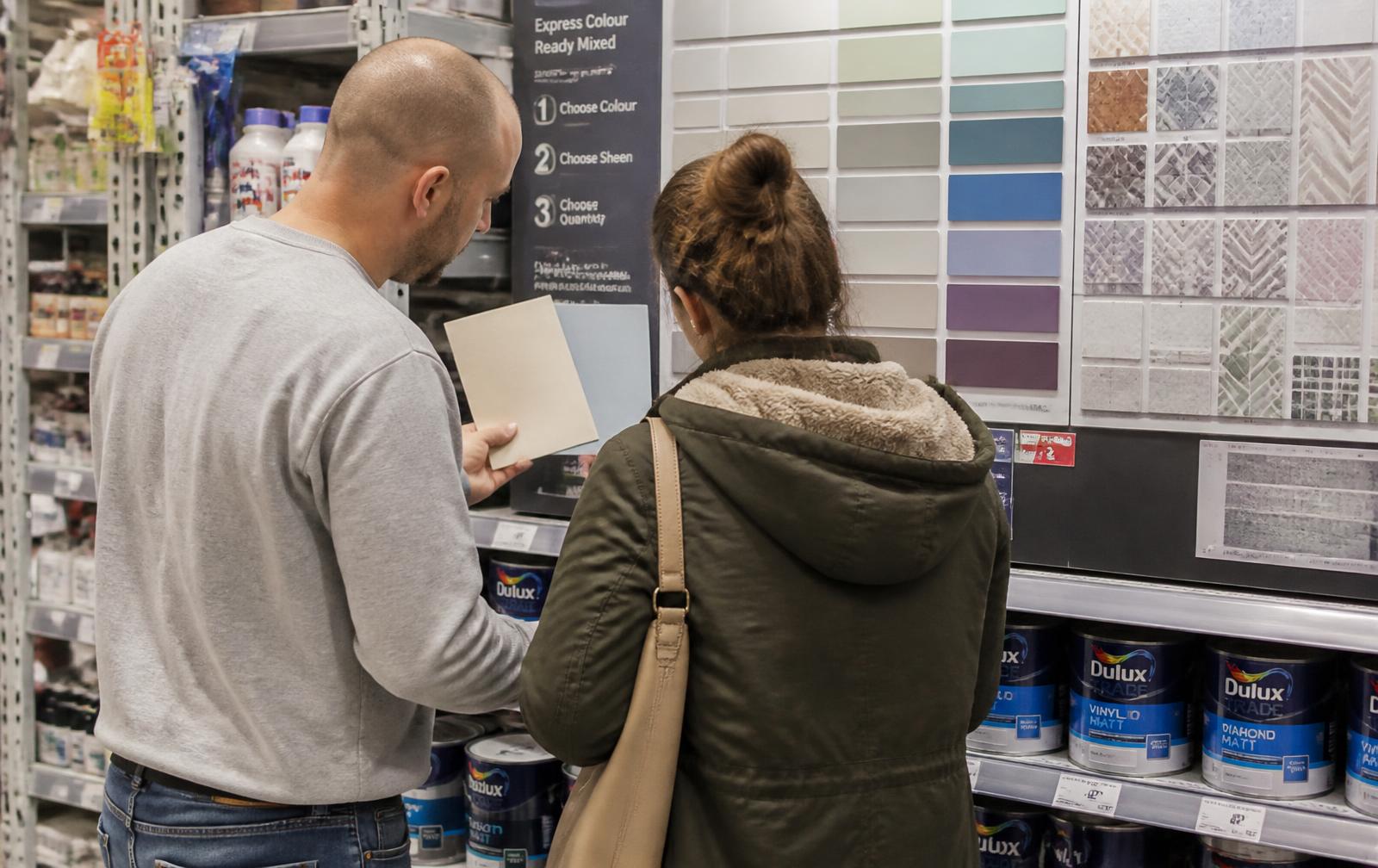
In the paint section of a DIY store, two customers, seen from behind, compare color and tile samples under ordinary store lighting.
Same store, different function : here, time spent comparing is part of what the customer came for.

WHAT STRUCTURES PROFESSIONAL USE

You do not come
always choose.

Tradespeople's relationship to the store rests on precise technical landmarks, search by trade category, dialogue with expert staff and speed of execution during working hours. These are the elements — not the style of the concept — that the redesign could put at risk.

WHAT IS EXPECTED

Assortment depth accessible by trade category, available during working hours.

WHAT DEFINES THE USE

Precise technical landmarks, fast search, a contact person capable of detailed technical dialogue.

WHAT TRIGGERS SWITCHING

Additional search time, slower movement, loss of the expert contact.

WHAT THIS CHANGES

Not an isolated sale, but the choice of retailer used for supplies, for a high-frequency customer base.

COMPARISON

The six scenarios,
assessed across three dimensions.

SCENARIOCONSUMER ATTRACTIVENESSPROFESSIONAL EFFICIENCYOPERATING COMPLEXITY
01Full redesign, without a tradespeople offerhighlowmedium
02Full redesign, with a tradespeople offerhighmediumhigh
03Zoned modular, generalist staffhighmediummedium
04Zoned modular, dedicated expert staffhighhighhigh
05Partial consumer redesign, without a tradespeople offermediummediumlow
06Partial consumer redesign, with a tradespeople offermediumhighmedium

Qualitative comparative reading derived from the simulated scenarios. The levels reflect documented differences : 92 % tradespeople retention with the zoned modular concept versus an 82 % projection ; +34 pts in consumer attractiveness ; 78 % tradespeople satisfaction with dedicated expert staff versus 42 % with generalist staff. No scenario is cost-free : the most robust is also the most demanding to operate.

THE MOST ROBUST

Technical zone organized by trade dedicated expert staff modernized consumer zone clear transitions

THE MOST FRAGILE

Full redesign versatile generalist staff, with no dedicated offer for tradespeople

DECISION

What the decision
selected.

TO MODERNIZE
The consumer zone, following contemporary standards.
TO PROTECT
Trade-based organization of the technical zone.
TO DIFFERENTIATE
Different journeys, when intentions are incompatible.
TO TRAIN
Dedicated expert staff, trade by trade.
TO MEASURE
Tradespeople retention, not attractiveness alone.

PROJECTION, THEN OBSERVATION

Eighteen months
after the pilots.

The chain selected the zoned modular concept : preservation of the technical zone's trade-based organization, modernization of the consumer zone to contemporary standards, dedicated expert staff in the technical zone trained by trade with a career-progression program that values expertise, and versatile generalist staff in the consumer zone. The concept was piloted in 12 stores before gradual rollout.

At 18 months after full deployment in the pilot stores, measured tradespeople retention is 92 %, in line with the projection. Consumer attractiveness measured by survey is up +34 pts. Revenue in the pilot stores is up 8 % versus their pre-redesign trajectory : consumers +14 %, tradespeople +3 %. No significant loss of professional tradespeople was observed.

The chain has begun rolling out the concept across the full store network, on a 36-month timetable. These values are those documented by the commissioning client : they describe what was observed after the decision, without establishing exclusive causality between the concept and each of these changes.

TRADESPEOPLE RETENTION
71 % → 92 %, with the modular concept
CONSUMER ATTRACTIVENESS
+34 pts, versus the legacy concept
PILOT STORE REVENUE
+8 %: consumers +14 %, tradespeople +3 %
ROLLOUT UNDER WAY
36 months, across the full store network

TAKEAWAY

The problem was not
to choose between
consumers
and professionals.
It was to stop
to ask them
the same journey.

Seeking a unified concept designed to reconcile all audiences degrades the experience of each segment. Explicit modularity — distinct zones calibrated for each use — preserves the value of each segment while freeing the ambition to modernize. This principle can be observed beyond DIY retail : garden centers, sports retail, home improvement, pet stores.

The second lesson concerns staff. For technical audiences, the expertise of customer-facing staff is the structural driver of support, more than the store's physical organization : 78 % satisfaction with dedicated expert staff, versus 42 % with generalist staff, regardless of organization. This implies an HR policy that values technical expertise, with dedicated career paths.

POSSIBLE FUTURES

The same store.
Three ways to redesign it.

A

UNIFY

A concept fully redesigned to contemporary standards, applied throughout the store

  • strong brand consistency and attractiveness among consumers
  • optimization around an average customer
  • introduces the three operational frictions rejected by tradespeople
  • exposes 40 % of revenue to switching

B

PRESERVE THE FUNCTIONAL LOGIC

Modernization limited to the consumer area, legacy organization retained elsewhere

  • protects the economically central customer base
  • partial modernization of the store
  • less improvement in attractiveness among consumers
  • does not by itself address the issue of customer-facing staff

C

DIFFERENTIATE THE JOURNEYS

Zoned modular concept: technical zone retained with dedicated expert staff, consumer zone modernized, clear transitions

  • 92 % tradespeople retention, above the 82 % projection
  • +34 pts in attractiveness among consumers
  • 78 % tradespeople satisfaction with expert staff, versus 42 % with generalist staff
  • requires an HR policy that values technical expertise

METHOD

Before recommending,
we tested reactions.

  1. 1,4 MILLION SYNTHETIC CUSTOMERS
  2. 17 STORE-RELATIONSHIP PROFILES
  3. 6 REDESIGN SCENARIOS
  4. 2 800 CUSTOMERS INTERVIEWED
  5. DYNAMIC FOLLOW-UPS
  6. 24 MONTHS
  7. DECISION

1,4 million reconstructed synthetic customers, 17 store-relationship profiles spanning consumers and professionals, 2 800 customers interviewed in a simulated store environment, dynamic follow-up on friction points — search time, dialogue with staff, store perception, intention to return — and a 24-month projection of retention dynamics and switching to competitors.

This case adds a capability to the library : exploring satisfaction, frequency, use and economic value simultaneously, without reducing the analysis to an average customer. It shows that a behavioral minority can constitute an economically critical population, and that an average improvement can conceal a decisive deterioration.

A real case.
An unnamed retailer.

This case is based on a simulation carried out for a European DIY retail chain. The commissioning client is not named, the retailer cannot be identified, and the detailed results remain its property. The comparisons between scenarios published here are qualitative ; the quantitative values cited are those documented by the commissioning client.

The simulation does not predict the behavior of an identified customer and produces no individual score. It is used upstream of the decision to compare the possible consequences of several store architectures on synthetic populations.

Your next decision

Which decision do you want to explore?

Describe your need. We can point you to the right level of support.

What if you tested
your next decision?

State your decision. See the future it produces.

Explore the product