CREATIVE INDUSTRIES · CONTENT DECISION

“How do you decide whether a high-budget Korean series pilot deserves a full 10-episode order by anticipating its reception across 6 distinct cultural markets?”

A global streaming platform had received from a Korean studio the 62-minute pilot of a series combining psychological thriller and fantasy. The cast brought together an established Korean star and two emerging actors. Season 1 order: 60 million dollars, with a three-season commitment totaling 180 million over three years.

For the platform, it is a pilot. For the viewer, it is another question: do I want to spend the next episodes in this universe? The decision had to be made within three weeks.

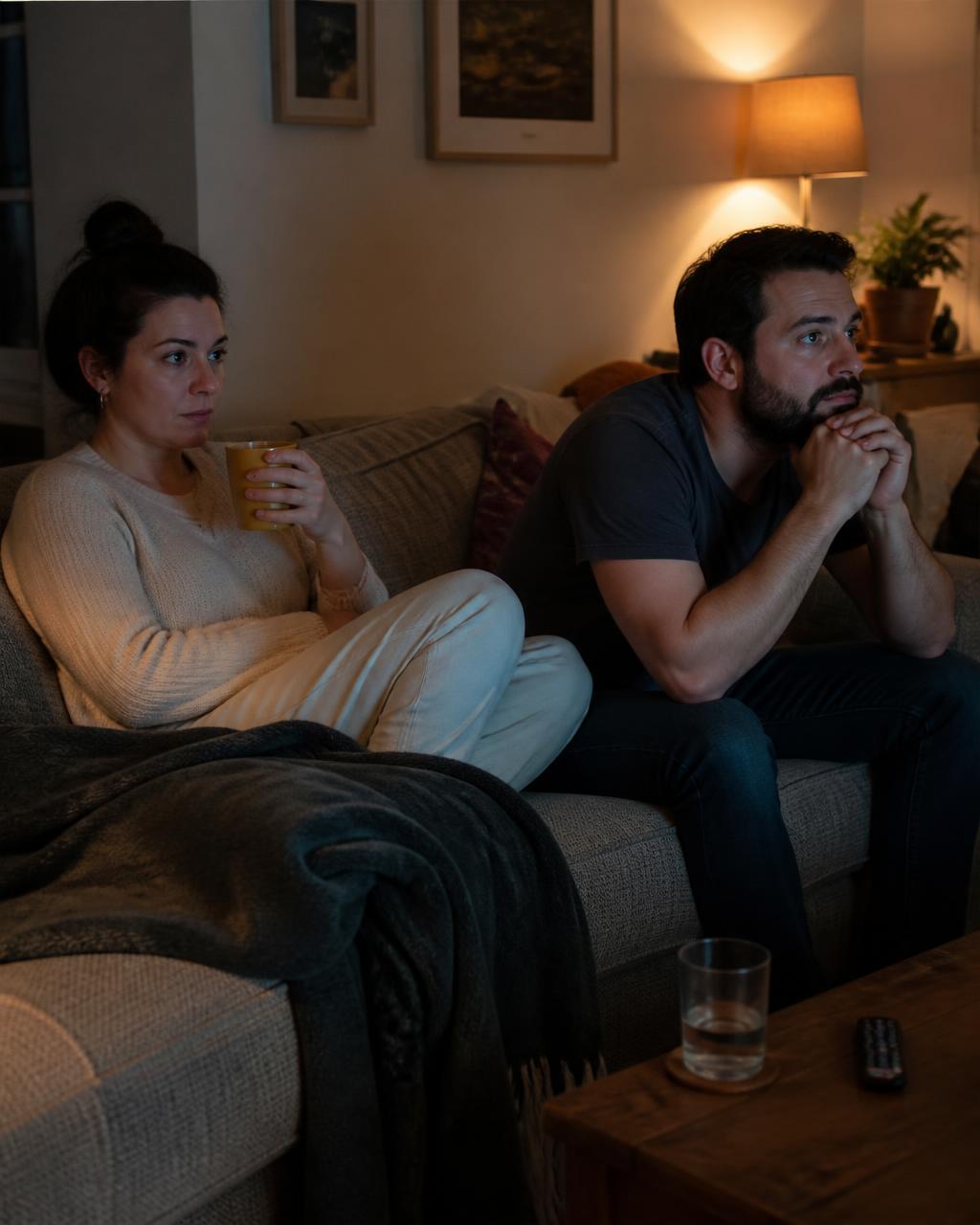
A couple at home in the evening on a sofa, lit by the glow of an off-screen display: one leaning forward, absorbed, the other holding a cup with an uncertain expression.
DECISION
Order or decline the complete season 1 of a Korean genre series
COMMITMENT
60 M$ for season 1, 180 M$ over three seasons and three years
OBJECT EVALUATED
A 62-minute pilot, psychological thriller and fantasy
TIMELINE
3 weeks before the decision, result expected within four weeks

THE PROBLEM

A good
first episode
does not guarantee
a good
series.

A pilot can be original, spectacular, intriguing. Ordering the rest requires something else: viewers must want to stay with the characters, accept the pace, tolerate unfamiliar cultural codes, wait for what comes next, then recommend the series once the initial surprise has passed.

The budget placed the series among the platform's most expensive productions in the Asian market, with limited room for error. The question before internal decision-makers was therefore not “did you like episode 1?” but: does this universe generate an engagement trajectory sufficient to justify an entire season?

The international editorial director used our system three weeks before the final decision, with results expected within four weeks.

THE THREE OPTIONS ON THE TABLE

  • ORDER SEASON 1commit 60 M$ by betting on cultural-phenomenon potential comparable with other recent Korean successes.
  • REJECT THE PILOTlet the series go to a competitor, risking missing a cultural phenomenon if it finds its audience.
  • NEGOTIATE AN ALTERNATIVE PILOTdevelop editorial changes with the studio, incurring additional costs with no guarantee of results.
  • WHAT EACH OPTION COMMITTEDthe platform's regional metrics, and its relationships with Asian studios.

A DISTINCTION: AN OPINION IS NOT A TRAJECTORY

The indicators
internal
were divided.
contradictory.

Thirty-five people in California and Seoul had judged the series original but slow. Internal editorial experts were divided over the same object. A split does not indicate which of the two readings will turn into an audience.

  • INTERNAL FOCUS GROUPS35 people in California and Seoul: series judged original but slow, with sharply divided assessments between the two locations.
  • THE OBSERVED SPLITKorean respondents more engaged, US respondents more critical.
  • INTERNAL EDITORIAL EXPERTSsome saw the potential for a cultural phenomenon, others a narrative pace too slow for Western markets.
  • PROGRAMMING SLOTnot yet identified: thriller, fantasy or international auteur, with very different targets depending on positioning.

A MECHANISM: INITIAL ATTRACTION IS NOT NARRATIVE ENDURANCE

The question is not
“does it
get going?”
but “does
it hold up?”

THE DECISION CONCERNS A TRAJECTORY, NOT AN IMPRESSIONPILOT — 62 MINUTES“AM I INTERESTED?”EPISODE 2, SCENE 4“DO I TALK ABOUT IT TO PEOPLE AROUND ME?”MID-SEASON“IS IT MOVING FORWARD?”SEASON FINALE“WAS IT WORTH MY TIME?”WHAT A PILOT FOCUS GROUP MEASURES: ONLY THE FIRST BOXTHE SHIFT TO ACTIVE RECOMMENDER OCCURS IN SCENE 4 OF EPISODE 2CONVERTED VIEWERS RECOMMEND WITHIN 72 HOURS OF WATCHINGA TEASER CENTERED ON THIS SCENE AMPLIFIES THE RECOMMENDATION EFFECT BY 42 %

A very strong pilot can create immediate desire without producing lasting attachment. The simulation therefore does not measure an impression; it projects a sequence of successive states: attention, emotional engagement, intellectual investment, intention to recommend.

The shift from intrigued viewer to viewer-ambassador happens after the pilot, at a precise point in the next episode. That transition, not the score of the first episode, carries the audience trajectory.

A MECHANISM: CULTURAL SPECIFICITY IS BOTH AN ASSET AND A FRICTION

The same cut,
perceived as slow
here and as
well-paced elsewhere.

ONE CUT, THREE ATTENTION CURVESKOREAN OR JAPANESE VIEWERRISING ENGAGEMENT THROUGHOUT THE PILOTFRENCH VIEWERSTABLE ATTENTIONAVERAGE US VIEWERMEASURABLE ATTENTION DROP AT 18 MINUTESTHE GENRE WORKS IN ALL 6 MARKETS. THE PACING IS WHAT DIVERGES.

Genre is not the discriminating variable: psychological thriller and fantasy work across all six markets. What diverges is the encounter between narrative pace and culturally differentiated expectations.

Korean specificity is therefore not a defect to erase. It produces rising engagement in some populations and entry friction in others. The simulation is used to determine where it does one and where it does the other.

A DISTINCTION: A MARKET IS NOT A HOMOGENEOUS CULTURE

Six markets,
twenty-four
typologies.
Not six
personas
national ones.

The platform's six cultural markets — Korea, Japan, United States, France, Brazil, United Arab Emirates — each contain multiple populations. A US viewer familiar with Korean series is closer to a Japanese genre fan than to their neighbor. Within-market variation matters as much as between-market variation.

  • KOREAmultiple coexisting typologies, with different relationships to pacing, language and genre
  • JAPANmultiple coexisting typologies, with different relationships to pacing, language and genre
  • UNITED STATESmultiple coexisting typologies, with different relationships to pacing, language and genre
  • FRANCEmultiple coexisting typologies, with different relationships to pacing, language and genre
  • BRAZILmultiple coexisting typologies, with different relationships to pacing, language and genre
  • UNITED ARAB EMIRATESmultiple coexisting typologies, with different relationships to pacing, language and genre

WHAT IS TESTED

Nine variants
of the pilot,
in variable
combinations.

These are not nine launch campaigns. They are nine object hypotheses: cut, music, voices, packaging, timetable and territorialization, crossed in varying combinations.

  1. 01ALTERNATIVE CUTS — 3 PACING VARIANTSThe same filmed material, edited according to three distinct narrative tempos.
  2. 02SOUNDTRACKS — 3 MUSICAL VARIANTSAtmospheric bed, Western orchestral score, hybrid post-production variant.
  3. 03DUBBING — 2 INTERNATIONAL VOICE-CAST VARIANTSTwo voice treatments for non-Korean-speaking markets.
  4. 04MARKETING PACKAGING — 3 TEASER AND POSTER VARIANTSIncluding a teaser built around scene 4 of episode 2 rather than around the pilot.
  5. 05RELEASE STRATEGY — SIMULTANEOUS OR TERRITORY-SPECIFICSame cut everywhere, or variants adapted by region with unchanged images.
  6. 06CAMPAIGN TIMETABLE — EVEN OR CONCENTRATEDEffort spread over 12 weeks, or concentrated in the first 3.

6 200 synthetic viewers watched the pilot, each exposed to the 9 variants in randomized order, with dynamic follow-ups on transition points identified in real time.

An audience
cannot be described
by a
nationality.

The reconstructed population covers 1,2 million viewers across the six target cultural markets, calibrated using public data — audiences for reference series by market, national demographic and cultural data — and the platform's proprietary data: internal viewer typologies, consumption history by market, genre preferences by cohort.

It is structured into 24 typologies of relationship with genre series, combining age, relationship with non-English-language series, narrative-pacing preference, previous exposure to Korean series and integration into cultural recommendation networks. No personal data entered the system.

  • RELATIONSHIP WITH NON-ENGLISH-LANGUAGE SERIES

    from established habit to stated resistance: language is not a national boundary.

  • NARRATIVE-PACING PREFERENCE

    the variable that most strongly separates reactions to the same 62-minute cut.

  • PREVIOUS EXPOSURE TO KOREAN SERIES

    established fans, genre viewers with no prior affinity, first-time viewers.

  • INTEGRATION INTO RECOMMENDATION NETWORKS

    what determines whether individual support spreads or remains isolated.

These configurations reveal part of the population's heterogeneity. The simulation operates on synthetic individuals, not a handful of persona types.

REACTIONS

The same pilot,
presented differently,
does not produce
the same series.

  1. 01

    IT IS NOT THE GENRE THAT DIVIDES; IT IS THE PACING

    The psychological thriller and fantasy elements work across all 6 markets. What diverges is narrative pacing: the pilot is perceived as slow by an average US viewer, with a measurable attention drop at 18 minutes; as well-paced by a Korean or Japanese viewer, with engagement rising throughout; and as acceptable by a French viewer, with stable attention. The problem is therefore not the quality of the series: releasing simultaneously everywhere with the same cut optimizes 2 markets out of 6.

  2. 02

    MUSIC ACCOUNTS FOR 40 % OF THE DIFFERENCE IN RECEPTION

    Over the same images, the atmospheric bed produces +34 pts of engagement in East Asian markets and −18 pts in Western markets. The Western orchestral score does the reverse: +28 pts and −22 pts. The hybrid variant optimizes none of the markets. Territory-specific remixing, technically possible in post-production but never done at this scale on a series, makes it possible to optimize all 6 markets simultaneously for 400 000 dollars and a projected impact of +34 pts in average engagement.

  3. 03

    WORD OF MOUTH IS TRIGGERED IN SCENE 4 OF EPISODE 2

    Converted viewers — those who actively recommend the series within 72 hours of watching — do not become recommenders at the end of the pilot. They do so after a psychological-revelation scene that brings the pilot's elements into coherence and opens the fantasy dimension. Teasing that specific scene, rather than using the generic pilot teaser, amplifies the recommendation effect by 42 %. The viral material is not in the pilot already cut: it is in the unedited footage from episode 2.

  4. 04

    THE 24 TYPOLOGIES DO NOT CONVERT AT THE SAME SPEED

    Seven typologies — established Korean-series fans, international cinephiles, psychological-thriller genre viewers — convert in 1 to 2 weeks and feed the first viral wave. Eleven typologies convert in 4 to 6 weeks if word of mouth from the first wave is strong. Six typologies convert in 10 to 14 weeks, or do not convert. A campaign spread evenly over 12 weeks misses the first wave and never activates the second.

  5. 05

    A COMBINED ARCHITECTURE OUTPERFORMS 7 OF THE 9 VARIANTS

    Territory-specific release with unchanged images and pacing but regionally adapted soundtracks and differentiated packaging, teaser centered on scene 4 of episode 2, campaign concentrated in the first 3 weeks: this combination outperforms 7 of the 9 variants tested. Additional post-production and marketing cost of 3,2 million dollars, for a projected +34 % differential in global audience over 12 weeks versus the standard release strategy.

A MECHANISM: LOCALIZE WITHOUT DILUTING

Adapt the soundtrack
rather than
the narrative.

THE SAME IMAGES, THREE SOUNDTRACKSEAST ASIAN MARKETSWESTERN MARKETSATMOSPHERIC BED — MINIMALIST ELECTRONIC TEXTURES+34 PTS−18 PTSWESTERN ORCHESTRAL SCORE — CLASSICAL MELODIC THEMES−22 PTS+28 PTSHYBRID VARIANT CREATED IN POST-PRODUCTIONOPTIMIZES NO MARKETOPTIMIZES NO MARKETTERRITORY-SPECIFIC REMIXING: 400 000 $ IN POST-PRODUCTION, +34 PTS PROJECTED AVERAGE ENGAGEMENTMUSIC ACCOUNTS FOR 40 % OF THE DIFFERENCE IN RECEPTION

When there is entry friction, the temptation is to simplify, explain and universalize. The hybrid variant built in post-production is exactly that: an average compromise. It optimizes none of the markets.

The effective lever touches neither the images, nor the pacing, nor the object's distinctiveness: it sits in an adaptable layer, the music, remixed market by market. Accessibility and specificity are not traded off in the middle; they are traded off layer by layer.

Two writers in a small workroom: annotated script pages on the table, an open laptop, a corkboard covered with handwritten cards linked by arrows showing narrative arcs, one of the two moving a card.
The audience has to stay. The season has to be built to hold.

A TEMPORAL MECHANISM: PROPAGATION THROUGH RECOMMENDATION

The trajectory
of audience
is not
the level
at launch.

Typologies do not convert at the same speed, and the slowest only convert if the fastest have recommended. The twelve-week audience therefore cannot be read from the initial peak: it is read from the sequence of waves.

  • WAVE 17 TYPOLOGIESconversion in 1 to 2 weeks: they feed the first viral wave
  • WAVE 211 TYPOLOGIESconversion in 4 to 6 weeks, provided word of mouth from wave 1 is strong
  • WAVE 36 TYPOLOGIESconversion in 10 to 14 weeks, or no conversion at all
  • WHAT THIS REQUIRESA TIMETABLE, NOT A BUDGETan evenly spread campaign misses wave 1 and never activates wave 2

A MECHANISM: VIEWER TIME IS THE SCARCE RESOURCE

The average score
of the pilot
is a poor
decision
criterion.

A highly intense but narrow audience, a broad but lukewarm audience, and a moderately engaged but highly influential audience do not produce the same future value. The pilot's aggregate score collapses them into one number. The trajectory separates them.

This is what distinguishes the seven first-wave typologies from the other seventeen: they are not the most numerous, they are the ones whose conversion in one to two weeks determines the conversion of all the others.

Ordering a season means asking these populations for hours of attention. A pilot can be excellent over 62 minutes and insufficient over a season: engagement must be assessed against the time being requested.

COMPARISON

The architectures tested,
read through what they produce at twelve weeks.

ARCHITECTURECONTENUDOCUMENTED EFFECTCOST
01Simultaneous release, single cut and soundtracksame object across all 6 markets, standard timetableoptimizes 2 markets out of 6; projected differential of 47 pts between marketsno additional cost
02Hybrid soundtrack variantmusical compromise built in post-productionoptimizes none of the marketsnot published
03Soundtracks adapted by territorymarket-by-market remixing, images and pacing unchanged+34 pts projected average engagement400 000 $ in post-production
04Teaser centered on scene 4 of episode 2unedited episode-2 footage instead of the pilot teaser+42 % recommendation effectexisting material at the studio
05Combined architecture selectedterritory-specific release, adapted soundtracks, scene-4 teaser, campaign concentrated over 3 weeksoutperforms 7 of the 9 variants; +34 % projected global audience at 12 weeks3,2 M$, or 0,5 % of the 180 M$ budget

Only dimensions for which the case documents measurements carry numerical values. “Not published” is retained rather than replaced by an estimate.

TERRITORY-SPECIFIC RELEASE

Images unchanged, soundtracks adapted 22 pts gap between markets

STANDARD RELEASE

One object everywhere projected gap of 47 pts between markets

A DISTINCTION: GO / NO-GO IS NOT YES / NO

The simulation
does not return
a score.
It indicates
what needs to
change.

The committee had three options: order, reject, or renegotiate an alternative pilot with editorial changes. The answer produced was none of the three as initially framed. It was: order, without touching the cut, while changing the soundtrack by territory, the campaign material and the investment timetable.

The pilot is an option, not the final product. Its value is not only as content: it is information about the series' future potential. That shift is what makes it possible to arbitrate a 180-million-dollar investment on an incomplete object.

Most content decisions are made before the complete product exists. This case adds investment arbitration on an incomplete object to the library: pilot, populations, reactions, season hypotheses, propagation, multi-market potential, decision.

REAL-WORLD DEPLOYMENT

Order approved,
cut
unchanged.

The international editorial committee approved the full season-1 order based on the projections, adopting the identified dominant strategy. The Korean studio agreed to remix the soundtrack in post-production into three territorial variants — one for East Asian markets, one for Western markets, one intermediate version for emerging markets — with an additional cost of 480 000 dollars integrated into the season budget.

The marketing campaign was built around the teaser for scene 4 of episode 2, with differentiated packaging by market and investment concentrated in the first three weeks after release. The global marketing budget was adjusted by 8 million dollars to incorporate that concentration.

The series was released 14 months after the ordering decision, on the original schedule: simultaneous launch across all six markets, with the three remixed soundtrack variants, differentiated packaging and priority targeting of the seven first-wave typologies.

DECISION

What the decision
selected.

TO ORDER
The complete season 1, based on the projected 12-week trajectory rather than the pilot score.
TO PRESERVE
The images and pacing of the original cut: distinctiveness is not what blocks adoption.
TO ADAPT
The soundtrack, through territory-specific remixing, and the marketing packaging by market.
TO SHIFT
Campaign material, shifting from the pilot to scene 4 of episode 2.
TO CONCENTRATE
Marketing investment in the first 3 weeks and on the 7 first-wave typologies.

PROJECTION, THEN OBSERVATION

Twelve weeks
after release.

Over the first twelve weeks, the audience trajectory followed the projections with an average gap below 8 %. The first viral wave began in the second week, driven by scene 4 of episode 2, which was widely shared on social networks. The second wave began in week 4, activated by word of mouth from the first.

At twelve weeks, the series had reached 68 million household views across the six target markets, above the 62 million projection. Performance was balanced: a maximum differential of 22 points between the best-performing market, Korea, and the worst-performing, the United States, versus 47 points projected under the standard release strategy.

The conversion rate into active recommenders, measured through social-sharing metrics and in-platform recommendation, was 78 % above the average for comparable series. Season 2 was confirmed in week 8, rather than on the initial end-of-season-1 decision timetable, with a commitment to develop an adapted soundtrack from the production stage. The platform industrialized the methodology across three other high-budget international series orders over the following 18 months.

These values describe what was observed after the decision. They do not establish exclusive causality between the strategy selected and each of these movements.

GLOBAL AUDIENCE AT 12 WEEKS
68 M household views, above the 62 M projection
DIFFERENTIAL BETWEEN MARKETS
22 pts, versus 47 pts projected under the standard strategy
CONVERSION INTO ACTIVE RECOMMENDERS
+78 % vs the average for comparable series
GAP VERSUS 12-WEEK PROJECTIONS
below 8 % on average
SEASON 2 DECISION
confirmed in week 8, rather than a decision at the end of season 1
SIMULATION COST / ADDITIONAL AUDIENCE
1 : 340

TAKEAWAY

The question
was not
if people
liked
this episode.

The question was whether this universe deserved the hours of attention represented by an entire season, across populations whose pacing expectations, languages and recommendation networks differ. The pilot was not the product being evaluated: it was the information available about a product that did not yet exist.

International potential did not come from cultural neutralization. The hybrid variant, the compromise version, optimized no market. It came from the ability of the distinctive object to remain legible across multiple populations, provided adaptable layers were adapted without touching the layers that define the object.

POSSIBLE FUTURES

The same pilot.
Three investment decisions.

A

DECIDE ON THE PILOT SCORE

Decide based on internal focus groups: 35 people, California and Seoul

  • quick decision, near-zero analysis cost
  • a divided judgment between two locations, with no way to arbitrate
  • no information on the trajectory over the following 12 weeks
  • order or reject without knowing what should have been changed

B

UNIVERSALIZE THE CUT

Simultaneous release, one cut and one soundtrack across all 6 markets

  • one object to produce, promote and monitor
  • optimizes 2 markets out of 6
  • projected differential of 47 pts between the best- and worst-performing markets
  • the hybrid compromise variant optimizes no market

C

DECIDE ON THE TRAJECTORY

Territory-specific release, adapted soundtracks, scene-4 teaser, campaign concentrated over 3 weeks

  • outperforms 7 of the 9 variants tested
  • +34 % projected global audience at 12 weeks
  • 3,2 M$ additional cost, or 0,5 % of the 180 M$ budget
  • the decision concerns the trajectory, not the initial impression

METHOD

Before ordering,
we had
show the series
to 6 200 viewers.

  1. 1,2 M SYNTHETIC VIEWERS
  2. 6 CULTURAL MARKETS
  3. 24 TYPOLOGIES
  4. 6 200 VIEWERS EXPOSED TO THE PILOT
  5. 9 VARIANTS IN RANDOMIZED ORDER
  6. 12 WEEKS OF WORD OF MOUTH
  7. 216 TRAJECTORIES PER VARIANT
  8. 1 944 TRAJECTORIES IN TOTAL
  9. ORDER DECISION

1,2 million synthetic viewers across six cultural markets, calibrated using public data and the platform's proprietary data, structured into 24 typologies. 6 200 viewers watched the pilot, each exposed to the 9 variants in randomized order, with dynamic follow-ups on transition points identified in real time: attention, emotional engagement, intellectual investment, intention to recommend. Interviews were conducted in parallel across 1 200 simultaneous compute threads, compressing the equivalent of three months of international focus groups into less than five minutes of computation.

This granularity made it possible to isolate editing effects, music effects, dubbing effects and marketing effects independently, a decomposition conventional focus groups do not perform. The word-of-mouth trajectory was then projected over the 12 weeks following release for each combination, modeling recommendation networks, dominant social networks by market, critical relays and conversion effects between typologies: 216 distinct trajectories per variant, or 1 944 trajectories in total.

A real case.
An unnamed platform.

This case comes from a simulation carried out for a global streaming platform facing an ordering decision committing 180 million dollars over three years. The client is not named, no personal data entered the system, and the detailed results remain the client's property.

The simulation does not decide the artistic value of the work, the budget or the production schedule. It concerns the consequences, across different populations, of several hypotheses for editing, music, dubbing, packaging and release timing.

Your next decision

Which decision do you want to explore?

Describe your need. We can point you to the right level of support.

What if you tested
your next decision?

State your decision. See the future it produces.

Explore the product