CRISIS MANAGEMENT · PRODUCT RECALL

“ How can a product recall be triggered for a series defect without turning a safety operation into a brand crisis ? ”

A European appliance manufacturer had internally identified a series defect in a range sold for 18 months : an electronic component that, in fewer than 0,3 % of cases, could generate overheating leading to the start of a fire. 240 000 units sold, no serious incident documented, legal recall obligation established.

The question put to the system was not whether a recall was necessary. It concerned how to organize the announcement, scope, notification and remediation.

In an ordinary kitchen, a person seen from the side loads dishes into a built-in appliance among everyday household objects.
AFFECTED UNITS SOLD
240 000
COMMUNICATION SCENARIOS
5 tested
DELIVERY
10 hours
PROJECTION HORIZON
90 days

THE PROBLEM

Recalling a product
can protect
trust.
Or destroy
much more
than the product.

Legal, technical and commercial management agreed on the need for a recall within 30 days. The affected range was carrying the brand’s commercial recovery in a premium segment.

Communication remained. A mass recall with proactive communication risked turning a low-probability defect into a major media crisis. A minimal silent recall risked being perceived as concealment if later publicized.

The brand crisis appears when the question shifts from “ is this product defective ? ” to “ is this company reliable ? ”.

WHAT THE OWNER ASKS

  • MY DEVICEis it affected by the series covered by the recall?
  • THE RISKam I in danger, and how long has the company known?
  • SCOPEwhy only this series, and not the other models?
  • THE BRANDdoes this company really control its quality?
  • THE ACTIONwhat should I do now, and who is responsible for what?

A MECHANISM : CATEGORY CONTAGION

The defect concerns
one series.
The doubt, however,
does not stop
at the series.

HOW FAR THE DOUBT SPREADSBATCH / SERIESCONFIRMED TECHNICAL DEFECTPRODUCT“IS MY DEVICE AFFECTED?”RANGE“WHAT ABOUT THE OTHER MODELS?”BRAND“DOES THIS COMPANY REALLY CONTROL ITS QUALITY?”A SERIES DEFECT CAN REMAIN CONTAINED, OR BECOME DOUBT ABOUT THE QUALITY SYSTEM

A series defect can remain a contained problem. It can also become doubt about the range, then the brand, then the quality system that allowed it through.

The decision question is therefore not only “ what do we recall ? ” but “ how far does the doubt spread ? ”.

A CENTRAL VARIABLE : THE SCOPE

The technical scope
is precise.
The mental scope
can be much
broader.

TWO SCOPES FOR THE SAME RECALLTECHNICAL SCOPEONE SERIESAN IDENTIFIED ELECTRONIC COMPONENT, WITHIN ONE RANGESOLD FOR 18 MONTHSFEWER THAN 0,3 % OF CASES EXPOSED TO THE MODELED RISKPERCEIVED SCOPEPOSSIBLY ALL OF THEMIF THE OWNER DOES NOT KNOW WHICH MODEL,WHICH SERIES, WHAT RISK, WHAT ACTIONUNCERTAINTY BROADENS THE PROBLEMPRECISE IDENTIFICATION IS THE FIRST REDUCEROF UNCERTAINTY

If the owner does not clearly understand which device, which series, which risk and what action concern them, uncertainty broadens the problem beyond its actual scope.

Precise identification is not an execution detail : it determines the size of the problem as it is experienced.

A MECHANISM : TWO QUESTIONS

“ Am I
affected ? ”
“ Can I still
trust you
trust you ? ”

The first question calls for a procedure. The second calls for a stance. A recall can be technically flawless on the first and insufficient on the second.

  • “AM I AFFECTED?”requires precision, serial-number identification, a clear procedure and a channel that actually reaches the owner
  • “CAN I STILL TRUST YOU?”requires transparency about the defect, ownership of responsibility, consistent messaging and effective remediation
  • A RECALL CAN SUCCEED AT ONE AND FAIL AT THE OTHERthe generic postal letter fulfills the regulatory function and leaves 66 % of units in circulation at 90 days

WHAT IS TESTED

Five architectures
of safety,
information
and remediation.

The scenarios do not concern whether a recall is warranted, which was established by the quality teams and regulatory framework. They concern what each architecture makes people understand, and what it enables them to actually do.

  1. 01FULL PROACTIVE RECALL, TRANSPARENT COMMUNICATIONThe defect is explained technically, the scope is announced, and the brand speaks before any media coverage.
  2. 02MINIMAL SILENT RECALLThe recall obligation is fulfilled at the strict minimum, with no public statement.
  3. 03THREE OTHER COMMUNICATION ARCHITECTURESTested within the same setup; their numerical results are not published here.
  4. 04FOUR NOTIFICATION CHANNELSFrom a generic postal letter to an SMS notification followed by a phone call from a dedicated center.
  5. 05REMEDIATION ARRANGEMENTSFree in-home replacement and an extended 24-month warranty offered to affected owners.

2 400 synthetic owners were interviewed on the 5 communication scenarios and 4 notification channels tested. Dynamic agents modeled likely media cascades over 90 days for each scenario, with projected operational conversion of the recalls and impact on brand perception. Delivery was completed in 10 hours because the crisis committee timetable could not tolerate a longer delay.

A population
is not shared
between affected
and unaffected owners.

The reconstructed population covers 480 000 European owners-users of the range, calibrated on the manufacturer’s proprietary data — warranty register, customer profiles, purchase history — and on sector studies of product-recall perception.

It is structured into 18 typologies crossing time since purchase, sensitivity to household risk, media exposure, relationship to the brand and propensity to actually return the product.

  • TIME SINCE PURCHASE

    a device bought two months ago and one bought eighteen months ago do not occupy the same place in the household

  • SENSITIVITY TO HOUSEHOLD RISK

    the same modeled probability does not produce the same concern depending on household composition

  • MEDIA EXPOSURE

    some owners learn about the recall from the brand, others from the media or a forum

  • RELATIONSHIP TO THE BRAND

    a long-standing customer, recent buyer and simple prospect do not judge the same event

  • PROPENSITY TO ACTUALLY RETURN

    knowing about the recall and returning the device are two distinct behaviors

  • UNAFFECTED OWNERS

    they have nothing to do, but they observe how the company behaves when something goes wrong

These configurations reveal part of the population's heterogeneity. The simulation operates on synthetic individuals, not a handful of persona types.

REACTIONS

The same corrective action
can be read as proof
as proof
of the problem,
or as proof
of responsibility.

  1. 01

    PROACTIVE TRANSPARENCY STRENGTHENS THE BRAND

    The full proactive recall, communicated transparently with a technical explanation of the defect, restores brand perception by +12 pts versus the prior period in the projection. Actively demonstrating industrial responsibility creates more brand capital than silence around a low-probability defect.

  2. 02

    SILENCE IS STRUCTURALLY MORE COSTLY

    Media cascades from a silent recall discovered later have a measurable probability of 62 % over 24 months under the hypotheses tested. If discovered by a journalist or affected consumer, it produces a −34 pts reputational impact and a lasting sales decline across the affected range.

  3. 03

    THE CHANNEL DETERMINES OPERATIONAL CONVERSION

    A generic postal letter generates a 34 % effective return rate for affected units within 90 days. An SMS notification followed by a phone call from a dedicated center generates 78 %. A recall that is announced but not executed leaves the risk in circulation and exposes the brand to a later serious incident.

A MECHANISM : REMEDIATION IS A MESSAGE

A recall announced
but not executed
leaves the risk
in circulation.

THE OWNER’S JOURNEY, AND WHERE IT BREAKSI RECEIVE THE ALERTI CHECK MY DEVICEI KNOW WHETHER I AM AFFECTEDI KNOW WHAT TO DOTHE BRAND REPLACES ITI REASSESS MY TRUSTNOTIFICATION NOT RECEIVEDDIFFICULT IDENTIFICATIONUNCLEAR MESSAGERETURN NOT COMPLETEDSLOW REPLACEMENTGENERIC POSTAL LETTER : 34 % EFFECTIVE RETURN WITHIN 90 DAYSSMS THEN PHONE FOLLOW-UP BY A DEDICATED CENTER : 78 %

The path runs from the alert to reassessment of trust. It breaks at every poorly managed interval : notification that does not reach, difficult identification, unclear message, return never completed.

Replacing, reimbursing, extending a warranty are not just operations. They are signals of the level of responsibility the brand assumes. Here : free in-home replacement and an extended 24-month warranty offered to affected owners.

A MECHANISM : THE UNAFFECTED

Affected customers
must act.
Others
watch
how you act.

Part of the brand risk comes from people who do not own the recalled device. They have no action to take : they assess how the organization behaves when something goes wrong. The recall becomes a public demonstration of governance.

  • LEVEL 1“THIS PRODUCT HAS A DEFECT.”technical scope established, safety action under way
  • LEVEL 2“THIS RANGE HAS A PROBLEM.”doubt spills beyond the series and reaches adjacent models
  • LEVEL 3“THIS BRAND IS NO LONGER RELIABLE.”doubt concerns the quality system, far beyond the actual defect
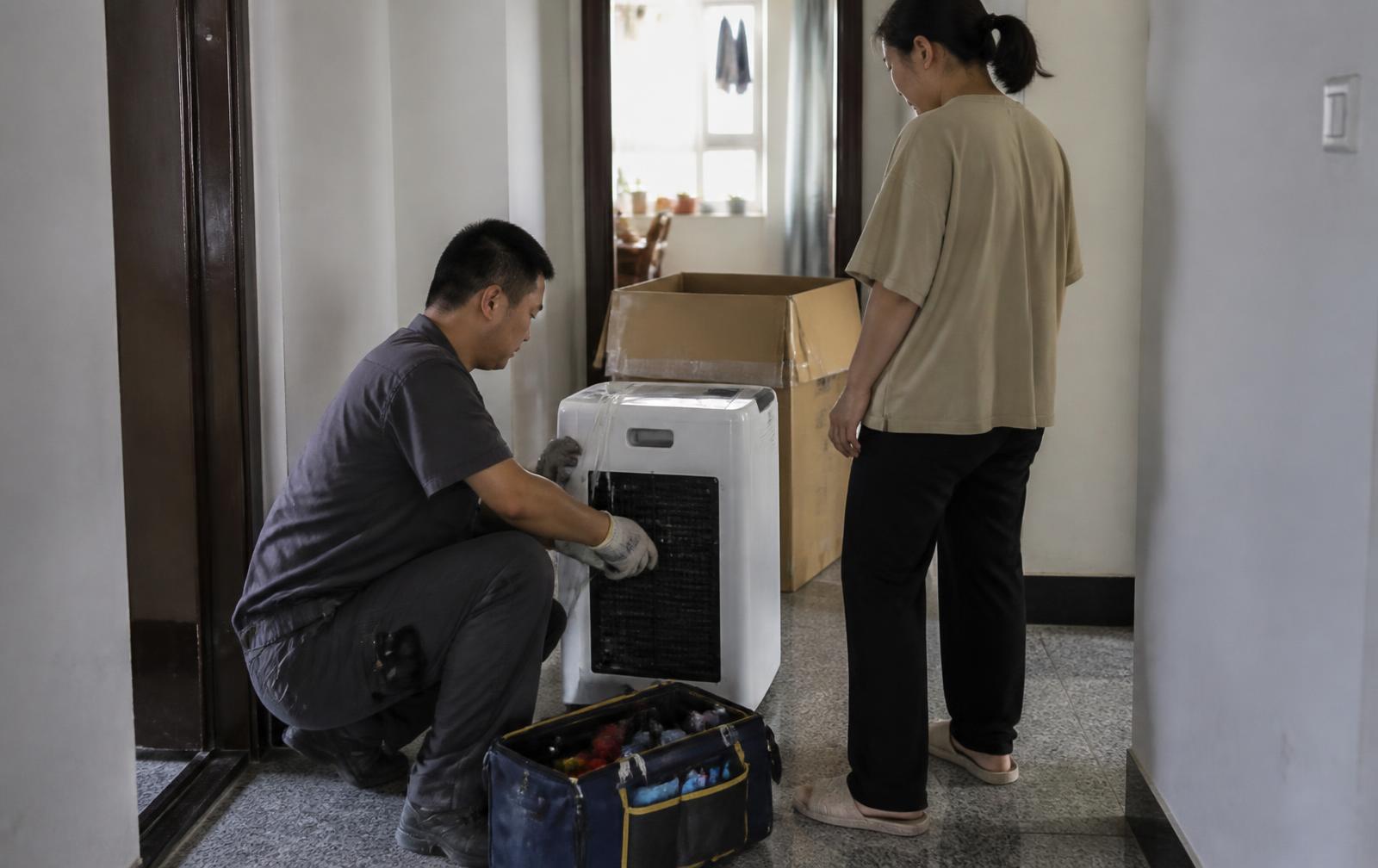
In the hallway of an ordinary apartment, a crouching technician works on an appliance next to a cardboard box, watched by the resident seen from behind.
Trust is rebuilt through what happens after the announcement.

COMPARISON

The architectures tested,
assessed across four dimensions.

ARCHITECTURESAFETY EXECUTIONCLARITYTRUSTCONTAGION RISK
01Full proactive recall, transparent communicationrecall completed within 30 daysdefect explained technically, scope announced+12 pts projected brand perceptionrisk of a major media crisis reduced to 0 %
02Minimal silent recallobligation fulfilled, execution not sustainedno public explanation of the defect−34 pts reputational impact if discovered62 % probability of discovery over 24 months
03Generic postal-letter notification34 % effective return within 90 daysidentification left to the ownernot publishedrisk maintained by units still in circulation
04SMS notification followed by a dedicated phone follow-up78 % effective return within 90 daysidentification supported by a dedicated centernot publishednot published
05Three other architectures testednot publishednot publishednot publishednot published

Only architectures for which the case documents measurements carry numerical values. The other scenarios were tested, but no numerical result is published here : the wording “ not published ” is retained rather than an estimate.

THE STRONGEST

Full proactive recall technical explanation of the defect multichannel notification in-home replacement

THE MOST FRAGILE

Minimal silent recall notification by generic postal letter

A MECHANISM : THE CASCADE

The recall is
a distributed
experience.

The announcement circulates : owners, online reviews, media, retailers, prospects, brand perception. At the same time, every customer-service call creates an individual experience, which in turn becomes a story.

Central communication does not control this story alone. Likely media cascades were modeled over 90 days for each scenario tested.

DECISION

What the decision
selected.

TO CONTAIN
The actual scope: the affected series, and that series alone.
TO EXPLAIN
The technical defect, described in terms that make it verifiable.
TO MAKE SIMPLE
Checking the device and in-home replacement.
TO COORDINATE
Multi-channel notification, dedicated call center, recovery logistics.
TO SHOW
That executing the recall takes precedence over protecting reputation.

PROJECTION, THEN OBSERVATION

Ninety days
after the announcement.

The manufacturer selected the strategy combining a full proactive recall announced within 21 days, transparent communication with a technical explanation of the defect, multi-channel notification — SMS, letter and phone follow-up by a dedicated center —, free in-home replacement and an extended 24-month warranty offered as compensation to affected owners.

At 90 days from rollout, the effective return rate of affected units reaches 74 %, above the 68 % projection. Measured brand perception improves by +11 pts versus the period before the recall. No serious incident was reported on unrecalled units. Revenue on the range is stable, with a slight positive effect on adjacent ranges.

These values describe what was observed after the decision. They concern recall execution and perception, and do not establish any exclusive causality between the selected architecture and each of these movements.

EFFECTIVE RETURN RATE AT 90 DAYS
74 %, above the 68 % projection
BRAND PERCEPTION
+11 pts versus the period before the recall
SERIOUS INCIDENTS REPORTED
none among units not recalled
REVENUE ON THE RANGE
stable, with a slight positive effect on adjacent ranges

TAKEAWAY

Customers judged
less the fact that
that a defect exists
less harshly than the way
the company behaves
behaved
once it knows.
knew about it.

Actively demonstrating industrial responsibility, communicated transparently, strengthens brand perception beyond the operational cost of the recall. A product recall is not only a crisis to contain : it is a moment when the quality of the system handling the incident becomes observable.

The second lesson is operational. The quality of the notification and execution channel — multi-channel notification, dedicated call center, recovery logistics — determines the industrial success of the recall more than the message content. A recall announced but not executed leaves the risk in circulation.

POSSIBLE FUTURES

The same defect.
Three ways to handle it.

A

MINIMIZE

Silent recall, strictly necessary communication

  • limited short-term exposure
  • 62 % probability of discovery over 24 months under the hypotheses tested
  • −34 pts reputational impact in the event of media coverage
  • lasting sales decline on the affected range

B

RECALL WITHOUT EXECUTION

Recall announcement, notification by generic postal letter

  • 34 % effective return of affected units within 90 days
  • two thirds of units remain in circulation
  • the safety risk remains; the announcement does not address it
  • exposure to a later serious incident

C

CONTAIN, EXPLAIN, REPAIR

Full proactive recall within 21 days, multi-channel notification, in-home replacement

  • +12 pts projected brand perception, +11 pts observed at 90 days
  • 74 % effective return observed, above the projected 68 %
  • extended 24-month warranty offered to affected owners
  • high operational demands: dedicated center and recovery logistics

METHOD

Before recommending,
we tested reactions.

  1. SERIES DEFECT CONFIRMED
  2. 480 000 SYNTHETIC OWNERS
  3. 18 TYPOLOGIES
  4. 5 SCENARIOS + 4 CHANNELS
  5. 2 400 OWNERS INTERVIEWED
  6. MEDIA CASCADES OVER 90 DAYS
  7. DECISION

480 000 European owners-users of the range, 18 typologies, 5 communication scenarios and 4 notification channels, 2 400 synthetic owners interviewed, media cascades modeled over 90 days and delivery in 10 hours.

This case adds a mechanism to the library : a corrective action can be interpreted as proof of the problem or as proof of responsibility. The recall is exactly the same technical action ; its meaning depends on timing, precision, transparency, remediation and the individual experience that follows.

A real case.
An unnamed manufacturer.

This case comes from a simulation conducted for a European appliance manufacturer. The commissioning organization is not named, the range cannot be identified, no personally identifiable data entered the system, and the detailed results remain the property of the commissioning organization.

The simulation determines neither whether a product should be recalled for safety reasons, nor the mandatory regulatory scope, nor the technical severity of the defect, nor the level of danger. Those decisions belong to quality teams, technical experts and competent authorities. It focuses on the human and reputational consequences of several management architectures within the required safety framework.

Your next decision

Which decision do you want to explore?

Describe your need. We can point you to the right level of support.

What if you tested
your next decision?

State your decision. See the future it produces.

Explore the product