ENERGY & UTILITIES · TERRITORIAL TRANSITION

“ How can the planned closure of a thermal power plant be managed in its host territory? ”

A European energy group was preparing to close a thermal power plant that had operated for more than 40 years in a French industrial area. The closure formed part of the European decarbonization trajectory and had been politically decided on a 60-month horizon.

The site directly employed 380 people, with an estimated indirect impact of 1 400 territorial jobs. The question was not whether the plant would close. It was what would exist after it.

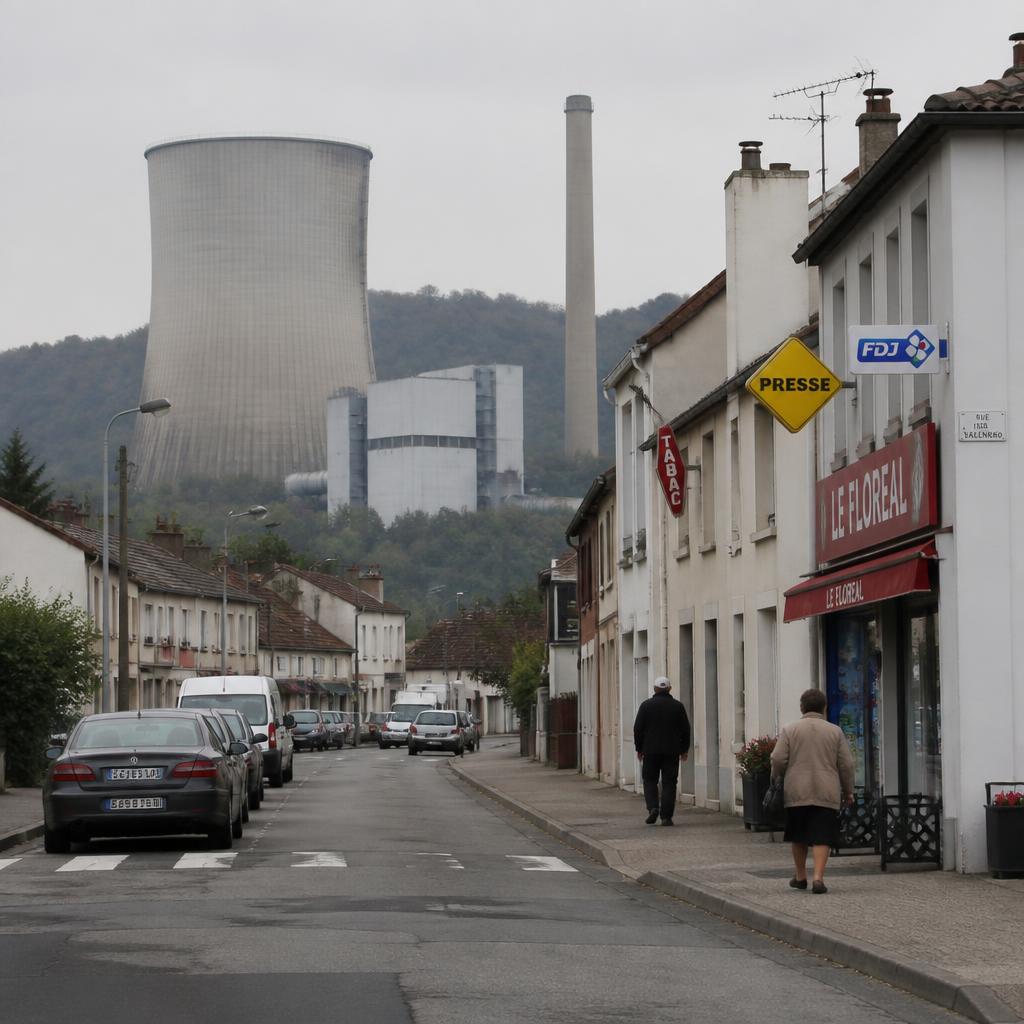
An ordinary street in a French town: houses, parked cars, local shops and two passers-by ; in the distance, the cooling tower and chimney of a thermal power plant.
DECISION
Choose the territorial support strategy for a thermal power plant closure that has already been politically decided
POPULATION
1,1 million synthetic residents, workers and stakeholders in the employment area, 14 profiles
WHAT IS TESTED
4 territorial redevelopment strategies
HORIZON
60 months after announcement

THE PROBLEM

The closure
has a date.
The territory, however,
has a trajectory.

A production unit can be shut down on a set date. The employment area that grew around it cannot. The territory was historically tied to the plant : several generations of families had worked there, and the local identity carried the site's industrial memory.

Two closures of other industrial sites in the same area, fifteen years earlier, had left a lasting economic and social mark. The risk of political and union mobilization was significant : several local elected officials and union federations were ready to challenge the closure.

The group's management used our system to test 4 territorial redevelopment strategies, with particular attention to employee support, the industrial site's redevelopment project, and relations with local elected officials and trade unions.

WHAT IS ALREADY ESTABLISHED

  • a thermal power plant operated for more than 40 years in a French industrial area
  • a closure embedded in the European decarbonization trajectory, politically decided on a 60-month horizon
  • 380 people directly employed at the site
  • an estimated indirect impact of 1 400 territorial jobs: contractors, service providers, local commercial activity
  • two industrial closures in the same area fifteen years earlier, and their economic and social legacy
  • a documented risk of political and union mobilization, with local elected officials and federations ready to challenge the closure

WHAT DIFFERS FOR EACH GROUP

  • exposure to the plant
  • time living in the area
  • political and union involvement
  • relationship to the energy transition

ONE VARIABLE : INDIRECT DEPENDENCE

Working at the plant
is not the only way
to depend on it.

THE DECISION PERIMETER EXTENDS BEYOND THE SITESITE AND DIRECT EMPLOYEESCONTRACTORS AND SERVICE PROVIDERSLOCAL COMMERCE AND ECONOMIC ACTIVITYLOCAL AUTHORITIES AND SERVICESHOUSEHOLDS AND TERRITORY

Conceptual diagram. It does not represent any measured value : it only maps the circles of dependence documented in this case.

380 people worked at the site. The indirect impact was estimated at 1 400 territorial jobs : contractors, service providers, local commercial activity. The scope of the decision therefore extended far beyond the company's perimeter.

  1. 01WHAT IS CLOSINGA production unit, operated for more than 40 years, whose closure date has already been set.
  2. 02WHAT IS DIRECTLY AFFECTED380 site employees whose career trajectories depend on the support package selected.
  3. 03WHAT IS INDIRECTLY AFFECTEDAn estimated 1 400 territorial jobs: contractors, service providers, local commercial activity.
  4. 04WHAT THIS SHIFTSThe decision is not about closing a site, but about the trajectory of an employment area.

THE INCOMPLETE QUESTION

“ Are they in favor
of the closure? ”
did not open up any decision.

The closure had been politically decided on a 60-month horizon. What remained open was not whether the site would shut down, but how it would be announced, supported, funded and governed.

THE QUESTION USUALLY ASKED

“Are residents in favor of the closure?” The closure had already been politically decided: the question opened up no decision.

THE QUESTION ACTUALLY ASKED

“How can the planned closure of a thermal power plant be managed in its host territory?”

WHAT THE CASE SHOWS

Territorial acceptance rises from 34 % to 62 % solely depending on the sequence of the announcements, with the closure decision unchanged.

WHAT THIS IMPLIES

What was being decided was not the closure, but the visibility of what would exist after it.

WHAT IS TESTED

Four strategies
of territorial redevelopment.

The closure is identical in every case. What varies are the support architectures : the sequencing of announcements, the format of the employee support package, and the governance of the redevelopment project. These configurations were tested separately.

  1. 01SIMULTANEOUS ANNOUNCEMENTClosure and redevelopment project announced at the same time, with no lead time given to the industrial project.
  2. 02REDEVELOPMENT ANNOUNCED FIRSTRedevelopment project announced before the closure, with quantified commitments on jobs created, an execution timetable and training programs.
  3. 03INDICATIVE EMPLOYEE SUPPORT PACKAGERedeployment commitment, training promise, guarantee of solutions, without individual contractual commitments.
  4. 04CONTRACTUAL EMPLOYEE SUPPORT PACKAGEIndividual redeployment guarantee at the same level of pay, individualized training budget, contractual commitment on timelines.
  5. 05PROJECT DEFINED UNILATERALLYRedevelopment designed by the group and presented to local elected officials as a fait accompli.
  6. 06PROJECT CO-DESIGNED WITH ELECTED OFFICIALSRedevelopment co-designed from the outset, with a tripartite steering committee: group, elected officials, State.

3 400 synthetic residents, employees and stakeholders were questioned about the 4 territorial redevelopment strategies, with several configurations of the employee support package and governance arrangements. Projections were calculated over 60 months, modeling political mobilization dynamics, territorial employment trajectories and relationships with local elected officials.

An employment area
is not
employees
facing residents.

SIMULATED POPULATION

The reconstructed population covers 1,1 million residents, workers, employees, local elected officials, unions and territorial stakeholders in the employment area. It is calibrated on public INSEE data, territorial studies from chambers of commerce, and the history of mobilizations around the territory's two previous industrial closures.

It is structured into 14 profiles combining exposure to the plant, length of residence in the territory, political and union involvement, and relationship to the energy transition.

  • SITE EMPLOYEES

    380 people whose trajectory depends directly on the support package selected

  • CONTRACTORS AND SERVICE PROVIDERS

    activity dependent on the site, without being employed by it

  • LOCAL COMMERCE AND ECONOMIC ACTIVITY

    indirect exposure through customers and the economic fabric of the employment area

  • LONG-STANDING ROOTS IN THE TERRITORY

    several generations of families have worked at the site

  • MEMORY OF PREVIOUS CLOSURES

    two industrial closures in the same area fifteen years earlier

  • UNION INVOLVEMENT

    union federations ready to challenge the closure

  • LOCAL ELECTED OFFICIALS

    territorial political legitimacy, with their position determined by project governance

  • RELATIONSHIP TO THE ENERGY TRANSITION

    decarbonization is not perceived in the same way depending on exposure to the site

These configurations make part of the population's heterogeneity visible. The simulation concerns synthetic individuals, not a few archetypal personas : the population cannot be reduced to employees facing residents, but consists of distinct exposures, roots and trajectories.

REACTIONS

With the decision unchanged,
the difference comes down to
on what is announced,
when, and with whom.

  1. 01

    THE REDEVELOPMENT ANNOUNCEMENT MUST COME BEFORE THE CLOSURE ANNOUNCEMENT

    Announcing the closure and the redevelopment project simultaneously generates 34 % territorial acceptance. Announcing the redevelopment project first — with quantified commitments on jobs created, an execution timetable and training programs — six months before the official closure announcement generates 62 %. The sequencing reverses the symbolic reading: the territory does not lose the plant; it gains a new industrial project.

  2. 02

    AN INDICATIVE SUPPORT PACKAGE IS NOT AN ALTERNATIVE

    An indicative employee support package — redeployment commitment, training promise, guarantee of solutions — generates 41 % support. A quantified and contractual package — individual redeployment guarantee at the same level of pay, individualized training budget, contractual commitment on timelines — generates 78 %. Individual contractualization changes how the package is read: as a credible commitment rather than a defensive promise.

  3. 03

    GOVERNANCE DETERMINES POLITICAL SUPPORT

    A redevelopment project defined unilaterally by the group and presented to local elected officials as a fait accompli generates 48 % territorial political support. A project co-designed with elected officials from the outset, within a tripartite steering committee bringing together the group, elected officials and the State, generates 82 %. Co-design turns the project into a negotiated territorial agreement rather than a decision imposed from headquarters.

  4. 04

    THE TERRITORY READS THE DECISION THROUGH ITS PAST CLOSURES

    Two industrial closures in the same area fifteen years earlier left a lasting economic and social mark. The synthetic population was calibrated on the history of these mobilizations: here, the credibility of a redevelopment promise is read through what was promised, then observed, once before.

The observed differences between configurations — 34 % versus 62 %, 41 % versus 78 %, 48 % versus 82 % — concern the same closure, on the same industrial timetable. They are not differences of opinion about the energy transition.

THE SEQUENCING

The day of closure
is not day 1
of the transition.

SAME DECISION, TWO ANNOUNCEMENT SEQUENCESSIMULTANEOUS ANNOUNCEMENTCLOSURE + REDEVELOPMENT34 %REDEVELOPMENT ANNOUNCED FIRSTREDEVELOPMENT PROJECTCLOSURE62 %PROJECTED TERRITORIAL ACCEPTANCE, BY ANNOUNCEMENT SEQUENCETHE TERRITORY DOES NOT JUST LOSE A SITE : IT EITHER SEES WHAT COMES NEXT OR IT DOES NOT

The two values shown are those documented by the simulation : 34 % territorial acceptance with a simultaneous announcement, 62 % when the redevelopment project is announced six months before the official closure announcement.

The sequencing reverses the symbolic reading of the decision. The territory does not lose the plant : it gains a new industrial project, then learns the shutdown date of the old one.

PROMISE OR REAL OPTION

A redevelopment project
is not yet
an alternative.

The same commitment produces two different readings depending on whether it is indicative or contractual. What changes is not the generosity of the package : it is the extent to which it can be individually enforced.

  • WHAT REMAINS A PROMISEA redeployment commitment, a training promise, a guarantee of solutions: 41 % employee support.
  • WHAT BECOMES AN OPTIONAn individual redeployment guarantee at the same level of pay, an individualized training budget, a contractual commitment on timelines: 78 %.
  • WHAT CHANGESThe content of the package is similar. What differs is the degree to which it is individually enforceable.
  • WHAT THIS SIGNALSAn alternative exists for a person only when it is quantified, dated and enforceable.
A shopping street in an industrial town : a bakery, a hardware store, the entrance to a workshop and a delivery van ; two men talking on the sidewalk.
What happens to the site does not stay within the site. The estimated indirect impact — 1 400 territorial jobs — plays out through contractors, service providers and local commercial activity.

ANTICIPATION

An announced future
acts on the present
before it happens.

The closure had been decided on a 60-month horizon. The simulation treated this period, between announcement and shutdown, as the true object of the decision.

THE CLOSURE IS IN THE FUTURE

It is politically decided on a 60-month horizon. It has not happened yet.

BEHAVIORS ARE PRESENT

As soon as the deadline becomes credible, career and economic trajectories begin to adjust.

WHAT THE SIMULATION OBSERVES

60 months of political mobilization dynamics, territorial employment trajectories and relationships with local elected officials.

WHAT THIS IMPLIES

The day of closure is not day 1 of the transition. The transition begins with the announcement.

CASCADES

Reactions change
the territory
in which
the following reactions occur.

The simulation does not add up individual opinions. Over 60 months, it modeled political mobilization dynamics, territorial employment trajectories and relationships with local elected officials — in other words, populations that observe one another.

  • SITE EMPLOYEESTheir trajectory depends on whether the support package is contractual or indicative.
  • CONTRACTORS AND SERVICE PROVIDERSPart of the estimated 1 400 territorial jobs depends on the site's activity without being employed by it.
  • LOCAL COMMERCIAL ACTIVITYIt depends on the working population that remains, works and consumes in the area.
  • LOCAL ELECTED OFFICIALS AND UNIONSDepending on the governance selected, their position opens or closes the possibility of a territorial agreement.

COMPARISON

The configurations tested,
assessed across three dimensions.

CONFIGURATIONTERRITORIAL ACCEPTANCEEMPLOYEE SUPPORTPOLITICAL SUPPORT
01Simultaneous announcement of the closure and redevelopmentlowmediummedium
02Announcement of the redevelopment project before the closurehighmediummedium
03Indicative employee support packagemediumlowmedium
04Quantified and contractual employee support packagemediumhighmedium
05Redevelopment project defined unilaterally by the groupmediummediumlow
06Redevelopment announced first + contractual package + co-design with elected officialshighhighhigh

Qualitative comparative reading derived from the simulated configurations. The levels reflect documented differences : 34 % versus 62 % territorial acceptance depending on sequencing, 41 % versus 78 % employee support depending on the package format, 48 % versus 82 % political support depending on governance. No configuration is cost-free : announcing redevelopment first requires it to already be quantified and dated ; contractualizing the employee package creates legal commitments for the group ; co-designing with elected officials requires sharing trade-offs.

THE MOST ROBUST

Redevelopment announced before the closure quantified and contractual employee support package co-design with elected officials within a tripartite committee

THE MOST FRAGILE

Simultaneous announcement indicative package and project defined unilaterally by the group

DECISION

What the decision
selected.

TO ANNOUNCE FIRST
The redevelopment project, with quantified commitments, a timetable and training programs.
TO BE CONTRACTUALIZED
The employee support package: individual redeployment guarantee, training budget, enforceable deadlines.
TO BE CO-DESIGNED
The project, with local elected officials, within a tripartite steering committee bringing together the group, elected officials and the State.
TO BE FUNDED
€280 million: site remediation, new industrial site, territorial training program.
TO MONITOR
Meeting the announced timetable, on which the credibility of the entire package depends.

PROJECTION, THEN OBSERVATION

Then reality
happened.

The group selected the strategy combining announcement of the redevelopment project 8 months before the official closure announcement, co-design of the project with local elected officials within a tripartite steering committee (group, elected officials, State), a quantified and contractual employee support package with an individual redeployment guarantee, and a €280 million budget covering site remediation, investment in a new industrial site — an energy storage unit and hydrogen production — and the territorial training program.

At 36 months after deployment, the trajectory is tracking the projections. The redevelopment project is under way, with the timetable met within 3 months. The employee support package has enabled 92 % of the site's 380 employees to be redeployed, including 62 % to the new industrial project and 30 % to other group sites. No lasting political mobilization has emerged : local elected officials publicly support the project. The new industrial site has created 220 direct jobs at this stage, with a projection of 340 at 60 months.

These values are those documented by the commissioning client. The methodology was referenced by the group to prepare the 4 other closures scheduled over a 60-month horizon.

EMPLOYEES REDEPLOYED
92 % of the site's 380 employees
OF WHOM ON THE NEW PROJECT
62 %, and 30 % to other group sites
DIRECT JOBS CREATED AT 36 MONTHS
220, with a projection of 340 at 60 months
REDEVELOPMENT TIMETABLE
met within 3 months

TAKEAWAY

The problem
was not
to close the plant.
It was to make credible
what would exist after it.

The closure was decided : none of the configurations tested called it into question. Yet projected territorial acceptance varied from 34 % to 62 % solely depending on whether the redevelopment project was announced before, or at the same time as, the site's shutdown.

The same mechanism appears at both the individual and political levels. Employee support rises from 41 % to 78 % when the package becomes quantified and contractual rather than indicative. A project rises from 48 % to 82 % political support when it is co-designed with elected officials rather than presented as a fait accompli. In all three cases, what changes is not the decision, but the degree to which the future it proposes is made concrete.

POSSIBLE FUTURES

The same closure.
Three ways to support it.

A

COMPENSATE

Indicative employee support package, redevelopment project announced at the same time as the closure

  • support exists from the announcement, without prior preparation
  • lowest projected territorial acceptance among the sequences tested
  • employee support at 41 %, with the commitment still only a promise
  • the territory sees a loss, with no visible counterpart

B

REPLACE

Industrial project led by the group, defined unilaterally and then presented to elected officials

  • new activity is planned on or around the site
  • potential economic continuity for the area
  • territorial political support at 48 %, versus 82 % with co-design
  • the project is still read as a decision made at headquarters

C

BUILD WHAT COMES NEXT FIRST

Redevelopment announced 8 months before the closure, contractual employee package, tripartite steering committee, 280 M€ committed

  • projected territorial acceptance at 62 %, versus 34 % with simultaneous announcement
  • employee support at 78 %, political support at 82 %
  • 92 % of the 380 employees redeployed at 36 months, no lasting political mobilization
  • depends on meeting a long timetable and coordinating three actors

METHOD

Before recommending,
we tested reactions.

  1. DECISION
  2. POPULATION & TERRITORY
  3. STRATEGIES
  4. 60-MONTH TRAJECTORIES
  5. SECOND-ORDER EFFECTS
  6. DECISION

1,1 million reconstructed synthetic residents and stakeholders, 14 profiles, 3 400 residents, employees and stakeholders questioned about 4 territorial redevelopment strategies, and a 60-month projection incorporating political mobilization dynamics, territorial employment trajectories and relationships with local elected officials.

This case adds a capability to the library : simulating an announced future. The closure has not yet happened, but as soon as it becomes credible, present decisions begin to adjust, and those adjustments change the context of subsequent decisions.

A real case.
An unnamed energy group.

This case is based on a simulation carried out for a European energy group. The group and the site are not named, no personally identifiable data entered the system, and the detailed results remain the property of the commissioning client. The comparisons between configurations published here are qualitative ; the quantitative values cited are those documented by the commissioning client.

The simulation concerns exclusively collective and territorial reactions to different support architectures. It is neither a position on the energy decision itself, nor an individual assessment of employees, nor a prediction of any person's trajectory.

Your next decision

Which decision do you want to explore?

Describe your need. We can point you to the right level of support.

What if you tested
your next decision?

State your decision. See the future it produces.

Explore the product