CRISIS MANAGEMENT · INDUSTRIAL RISK

« How do you manage an incident at a regulated industrial site without triggering a lasting local crisis? »

A European industrial company operates a high-threshold Seveso site in a peri-urban area. A malfunction in a thermal-treatment unit produced, for 90 minutes, a plume visible across the entire urban area, with emissions of strong-smelling compounds but no exceedance of regulatory health thresholds. The incident was brought under control: no evacuation ordered, no injuries reported.

The question facing the crisis team was therefore not technical. It concerned what the territory would make of what it had seen — in an area that had experienced two major industrial crises in ten years.

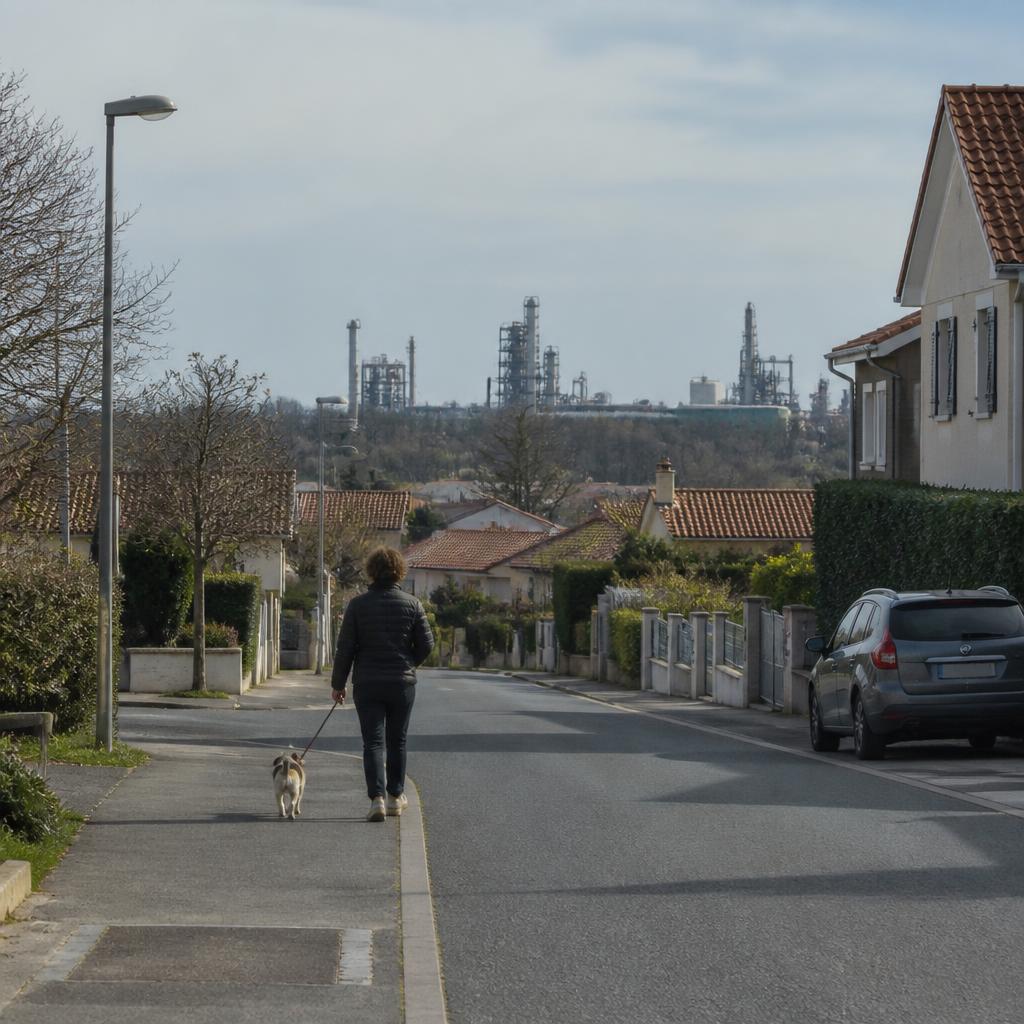
Residential street in a peri-urban town at the end of the day: houses, a parked car, a person walking a dog, and in the distance behind the rooftops, the silhouette of an industrial site.
DECISION
Choose the territorial communication strategy after an incident at a high-threshold Seveso site
POPULATION
620 000 local residents, workers and elected officials, 15 territorial types
WHAT IS TESTED
5 territorial communication scenarios
HORIZON
12-month reputational and political projection

THE PROBLEM

An industrial crisis
can begin before
starts with the first statement.

Technically, the incident was closed: unit shut down, regulatory health thresholds not exceeded, no evacuation ordered by the authorities, no injuries reported. From an industrial-safety standpoint, the sequence fell within the remit of the appropriate technical and regulatory systems.

Socially, it was beginning. For 90 minutes, a plume had been visible across the entire urban area, accompanied by strong-smelling compounds. The territory therefore had sensory information before any official communication and had already begun to interpret it.

The risk identified by the site management and the group's crisis team was territorial and political: the crystallization of lasting opposition to the site and a challenge to its continued operation. The crisis team mobilized our system within 6 hours of technical stabilization.
WHAT IS THE SAME FOR EVERYONE

  • a European industrial company operating a high-threshold Seveso site in a French peri-urban area
  • a malfunction in a thermal-treatment unit, technically brought under control
  • a plume visible across the entire urban area for 90 minutes
  • strong-smelling compounds, with no exceedance of regulatory health thresholds
  • no evacuation ordered by the authorities, no injuries reported
  • two major industrial crises in the area during the previous ten years
  • organized advocacy mobilizations and tense relations between industrial companies and local elected officials

WHAT DIFFERS FOR EACH GROUP

  • distance au site
  • time living in the area
  • attitude toward industrial activity
  • previous exposure to crises in the area
  • involvement in local advocacy networks
  • direct or indirect economic ties to the site

A VARIABLE: DIRECT EXPERIENCE

People do not react only
to what they are told.

  1. 01SIGNALA visible plume, a strong smell: the territory has sensory information before any communication takes place.
  2. 02INTERPRETATIONEveryone forms an initial interpretation of what they see, based on what they know about the site and its history.
  3. 03INFORMATIONOfficial communication enters an environment that is already active: it confirms, supplements or contradicts what has been perceived.
  4. 04CONSISTENCYCommunication that minimizes the visible nature of the incident is perceived as deceptive, even when it is technically accurate.
  5. 05TRUSTExplicitly acknowledging the anxiety-provoking nature of the scene before presenting technical data restores the credibility of the speaker.
  6. 06DURATIONThe trust built or damaged at this point shapes the reputational trajectory over the following twelve months.

The official message never arrives on a blank page. It is immediately compared with what residents have seen and smelled. When the perceived gap is too wide, it is the credibility of the speaker that deteriorates, not just the message.

THE TERRITORY'S MEMORY

The territory does not discover
the company on the day
of the incident.

The area had experienced two major industrial crises in the previous ten years: a fire at a neighboring site and a chemical accident at a plant in the same sector, with organized advocacy mobilizations and tense relations between industrial companies and local elected officials. The same incident is not received in the same way depending on the history into which it falls.

WHAT THE COMPANY SEES

An isolated operational incident, brought under control in 90 minutes, with no measurable health consequence.

WHAT THE TERRITORY SEES

The third industrial event in ten years, after a fire at a neighboring site and a chemical accident in the same sector.

WHAT ALREADY EXISTS

Organized advocacy mobilizations and tense relations between industrial companies and local elected officials.

WHAT THIS CHANGES

The risk identified by the crisis team is not a health risk: it is territorial and political, potentially extending to challenges to keeping the site in operation.

This memory is not an opinion to be corrected. It is one of the parameters of the decision, just like timing or the choice of speaker.

FOUR LAYERS OF INFORMATION

What is seen,
what is smelled,
what is known,
what is said.

Institutional communication is the last of the four to arrive. It is received through the other three, not instead of them.

  • WHAT IS SEENA plume visible across the entire urban area for 90 minutes. This scene is already information, before anyone says anything.
  • WHAT IS SMELLEDStrong-smelling compounds, with no exceedance of regulatory health thresholds. Sensory experience and regulatory measurement do not say the same thing.
  • WHAT IS KNOWNTwo major industrial crises in the previous ten years: a fire at a neighboring site and a chemical accident at a plant in the same sector.
  • WHAT IS SAIDThe official message arrives after these three layers. It is read through them, not instead of them.

WHAT IS TESTED

The same incident.
Five ways
to respond to it.

The crisis team tested 5 territorial communication scenarios combining the timing of the statement, the identity of the speaker, whether or not the visible nature of the incident was acknowledged, and the timetable for opening the listening mechanism.

  1. 01SILENCE UNTIL ALL FACTS ARE AVAILABLENo public statement until the technical analysis of the incident has been consolidated.
  2. 02GROUP COMMUNICATIONA statement by the group's communications director, focused on technical data and compliance with regulatory thresholds.
  3. 03SITE DIRECTOR SPEAKSA local, in-person statement in a human register and without notes, explicitly acknowledging the anxiety-provoking nature of the visible scene.
  4. 04LOCAL COMMUNICATION AND LISTENING WITHIN 48 HOURSStatement by the site director followed by a territorial listening mechanism: in-person office hours at the town hall, a dedicated line, public meetings for local residents.
  5. 05LATE LISTENINGThe same mechanism, opened after more than 96 hours, once local associations have structured the narrative.

2 800 synthetic local residents and territorial stakeholders were interviewed on the 5 scenarios, with 26 dynamic follow-ups on tipping points identified in real time. Projections were calculated over 12 months, modeling advocacy dynamics, regional and national media relays, and the political trajectory of local elected officials' position toward the site. The study was built in 12 hours.

The same plume
was not seen
by the same
people.

SIMULATED POPULATION

The reconstructed population covers 620 000 local residents, workers and elected officials in the site's area, calibrated on public INSEE data, territorial studies of industrial perceptions and the history of mobilizations around the area's two previous industrial crises.

It is structured into 15 types combining distance from the site, length of residence in the area, attitude toward industrial activity, previous exposure to crises and involvement in local advocacy networks.

  • NEAREST LOCAL RESIDENTS

    direct exposure to the visible scene and the smell, expectation of a rapid and locally grounded statement

  • EMPLOYEES AND FAMILIES

    direct economic connection with the site, tension between personal concern and defending the activity

  • DISTANT RESIDENTS WHO SAW THE PLUME

    plume visible across the entire urban area: concerned without being directly exposed

  • PEOPLE EXPOSED TO PREVIOUS CRISES

    memory of the neighboring-site fire and the chemical accident in the sector, cumulative interpretation

  • ORGANIZED ADVOCACY NETWORKS

    established capacity to mobilize, rapid production of an alternative narrative when there is an information vacuum

  • LOCAL ELECTED OFFICIALS AND INSTITUTIONAL RELAYS

    historically tense relations with industrial companies, public position decisive for whether the site can remain

  • LOCAL ECONOMIC ACTORS

    indirect dependence on industrial activity, sensitivity to the image of the area

  • NEWCOMERS

    no memory of previous crises: the reaction depends on the narrative available at the time of the incident

These configurations reveal part of the population's heterogeneity. The simulation operates on synthetic individuals, not a handful of persona types.

REACTIONS

It was not the technical severity
that determined the reaction.

  1. 01

    DENYING WHAT PEOPLE SAW STRUCTURALLY DAMAGES TRUST

    Communication that minimizes the visible nature of the incident — “a simple malfunction with no consequences” — damages local residents' trust regardless of the technical accuracy of the statement. Residents saw the plume: any communication that fails to acknowledge it is perceived as deceptive. A statement that explicitly recognizes the anxiety-provoking nature of the visible scene, even before addressing technical consequences, restores the industrial company's credibility.

  2. 02

    TERRITORIAL LEGITIMACY DETERMINES WHETHER PEOPLE LISTEN

    A statement by the group's communications director generates 34 % support among local residents. The same sequence delivered in person by the site director, in a human register and without notes, generates 68 % support. The difference lies in territorial legitimacy: the site director is perceived as the person who lives in the area, knows local residents and personally commits their responsibility.

  3. 03

    AN INFORMATION VACUUM FILLS WITHOUT THE COMPANY

    A listening mechanism — in-person office hours in the affected town halls, a dedicated phone line, public meetings for local residents — operational within 48 hours stabilizes the reputational trajectory. The same mechanism opened after more than 96 hours loses 42 % of its stabilizing effect: local associations have had time to structure their narrative, and the mechanism is perceived as a response to their mobilization rather than a voluntary commitment.

  4. 04

    THE TERRITORY'S MEMORY IS A PARAMETER OF RECEPTION

    The constructed types combine distance from the site, length of residence in the area, attitude toward industrial activity, previous exposure to crises and advocacy involvement. The area experienced two major industrial crises in ten years. The projected risk was not health-related but political: crystallization of lasting opposition and challenges to the site's operating authorization.

A message does not travel directly from an organization to an isolated population. It passes through a territorial ecosystem — town halls, prefecture, employees, regional press, associations, neighbors — in which any divergence between speakers becomes information in itself.

THE PUBLICS OBSERVE ONE ANOTHER

The message travels through
a territory
an already organized territory.

The industrial company is not the only speaker. Elected officials, authorities, employees, associations and regional media speak to the same territory, sometimes at the same time. Consistency across these voices is a parameter of reception, not an execution detail.

  • THE COMPANY SPEAKSbut its message never reaches an isolated population: it passes through a territory that is already organized.
  • ELECTED OFFICIALS AND AUTHORITIES RELAYand their public position is read as independent information, distinct from the industrial company's message.
  • EMPLOYEES SPEAKto neighbors and relatives: economic ties also circulate as an information channel.
  • ASSOCIATIONS STRUCTUREa narrative that becomes more stable the more time they have: after 96 hours, the listening mechanism is perceived as a response to their mobilization.

THE RADIUS OF THE CRISIS

Distance from the site
is not distance from the crisis.

THREE FORMS OF PROXIMITY THAT DO NOT OVERLAPPHYSICAL PROXIMITYSOCIAL PROXIMITYSYMBOLIC PROXIMITYDISTANCE FROM THE SITE ≠ DISTANCE FROM THE CRISIS

Conceptual diagram, with no geographic claim and no equivalence to any safety perimeter. It describes no exposure zone: it represents three ways of being concerned.

A distant resident whose relative works at the site may feel more concerned than a closer resident with little involvement. The plume, visible across the entire urban area, made this dissociation immediate.

WHAT IS MISSING

A locally grounded, rapid statement consistent with what the territory saw and smelled.

WHAT HAPPENS

The territory produces its own hypotheses, testimonies and narratives. That is not irrationality; it is a normal response to uncertainty.

WHAT STABILIZES

After 96 hours, the advocacy narrative is structured: the listening mechanism loses 42 % of its stabilizing effect.

WHAT IS DECIDED

The question is not whether to speak, but how long an information vacuum can remain open before another narrative occupies it.

PHYSICAL PROXIMITY

Distance from the site, direct exposure to the plume and smell. This is the dimension that technical systems know how to delimit.

SOCIAL AND SYMBOLIC PROXIMITY

A link with an employee, memory of the two previous crises, advocacy involvement. These can concern residents located far from the site.

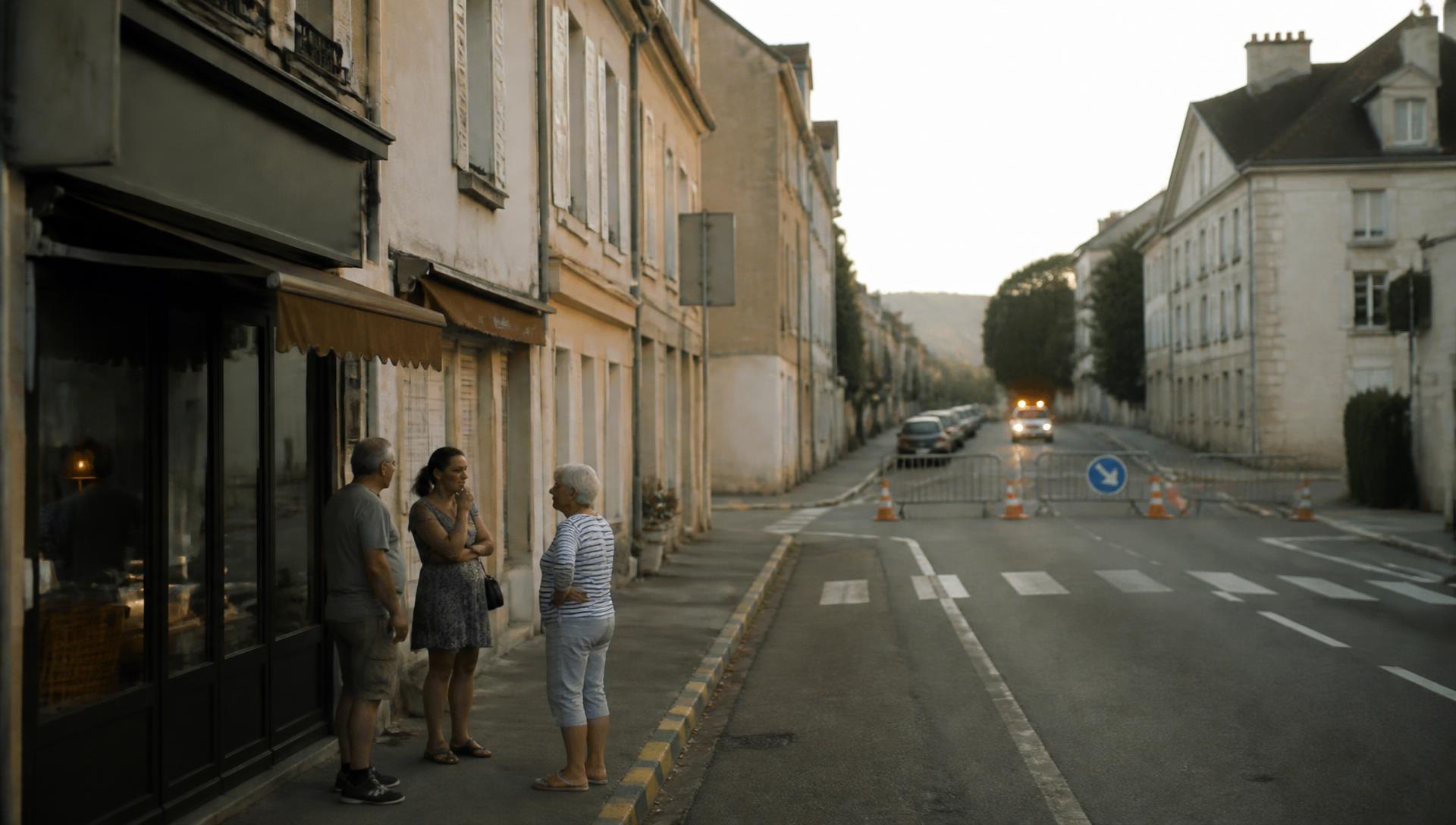
Street in a small town at the end of the day: three residents talking on the pavement outside a shop, with part of the road closed farther away by barriers.
Everyday life in the territory remains the place where the crisis is written. This is where interpretations circulate among neighbors, shops and relatives of employees, long before a public narrative stabilizes.

SECOND-ORDER EFFECTS

Technical closure
is not social closure.

TEMPS

48 hours for a stabilizing listening mechanism, 96 hours before losing 42 % of its effect

SPEAKER

34 % support for the group, 68 % for the site director

POLITIQUE

the public position of elected officials on keeping the site open is an outcome, not background

AFTER

technical resolution of the incident does not close the reputational trajectory projected over 12 months

The incident was closed in 90 minutes. The reputational and political trajectory was projected over twelve months — local-resident trust, advocacy dynamics, public positions of elected officials on keeping the site open.

COMPARISON

Five scenarios,
assessed across four dimensions.

SCENARIOSPEEDCONSISTENCY WITH LIVED EXPERIENCETRUST AT 12 MONTHSRISK OF A LASTING CRISIS
01Silence until the technical facts are completelowmediumlowhigh
02Group statement focused on technical datahighlowlowhigh
03Site-director statement acknowledging what was visiblehighhighmediummedium
04Local communication, territorial listening operational within 48 hourshighhighhighlow
05Same listening mechanism opened after more than 96 hoursmediummediummediummedium

Comparative reading based on simulated reactions. No scenario is cost-free. A very rapid group statement gains time but loses territorial legitimacy. A statement delayed until all facts are known gains precision but leaves an information vacuum in which narratives organize. Strong local coordination improves consistency but keeps site management exposed over time.

THE MOST ROBUST

Acknowledgment of what was visible site director speaking territorial listening within 48 hours independent audit reported publicly

THE MOST FRAGILE

Technical message from the group acknowledgment of the scene seen by the territory

PROJECTION, THEN OBSERVATION

At twelve months,
no mobilization
has persisted.

The industrial company selected the strategy combining a statement by the site director within 4 hours of technical stabilization, explicit acknowledgment of the anxiety-provoking nature of the visible scene before presenting technical data, a territorial listening mechanism operational within 48 hours — office hours in 3 affected town halls, a dedicated phone line, commitment to 3 public meetings within 30 days —, commissioning of an independent audit into the technical causes, and continuous transparency on its findings and corrective measures deployed.

At 12 months, no lasting advocacy mobilization had emerged beyond the isolated concerns expressed at public meetings. Local elected officials publicly supported keeping the site open after the independent audit was reported. No political challenge to the operating authorization was initiated.

LOCAL-RESIDENT TRUST AT 12 MONTHS
−4 pts versus the previous period, compared with a projection of −24 pts under the silence scenario
SUPPORT FOR THE RESPONSE
68 %, with the site director speaking
LASTING ADVOCACY MOBILIZATIONS
none, versus two territorial precedents in ten years
POLITICAL CHALLENGE
none; site maintained, operating authorization confirmed

TAKEAWAY

The problem was not
only the incident.
It was the gap between
what the territory saw
and what it was told.

Communication that minimizes the visible nature of an incident damages trust even when it is technically accurate. Local residents had seen the plume for 90 minutes: a statement that failed to acknowledge it was read as deceptive, regardless of the quality of the data presented.

The measured differences confirm this. The same message achieves 34 % support when delivered by the group and 68 % when delivered by the site director. The same listening mechanism stabilizes the trajectory when opened within 48 hours and loses 42 % of its effect after 96 hours. The content does not change; what changes is its consistency with what people experienced, and when it arrives.

DECISION

What the decision
selected.

TO SAY QUICKLY
What the territory saw. Acknowledging the anxiety-provoking nature of the scene comes before the technical data.
TO HAVE DELIVERED LOCALLY
The site director's statement, in person: 68 % support versus 34 % for the group.
TO OPEN WITHIN 48 HOURS
Office hours at town halls, a dedicated line, public meetings for local residents, before the narrative stabilizes elsewhere.
TO COMMIT TO OVER TIME
An independent audit of the technical causes, with ongoing transparency about its findings and corrective measures.

POSSIBLE FUTURES

The same incident.
Three ways to respond.

A

RASSURER

Rapid group statement focused on technical control and compliance with thresholds

  • message available very early, with technically accurate content
  • 34 % support among local residents for a statement delivered by the group
  • risk of denying what was visible: the plume was seen across the entire urban area
  • structural deterioration in trust, independent of the truthfulness of the statement

B

ATTENDRE

Communicate once the technical analysis of the incident has been consolidated

  • maximum precision of the information communicated
  • no statement requiring later correction
  • information vacuum left in a territory with organized advocacy networks
  • 12-month trust projection of −24 pts under the silence scenario

C

INFORM AND LISTEN

Local statement within 4 hours, acknowledgment of what was visible, territorial listening within 48 hours

  • 68 % support with the site director's statement
  • stabilizing listening mechanism if operational within 48 hours
  • independent audit launched and reported publicly
  • high operational requirements and sustained exposure of local management

METHOD

Before recommending,
we tested reactions.

  1. INCIDENT
  2. POPULATIONS & STAKEHOLDERS
  3. STRATEGIES
  4. DYNAMIC REACTIONS
  5. TERRITORIAL PROPAGATION
  6. DECISION

This case adds a capability to the library: simulating a crisis embodied in a territory. Individuals see, smell, hear, know employees, talk with neighbors and live in the affected space. Physical reality, memory, local networks, institutions and behaviors interact — and it is this interaction, not the isolated message, that determines the trajectory.

A real case.
An unnamed industrial company.

This case is based on a simulation conducted for a European industrial company. The company is not named, no personally identifiable data entered the system, and detailed results remain the client's property. The comparisons between scenarios published here are qualitative; the quantitative values cited are those documented by the client.

The simulation concerns exclusively human reactions to different management and communication strategies. It constitutes neither an assessment of industrial risk, nor a prediction of health exposure, nor a determination of evacuation perimeters, and in no way replaces the competent authorities or technical and regulatory systems.

Your next decision

Which decision do you want to explore?

Describe your need. We can point you to the right level of support.

What if you tested
your next decision?

State your decision. See the future it produces.

Explore the product