CREATIVE INDUSTRIES · RELAUNCH

“ How can a video-game franchise dormant for 8 years be relaunched without losing the historical community ? ”

A European game studio was preparing to relaunch a cult franchise built across three successive installments. The last was eight years old : around 3,4 million units sold, an average critic score of 88/100, and a strong community culture.

During those eight years, the studio published nothing. The community never stopped playing, discussing and producing.

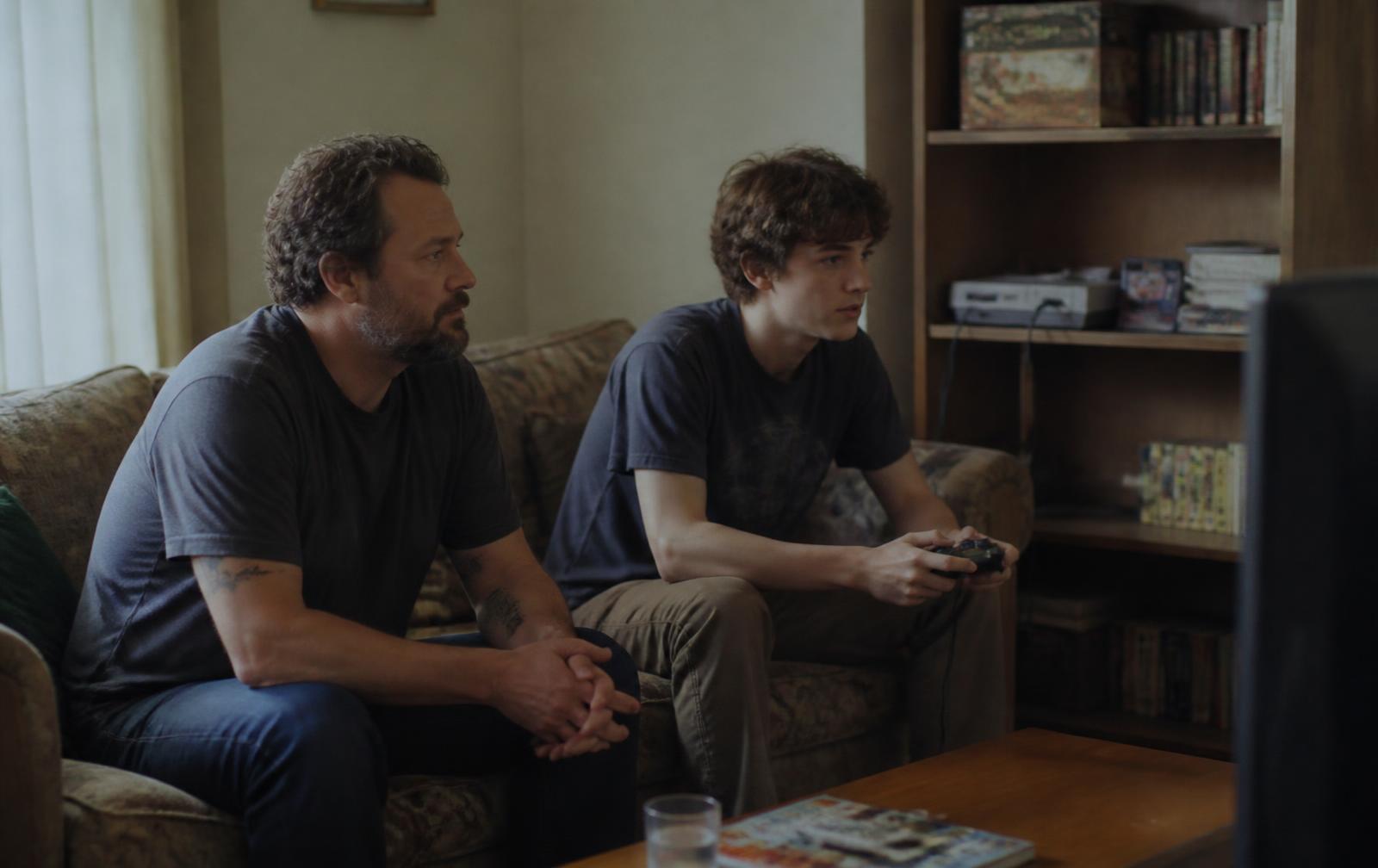
In an ordinary living room, an adult sitting on the floor near a shelf looks at an old game box held in both hands; a few cases and a controller lie nearby, with the television off in the background.
DECISION
Relaunch a franchise whose last installment was 8 years ago
POPULATION
1,4 million synthetic players, 16 profiles of relationship to the franchise
WHAT IS TESTED
6 relaunch configurations, 3 400 players interviewed individually
HORIZON
18 months post-release

THE PROBLEM

Eight years
without a new game
does not mean
eight years
without a history.

The question put to the studio was not “ do former players want a sequel ? ”. It was : how to reactivate an old cultural property, recruit a new generation, and avoid breaking the implicit contract the historical community still has with it.

The community was structurally aging : players from the first installment are now fifteen years older and have evolving gameplay expectations. The development budget was 68 million euros, with a break-even threshold set at 1,8 million units over 18 months. Neither the installed base alone nor an entirely new audience was mechanically sufficient.

Three directions remained open : strict preservation of historical mechanics, at the risk of feeling dated ; deep modernization, at the risk of betraying the community ; a hybrid combining the historical foundation with targeted modernization. Each implied a different communication positioning and timetable. Studio management used our system to test 6 relaunch configurations.

WHAT IS ESTABLISHED

  • a European game studio, cult franchise built across three installments
  • a last installment released 8 years ago, around 3,4 million units sold
  • an average critic score of 88/100 for that last installment
  • a strong community culture: forums, events, prolific fan content
  • a structurally aging historical community
  • a development budget of 68 million euros
  • a break-even threshold set at 1,8 million units over 18 months

WHAT DIFFERS FOR EACH GROUP

  • age and generation of entry into the franchise
  • prior exposure to the franchise
  • community engagement
  • relationship to evolving gameplay mechanics
  • sensitivity to community recognition
  • propensity to return to an old franchise
  • expectations of a relaunch installment

A VARIABLE : THE COMMUNITY PRESERVES AND TRANSFORMS

The product returns
in a world
to a community that kept
without it.

THE OFFICIAL BRAND IS DORMANT. THE COMMUNITY KEEPS GOINGLAST INSTALLMENTEIGHT YEARSREPLAYS, FORUMS, FAN CONTENTCOMMUNITY NORMSRELAUNCH INSTALLMENT

Conceptual diagram. It does not represent any measured value : it only identifies what happens when the organization stops publishing and the population continues to play, discuss and produce content around the franchise.

The case documents what matters for the decision : the relaunch does not meet the franchise as the studio left it, but the version the community preserved, with its forums, events and prolific fan content.

  1. 01WHAT THE PUBLISHER DOES FOR EIGHT YEARSNothing public. No new installment, no new promise, no renegotiated contract.
  2. 02WHAT THE COMMUNITY DOESIt replays, discusses, produces fan content, maintains forums and events.
  3. 03WHAT THIS PRODUCESInternal norms around what “this game” is, established without the publisher and sometimes against some of its past directions.
  4. 04WHAT THE RELAUNCH MEETSNot the franchise left behind in 2018, but the version the population preserved and transformed.

NOSTALGIA IS NOT CONSERVATISM

“ Recovering
the spirit ”
is not
“ recreating
the same game ”.

The simulation does not support the idea of a community hostile to any evolution. It documents the opposite : the same gameplay modernization receives 74 % acceptance with a recognition mechanism, and 32 % without.

  • WHAT THE COMMUNITY DOES NOT ASK FORStrict preservation of the last installment’s gameplay mechanics. The simulation does not support that reading.
  • WHAT IT ASKS FORExplicit recognition of its status as guardian of the franchise, and involvement in the creative process.
  • WHAT IS INVARIANTThe historical gameplay foundation, what makes the franchise still recognizable as itself.
  • WHAT CAN EVOLVEThe settings the community itself identifies as dated: the community names them, not the studio alone.

A MECHANISM : THE IMPLICIT CONTRACT

Players
think they know
think they know what
this game.

A heritage franchise carries a contract written nowhere. It combines what the studio actually delivered with what collective memory made of it. A relaunch can break it without the publisher consciously changing a promise.

OFFICIAL PROMISE

What the studio actually delivered across three installments: a foundation of gameplay mechanics, a level of challenge, an identity.

COLLECTIVE MEMORY

What the community retained, idealized, passed on, and sometimes hardened during eight years of absence.

IMPLICIT CONTRACT

The sum of the two. It is written nowhere, but it is enforceable: players think they know what this game is.

WHAT BREAKS IT

Not modernization itself, but modernization presented without recognition: 32 % acceptance versus 74 % with a recognition mechanism.

WHAT IS TESTED

Six ways
to define
what it means
to “ come back ”.

The six configurations combine a gameplay direction, communication positioning, teasing and release timetable, and a dialogue strategy with the historical community.

  1. 01STRICT PRESERVATIONPreserve historical gameplay mechanics, at the risk of feeling dated.
  2. 02DEEP MODERNIZATIONRedesign the mechanics to contemporary standards, at the risk of betraying the historical community.
  3. 03HYBRID DIRECTIONHistorical gameplay foundation preserved, targeted modernization of settings identified as dated.
  4. 04INTENSIVE SHORT TEASINGOfficial announcement 4 months before release, concentrated media campaign.
  5. 05PROGRESSIVE TEASINGAnnouncement 12 months out, monthly reveals, continuous dialogue with the community.
  6. 06AUDIENCE TARGETINGWinning 18-25-year-olds discovering the franchise, or winning back 35-50-year-old players.

3 400 synthetic players across the 16 profiles were interviewed individually, with the 6 relaunch configurations presented in progressive variations and dynamic follow-ups on turning points identified in real time : perception of fidelity, acceptance of modernization, sense of community recognition. Projections were calculated over 18 months.

A population
is not
“ the old
and the new ”.

SIMULATED POPULATION

The reconstructed population covers 1,4 million synthetic European and North American players, calibrated on public sector data — audiences of comparable franchises, demographic and behavioral data — and on the studio’s proprietary data : historical player base, history of community communication, engagement with fan content.

It is structured into 16 profiles crossing age, prior exposure to the franchise, community engagement, relationship to evolving gameplay mechanics and sensitivity to community recognition.

  • ENTRY GENERATION

    players from the first installment are now 15 years older and have evolving gameplay expectations

  • COMMUNITY ENGAGEMENT

    from passive forum reading to regular fan-content production

  • EXPOSURE TO THE FRANCHISE

    having played one, two or three installments, or none, does not produce the same expectation

  • RELATIONSHIP TO EVOLVING MECHANICS

    some historical players expect contemporary standards, others do not

  • SENSITIVITY TO RECOGNITION

    the most discriminating variable in the case: 74 % versus 32 % acceptance of the same modernization

  • COMMUNITY INFLUENCERS

    a small population whose influence exceeds its numerical weight

  • PLAYERS WITH NO MEMORY OF THE FRANCHISE

    18-25-year-olds discovering the franchise, with no pre-existing implicit contract

  • DISTANT FORMER PLAYERS

    35-50-year-olds who grew up with the franchise and moved away from regular play

These configurations reveal part of the population's heterogeneity. The simulation operates on synthetic individuals, not a handful of persona types : these are not representative figures, but distinct situations, constraints and options.

REACTIONS

The same game,
presented differently,
is not
not the same game.

  1. 01

    THE HISTORICAL COMMUNITY DOES NOT EXPECT FIDELITY, IT EXPECTS RECOGNITION

    The same gameplay modernization generates 74 % acceptance when accompanied by a community-recognition mechanism (priority closed beta, dialogue with creators, integration of internal cultural references), and 32 % when presented without it. The product is identical. The reading is not.

  2. 02

    WITHOUT RECOGNITION, MODERNIZATION IS READ AS OPPORTUNISTIC USE OF THE NAME

    In the configuration without a recognition mechanism, the simulation reveals structured community contestation: the relaunch is no longer interpreted as an evolution of the game, but as exploitation of brand capital by an organization that has stopped understanding why it existed.

  3. 03

    LONG TEASING LEVERAGES COMMUNITY-ENGAGEMENT MECHANICS

    Progressive teasing over 12 months generates 34 % higher commercial performance than intensive short teasing. Every reveal restarts internal dialogue; every community discussion broadens the anticipated audience. Duration is not a media execution detail: it is a decision variable.

  4. 04

    WINNING BACK AGING PLAYERS IS MORE PROFITABLE THAN WINNING A NEW GENERATION

    A positioning centered on 35-50-year-olds who grew up with the franchise delivers 22 % higher commercial performance than one centered on 18-25-year-olds. Higher purchasing power, strong propensity to return if activated, and influencer status within their close circle.

74 % versus 32 % acceptance depending on whether the modernization is accompanied by a recognition mechanism ; +34 % commercial performance depending on the length of teasing ; +22 % depending on the generation targeted. It is the same franchise, the same development budget, the same release year.

CORE AND PERIPHERY

What makes it
still part of the franchise,
and what does not
no longer part of it.

NOT EVERYTHING CARRIES THE SAME WEIGHT IN THE HERITAGEIDENTITYCOREAROUND IT : WHAT CAN EVOLVEGAMEPLAY COMFORTREADABILITYVISUAL DESIGNACCESSIBILITYDATED SETTINGSSECONDARY MODESHISTORICAL GAMEPLAY FOUNDATION PRESERVED, TARGETED MODERNIZATION OF SETTINGS IDENTIFIED AS DATED BY THE COMMUNITY

Conceptual diagram. The configuration selected by the studio distinguishes a preserved historical gameplay foundation from settings identified as dated by the community itself : the latter are what were modernized.

The optimum is not halfway between old and new. It consists in knowing which elements can evolve without the object ceasing to be recognizable. Too much preservation produces “ this game hasn’t moved ” ; too much unrecognized modernization produces “ this is no longer our game ”.

COMMUNITY INFLUENCERS

A small population
weigh heavily
on legitimacy
of the return.

The selected setup gives priority closed-beta access to players identified as community influencers. This is not a public-relations gesture : it is a decision about the order in which populations experience the game.

A SMALL POPULATION

Players identified as community influencers represent a fraction of the simulated population.

DISPROPORTIONATE WEIGHT

Their reading of the relaunch circulates through forums, events and fan content, and shapes the expectations of other players.

WHAT THE SELECTED ARRANGEMENT DOES

They are given priority access to the closed beta: they experience the game before forming the interpretation that will circulate.

WHY THE AVERAGE MISLEADS

An average acceptance score across all players hides this population’s structuring effect on collective reception.

In an ordinary living room, two people from different generations sit on a sofa looking at the same screen, one holding a controller; an older console and a few game cases are visible on a shelf.
Recruiting a new generation often passes through those who knew the franchise before it. Transmission is also a reception channel.

CASCADES

A population
shapes the opinion
of another population
before the experience.

The projections model community dynamics, fan-content cascades and word-of-mouth effects within player circles. A player with no memory of the franchise can form expectations from reactions produced by people who have eight years of history with it.

BEFORE PLAYING

  1. ANNOUNCEMENT
  2. HISTORICAL COMMUNITY
  3. FAN CONTENT AND DISCUSSIONS
  4. NEW PLAYERS
  5. EXPECTATION BEFORE EXPERIENCE

AFTER RELEASE

  1. EXIT
  2. FIRST EXPERIENCES
  3. CRITICAL RECEPTION
  4. SALES OVER 18 MONTHS

THE TIME OF LAUNCH

Twelve months
of dialogue,
or four months
of campaigning.

THE LAUNCH DOES NOT START ON RELEASE DAYCOMMUNITY DIALOGUE WINDOW : 12 MONTHSM−12OFFICIAL ANNOUNCEMENTM−8MONTHLY REVEALSM−3CLOSED BETA FOR COMMUNITY INFLUENCERSJ0EXITM+12OBSERVATIONSIMULATED : INTENSIVE SHORT TEASING AS REFERENCE, PROGRESSIVE TEASING OVER 12 MONTHS +34 % COMMERCIAL PERFORMANCEDEPLOYED : ANNOUNCEMENT AT 12 MONTHS, MONTHLY REVEALS BUILT WITH THE HISTORICAL COMMUNITY

Intensive short teasing concentrates attention and serves as the reference. Progressive teasing over 12 months generates 34 % higher commercial performance : each reveal restarts internal community dialogue, each discussion broadens the anticipated audience.

Duration is not a media constraint here. It is what allows a population to gradually rebuild expectations, and allows the publisher to demonstrate, reveal after reveal, what it has understood about the heritage.

COMPARISON

The six configurations,
assessed across three dimensions.

CONFIGURATIONFRANCHISE RECOGNITIONCOMMUNITY ACCEPTANCENEW-PLAYER RECRUITMENT
01Strict preservation of historical mechanicshighmediumlow
02Deep modernization without recognition mechanismlowlowmedium
03Hybrid direction, foundation preserved and targeted modernizationhighhighmedium
04Intensive short teasing 4 months before releasemediummediummedium
05Progressive teasing over 12 months with community dialoguehighhighhigh
06Hybrid, progressive teasing, closed beta and win-back of established playershighhighhigh

Qualitative comparison derived from the simulated configurations. The levels reflect the documented gaps : 74 % acceptance of modernization with a recognition mechanism versus 32 % without ; +34 % commercial performance for progressive teasing over 12 months versus intensive short teasing ; +22 % for winning back 35-50-year-old players versus acquiring 18-25-year-olds.

THE MOST ROBUST

Historical foundation preserved targeted modernization formalized recognition teasing over 12 months

THE MOST FRAGILE

Deep modernization no recognition mechanism or community dialogue

DECISION

What the decision
selected.

TO PRESERVE
The historical gameplay foundation.
TO MODERNIZE
The settings identified as dated by the community.
TO PROVE
The understanding of what mattered.
TO OPEN FIRST
The closed beta to influencers.
TO HOLD
Twelve months of dialogue, not four.

PROJECTION, THEN OBSERVATION

Twelve months
after release.

The studio selected the strategy combining a hybrid direction, a preserved historical gameplay foundation and targeted modernization of the settings identified as dated by the community ; progressive teasing over 12 months with monthly reveals built in dialogue with the historical community ; priority closed-beta access for players identified as community influencers ; and marketing positioning centered on winning back aging players, with a secondary discovery setup for new players.

At 12 months from release, cumulative sales reach 2,4 million units, above the 1,8 million break-even threshold and the projection of 2,1 million. The average critic score is 87/100, close to the last installment’s 88/100. The historical community embraced the relaunch : 82 % positive sentiment in community surveys, with fan-content proliferation exceeding the previous installment and no structured community contestation.

The studio approved development of the next installment using the same methodology. These values are those documented by the commissioning organization : they describe what was observed after the decision, without establishing exclusive causality between the setup and each of these movements.

CUMULATIVE SALES AT 12 MONTHS
2,4 million units, above the projected 2,1 million
AVERAGE CRITIC SCORE
87/100, close to the last installment’s 88/100
POSITIVE COMMUNITY SENTIMENT
82 % in community surveys
NEXT INSTALLMENT
development started using the same methodology
TAKEAWAY

The community
did not ask for
the return
did not want the old game.
It wanted
proof that the new one
understood
why it mattered.

The historical community of a cult franchise does not expect strict preservation of the last installment’s mechanics. It expects explicit recognition of its status as guardian, and involvement in the creative process. A formalized recognition mechanism — explicit dialogue, priority closed beta, integration of internal cultural references — transforms acceptance of modernization : 74 % acceptance, versus 32 % for the same modernization presented without it.

This principle extends beyond video games : relaunches of film sagas, cult series, literary properties and heritage brands with strong communities. It comes with a second lesson, contrary to the classic relaunch approach : winning back aging audiences is structurally more profitable than acquiring a new generation, by 22 % in this case. Higher purchasing power, strong propensity to return if activated, influencer status within the close circle.

POSSIBLE FUTURES

The same franchise.
Three ways to come back.

A

RESTORE

Strict preservation of historical gameplay mechanics

  • immediate recognition by the historical community
  • documented risk: feeling dated against current standards
  • limited recruitment beyond the installed base
  • the break-even threshold of 1,8 million units remains to be reached

B

REBOOT

Deep modernization of mechanics, without recognition mechanism

  • broader entry point for players with no memory of the franchise
  • 32 % acceptance from the historical community in simulation
  • structured community contestation in projections
  • the historical name becomes a contested asset rather than support

C

PASS ON

Historical foundation preserved, targeted modernization, formalized recognition, teasing over 12 months

  • 74 % acceptance of the modernization in simulation
  • +34 % commercial performance through progressive teasing
  • +22 % through winning back established players rather than acquisition
  • requires knowing precisely what belongs to the core

METHOD

Before recommending,
we tested reactions.

  1. 1,4 MILLION PLAYERS
  2. 16 PROFILES
  3. 6 CONFIGURATIONS
  4. 3 400 PLAYERS INTERVIEWED
  5. DYNAMIC FOLLOW-UPS
  6. 18 MONTHS
  7. DECISION

1,4 million reconstructed synthetic players, 16 profiles crossing age, exposure to the franchise, community engagement and relationship to evolving mechanics, 3 400 players interviewed individually across 6 relaunch configurations, dynamic follow-ups on turning points, and an 18-month projection modeling community dynamics, fan-content cascades and word-of-mouth effects.

This case adds a capability to the library : testing a relaunch not as a product launch, but as the meeting between an organization and a community that already has eight years of autonomous history with the brand. The population is not merely exposed : it discusses, interprets, transmits, and becomes the environment in which the decision is received.

A real case.
An unnamed franchise.

This case comes from a simulation conducted for a European development studio. The commissioning organization is not named, the franchise cannot be identified, no personally identifiable data entered the system, and the detailed results remain the property of the commissioning organization. The comparisons between configurations published here are qualitative ; the quantitative values cited are those documented by the commissioning organization.

The simulation cannot determine whether a game will be good, which art direction to adopt, or how to design a gameplay mechanic. Those questions belong to the studio, its creative teams and production. The simulation operates upstream of the decision, to compare the possible consequences of several ways of returning.

Your next decision

Which decision do you want to explore?

Describe your need. We can point you to the right level of support.

What if you tested
your next decision?

State your decision. See the future it produces.

Explore the product