URBAN PLANNING & MOBILITY · TRANSFORMATION

“How do you build a tramway along a historic shopping corridor without driving out the independent shops that give the neighborhood its soul?”

A French metropolitan authority was preparing a structuring 8 km tramway line, a €240M investment, meant to open up 40,000 residents, cut car traffic on the corridor by 30%, and carry 8,000 passengers per hour at peak times. Commissioning: 30 months after construction began.

The route ran through a historic shopping corridor of 340 shops, 60% of them independents with fragile cash reserves. The precedent set by another metropolitan area five years earlier was on everyone's mind: a 40% commercial die-off during construction.

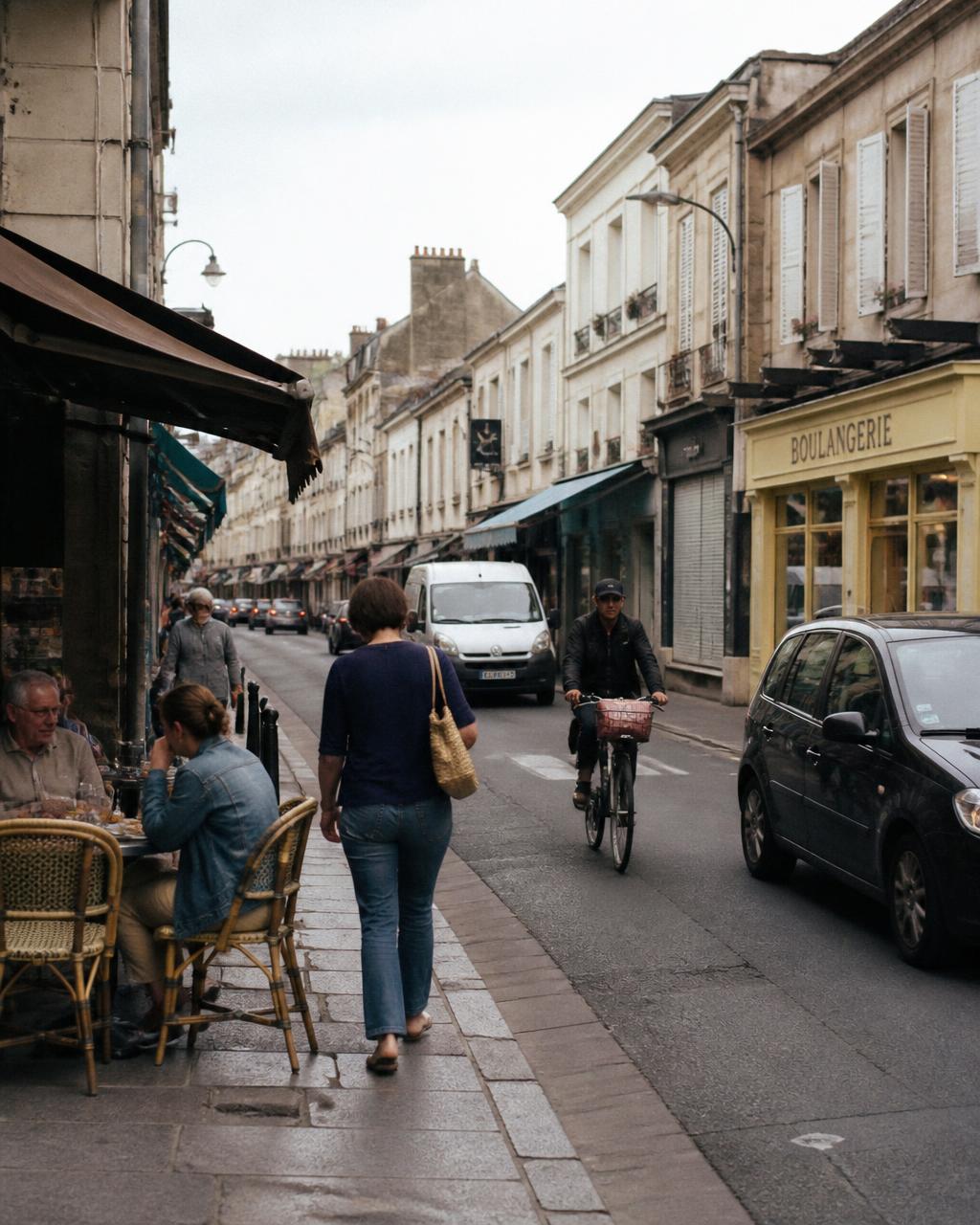
An ordinary shopping street before construction: small independent shops, a busy café terrace, pedestrians, a cyclist, a delivery van and cars in traffic, natural light.
DECISION
Build a structuring tramway along 8 km of a historic shopping corridor
INVESTMENT
€240M: metropolitan authority 55%, region 25%, state 20%
EXPOSED FABRIC
340 shops, 60% of them independents with fragile cash reserves
HORIZON
Commissioning at 30 months, trajectories projected over 36 months

THE PROBLEM

The construction
was temporary.

The disappearance

of the shops

would not

have been.

In the metropolitan area that set the precedent, more than a third of independent shops had disappeared during construction and never recovered after the tramway opened. A €12M compensation plan had produced no measurable result.

Evaluation reports had concluded that the corridor underwent an irreversible sociological transformation: closures, vacant units, then independent shops replaced by chains with deeper cash reserves.

So the problem wasn't building the tramway. It was preventing a temporary construction project from producing an irreversible commercial transformation. The project leadership brought in our system three weeks before the plan was due to be presented to the metropolitan council.

WHAT THE DECISION HAD TO RESOLVE

  • HOW TO PHASE THE WORKSin long or short segments, and with what interfaces between segments.
  • HOW TO COMPENSATEuniform or targeted compensation, with what thresholds and durations.
  • HOW TO TALK TO CUSTOMERSwhat communication would avoid the perception that the neighborhood was being abandoned.
  • WHAT THE STUDIES COULDN'T SETTLEstandard commercial-impact studies could not arbitrate between the scenarios under consideration.

A DISTINCTION: A TRANSPORT LINE, AN ECOSYSTEM

For the metropolitan authority,
it's a route.

For the neighborhood,

it's already

a system

that works.

The same stretch of road carries two different objects: infrastructure to be built, and a commercial fabric already in operation. The project was optimizing the first; the risk sat on the second.

  • WHAT THE AUTHORITY SAWa transport line: 40,000 residents newly connected, −30% car traffic, 8,000 passengers/hour at peak.
  • WHAT THE NEIGHBORHOOD LIVED340 shops already operating, including a historic fabric that defines the corridor's identity.
  • THE REGIONAL PRECEDENTa comparable metropolitan area, five years earlier: a 40% commercial die-off during construction.
  • WHAT HADN'T WORKEDa €12M compensation plan, with no measurable success, and a sociological transformation judged irreversible.

A MECHANISM: THE SIGNAL MATTERS MORE THAN THE NUISANCE

The construction
drove away fewer

customers than

the impression

that the neighborhood

had stopped living.

A — THE ABANDONMENT LOOPCONSTRUCTIONSTREET LESS LEGIBLE, LESS FOOT TRAFFICLESS ANIMATIONSIGNAL: “THERE'S NO POINT GOING THERE ANYMORE”FURTHER DROP IN FOOTFALL — 40% EXODUSB — THE CONTINUITY LOOPSAME CONSTRUCTION, SAME TECHNICAL PHASINGACTIVE SIGNAGE: “THE SHOPS ARE OPEN”MONTHLY MICRO-EVENTS IN THE CORRIDORSIGNAL: “THE NEIGHBORHOOD GOES ON”COMMERCIAL EXODUS BROUGHT DOWN TO 12%THE TECHNICAL PHASING IS IDENTICAL IN BOTH LOOPS

Standard analysis attributes the commercial exodus to barriers, dust, noise and degraded access. The simulation identifies something else: an implicit signal sent to residents — “there's no point going there anymore.”

Active signage and monthly micro-events — pop-up markets, exhibitions, cultural programming — bring the simulated exodus down from 40% to 12%, with no change to the technical phasing. The most effective response is not, first and foremost, a technical one.

WHAT IS TESTED

Seven phasing
scenarios, eleven

compensation and

communication mechanisms.

This is not a space of seven communication variants. It is a systemic decision space: each phasing scenario is coupled with compensation and communication mechanisms in variable combinations.

  1. 01PHASING: SHORT SEGMENTS OR LONG SEGMENTSHow the works are segmented and the interfaces between segments, with or without rotation from one segment to the next.
  2. 02COMPENSATION: UNIFORM OR TARGETEDAn envelope spread across the whole corridor, or concentrated on identified shops.
  3. 03COMPENSATION THRESHOLDS: 3, 6 OR 12 MONTHSThe exposure duration at which compensation kicks in.
  4. 04COMMUNICATION: INSTITUTIONAL OR ASSOCIATION-LEDCarried by the metropolitan authority, or by an association of corridor shopkeepers.
  5. 05TARGETING: ANCHOR SHOPS OR AGE CRITERIONProtection based on function within the system, or on how long a shop has been established.
  6. 06EVENTS: MONTHLY OR QUARTERLYFrequency of pop-up markets, exhibitions and programming in the corridor.

2,800 synthetic residents, customers and shopkeepers were interviewed individually, with dynamic agents re-engaged at tipping points identified in real time.

A corridor
cannot be described

by an average

revenue

figure.

The reconstructed population covers 840,000 residents and users of the target corridor, calibrated on public data — INSEE at the IRIS level, metropolitan commercial-flow data, regional retail observatories — and on proprietary data from the territorial Chamber of Commerce and Industry covering the corridor's 340 shops.

It is structured into 19 typologies crossing how long a shop has been established, its function within the corridor, its operating structure, its estimated cash reserves and its target customer base. No personal data was entered into the system.

  • CONTRASTING SHOP AGE

    bakeries over 40 years old, family restaurants, artisans, and recent urban concepts.

  • FUNCTION WITHIN THE CORRIDOR

    anchor shops, convenience shops, specialty shops: three roles, three exposures.

  • OPERATING STRUCTURE

    independent, franchise, subsidiary: cash-reserve depth is not the same.

  • CUSTOMER BASES AND VISIT HABITS

    target customers and their relationship to the neighborhood: what shifts elsewhere, and what comes back.

These configurations make part of the population's heterogeneity visible. The simulation runs on synthetic individuals, not on a handful of persona archetypes.

REACTIONS

The same construction project,
segmented

differently,

does not destroy

the same

neighborhood.

  1. 01

    THE REAL RISK ISN'T THE NUISANCE, IT'S THE ABANDONMENT SIGNAL

    Customers don't stop coming because of barriers, dust or noise. They stop coming because the neighborhood sends an implicit signal: there's no point going there anymore. Active signage — “the shops are open” — paired with monthly micro-events in the corridor, brings the commercial exodus down from 40% to 12%, without changing the technical phasing of the works.

  2. 02

    PHASING DETERMINES 70% OF COMMERCIAL SURVIVAL

    Phasing in short 3-month segments, i.e. 12 weeks of maximum impact per shop, preserves 78% of independent shops. Phasing in long 8-month segments, technically optimal, causes 34% of them to disappear: cash reserves don't hold beyond 4 months without customer traffic. This finding contradicted the approach favored by the project's engineering firm.

  3. 03

    HISTORIC SHOPS ARE THE MOST FRAGILE

    Shops established for more than 20 years hold up less well: older customers who easily shift to other neighborhoods, owners nearing retirement who take the opportunity to close, a model built on customer habits that are quickly disrupted. Shops less than 5 years old hold up better: younger, more mobile customers, digital tools already in place, an entrepreneurial project still in its establishment phase.

  4. 04

    THE MESSENGER MATTERS MORE THAN THE MESSAGE

    Communication carried by the metropolitan authority gets 34% favorable reception: it is perceived as an institutional dressing-up of the constraint. Carried by an association of corridor shopkeepers, with the neighborhood's own visual codes and tone, the same communication gets 71%. Shopkeepers talk to shopkeepers, in the customers' own words.

  5. 05

    SHOPS ARE INTERDEPENDENT

    The closure of an anchor shop — a café-restaurant, a landmark bakery, a signature boutique — triggers a drop in footfall for neighboring shops for 8 to 14 weeks, regardless of the state of their own construction work. Targeting anchor shops, identified by their function rather than their revenue, produces a cumulative preservation effect 22 points higher than a uniform mechanism.

  6. 06

    THE POST-CONSTRUCTION OUTCOME IS DECIDED DURING CONSTRUCTION

    A corridor that has lost 34% of its independents does not recover within the 24 months following opening, even with passenger flow matching projections: vacant units are mostly taken over by chains. A corridor that has preserved 82% of its independents keeps its identity and attracts new independents within the 12 months following opening.

A MECHANISM: A TECHNICAL VARIABLE IS A SOCIAL VARIABLE

Technical phasing
was, in reality,

a commercial

policy.

THE SAME PROJECT, TWO WAYS TO SEGMENT ITSHORT SEGMENTS — 3 MONTHS, 12 WEEKS OF IMPACT PER SHOPINDEPENDENT SHOPS PRESERVED — 78%LONG SEGMENTS — 8 MONTHS, MAXIMUM CONSTRUCTION CONTINUITYINDEPENDENT SHOPS LOST — 34%CASH RESERVES DO NOT HOLD BEYOND 4 MONTHS WITHOUT CUSTOMER TRAFFICTHE ENGINEERING CHOICE IS THE FIRST COMMERCIAL-POLICY CHOICE

The engineer optimizes construction continuity. The shopkeeper bears the exposure duration. The same parameter — segment length — therefore carries two simultaneous functions: industrial performance and economic survival.

A decision's variables don't stay within the silo that produced them. An industrial optimum can produce a bad urban optimum: a decision perfectly rational within its own silo becomes irrational at the scale of the system.

The construction exists. So does the neighborhood.

A MECHANISM: HISTORY IS NOT ABSORPTION CAPACITY

The commercial
heritage

contained

the most fragile

players.

You expect age to produce resilience. The simulation shows the opposite: it's the shops established for more than 20 years that hold up the least. This is exactly why real individuals and structures must be simulated instead of starting from intuitive assumptions.

  • SHOPS OVER 20 YEARS OLDolder customers who easily shift to other, accessible neighborhoods
  • CONSTRUCTION AS AN EXITowners nearing retirement who close up, often with no successor
  • SHOPS UNDER 5 YEARS OLDyounger, more mobile customers, delivery, online booking, social media already in place
  • WHAT THIS CHANGESa uniform plan protects recent shops that didn't need it

A MECHANISM: A SHOP'S VALUE EXCEEDS ITS REVENUE

Three hundred
and forty shops,

a single system.

A CORRIDOR, NOT A SUM OF SHOPSBAKERYCAFÉ-RESTAURANTBOOKSHOPBOUTIQUESPECIALTY SHOPSERVICESTHE ANCHOR SHOP CLOSESFEWER REASONS TO COME TO THE STREETFOOT TRAFFIC IN THE NEIGHBORHOOD DROPSNEIGHBORING SHOPS LOSE FOOTFALL FOR 8 TO 14 WEEKSEVEN WHERE THEIR OWN CONSTRUCTION WORK IS FINISHED OR MINIMAL

A shop carries a direct value — sales, jobs — and a systemic value: foot traffic it brings, the street's identity, a reason to come, an effect on its neighbors. The second doesn't show up in its revenue.

Compensation allocated on revenue alone therefore allocates resources poorly. Targeting anchor shops, identified by their function within the system, produces +22 points of cumulative preservation compared with a uniform mechanism.

A TEMPORAL MECHANISM: IRREVERSIBILITY

A temporary
shock can

produce an

irreversible

consequence.

The tramway was not going to recreate what construction would have destroyed. The commercial trajectory after opening depends less on the quality of the launch than on the fabric preserved during the works — and the chain that runs from a closure to a new commercial structure cannot be reversed.

  • MOMENT 1 — THE CONSTRUCTIONtemporary by construction: 12 weeks of impact per shop in short segments, 8 months in long segments
  • MOMENT 2 — THE CLOSURE, THEN THE VACANT UNITbeyond roughly 4 months without customer traffic, independents' cash reserves do not hold
  • MOMENT 3 — THE NEW OCCUPANTvacant units are mostly taken over by chains, which have deeper cash reserves
  • MOMENT 4 — THE NEW COMMERCIAL STRUCTUREno natural recovery within the 24 months following opening: the corridor's sociology has changed

COMPARISON

The architectures tested,
read through what they preserve.

ARCHITECTURECONTENTPRESERVATIONCOSTDOCUMENTED EFFECT
01Phasing in long 8-month segmentsmaximum construction continuity on each zone, industrial optimum34% disappearancenot publishedcash reserves do not hold beyond 4 months without customer traffic
02Phasing in short 3-month segments12 weeks of maximum impact per shop, rotating work sites78% preserved+4% industrial overcostprimary lever for preserving the commercial fabric
03Uniform compensation across the whole corridorsimple rule, envelope spread across the 340 shopsbaseline€12M under considerationalso protects recent, more resilient shops that didn't need it
04Targeted compensation for historic and anchor shopsprotection by function within the system and by age of establishment+22 points of cumulative preservation€8Mlasting effect on the fabric, at a reduced envelope
05Combined architecture retainedshort segments, targeted compensation, association-led communication, monthly events+22 points of preservation€8M and +4% industrial+18 points of post-construction footfall vs. alternatives tested

Only the dimensions for which the case documents measurements carry numeric values. “Not published” is kept rather than an estimate.

SHORT SEGMENTS OF 3 MONTHS

12 weeks of impact per shop → 78% of independents preserved

LONG SEGMENTS OF 8 MONTHS

Continuous exposure → 34% of independents disappear

THE ACTUAL ROLLOUT

More expensive
in engineering,

cheaper

in compensation.

The metropolitan council adopted phasing in short 3-month segments, renegotiated with the engineering firm after a month of technical discussion, with a 4% industrial overcost accepted by the project owner.

Compensation was targeted at the historic shops and anchor shops identified by the project committee: €8M instead of the €12M under consideration for a uniform mechanism. An association of corridor shopkeepers was formed and given financial support to carry customer communication.

Twelve major monthly events were organized in the corridor, drawing an average of 4,000 visitors per event, complemented by ongoing social media communication and a quarterly print newsletter distributed in the neighborhood.

ARBITRATION

What the decision
settled on.

TO RENEGOTIATE
The technical phasing: it decides each shop's exposure duration, and therefore its survival.
TO TARGET
Historic shops and anchor shops, identified by their function within the corridor.
TO DELEGATE
Customer communication to legitimate voices in the neighborhood, not to the institution.
TO MAINTAIN
Symbolic and sensory activity throughout the construction period.
TO PROTECT
The existing commercial fabric, before hoping to benefit from the tramway's future footfall.

PROJECTION, THEN OBSERVATION

Thirty months
later.

Over the first 24 months of construction, the commercial footfall trajectory tracked the projections with an average gap below 5%. Three episodes of local pushback were identified, in areas where the event calendar had fallen behind; they were resolved with reinforced support.

At 30 months into full rollout, i.e. 6 months after the tramway entered service, independent preservation reaches 82%, above the 78% projection. Post-construction footfall is up 24% versus the pre-construction period, against a projected +18%. The commercial occupancy rate stands at 96%, versus 91% before construction.

No vacant unit was taken over by a chain: the few vacancies were filled by new independent shops. The metropolitan authority has rolled the mechanism out across three other structuring transport projects in preparation.

These figures describe what was observed after the decision. They establish no exclusive causality between the strategy adopted and any of these movements.

INDEPENDENT SHOPS PRESERVED
82%, above the 78% projection
POST-CONSTRUCTION FOOTFALL
+24% vs. pre-construction, against a projected +18%
COMMERCIAL OCCUPANCY RATE
96%, versus 91% before construction
VACANT UNITS TAKEN OVER BY CHAINS
none: the few vacancies were filled by new independents
COST OF THE PROTECTION MECHANISM
€8M targeted, versus €12M for the uniform plan
SIMULATION COST / VALUE PROTECTED
1 : 128

LESSON

The shops didn't
need protecting

from the

tramway.

What needed protecting was the commercial ecosystem from the construction. Once in service, the tramway does not recreate a fabric that 24 months of construction have dissolved: a corridor that has lost 34% of its independents does not recover within the 24 months following opening, even with passenger flow matching projections.

The construction was temporary. The disappearance of the shops would have been irreversible. And the parameter that decided that tipping point wasn't in the compensation plan: it was in the technical segmentation of the construction works.

POSSIBLE FUTURES

One tramway.
Three different neighborhoods on arrival.

A

OPTIMIZE THE CONSTRUCTION

Phasing in long 8-month segments, maximum industrial continuity

  • better construction productivity, no rotation overcost
  • 8 months of continuous exposure per shop
  • 34% of independent shops disappear
  • no recovery within the 24 months following opening

B

COMPENSATE UNIFORMLY

A broad €12M financial plan spread across the whole corridor

  • simple rule, legible for all 340 shops
  • resources also allocated to more resilient, recently opened shops
  • under-protection of anchor shops, which structure footfall
  • the regional precedent had mobilized €12M with no measurable success

C

PROTECT THE ECOSYSTEM

Short 3-month segments, targeted compensation for historic and anchor shops, shopkeepers' association, monthly events

  • 78% of independent shops preserved in projection
  • +22 points of commercial preservation, +18 points of post-construction footfall
  • €8M of compensation instead of €12M
  • +4% industrial overcost for the project owner to absorb

METHOD

Before digging,
we let the

neighborhood live

for thirty-six months.

  1. 840,000 RESIDENTS AND USERS
  2. 19 TYPOLOGIES
  3. 2,800 INDIVIDUALS INTERVIEWED
  4. 7 PHASING SCENARIOS
  5. 11 COMPENSATION AND COMMUNICATION MECHANISMS
  6. DYNAMIC AGENTS
  7. 36 MONTHS OF TRAJECTORIES
  8. 133 TRAJECTORIES PER SCENARIO
  9. IRREVERSIBLE TIPPING THRESHOLDS

840,000 synthetic residents and users calibrated on public data and on proprietary data from the territorial Chamber of Commerce, 19 typologies, 2,800 residents, customers and shopkeepers interviewed individually across 7 phasing scenarios coupled with 11 compensation and communication mechanisms, then projection of footfall trajectories over 36 months of construction and post-construction, modeling spillover effects between adjacent shops and dynamics of vacant-unit reoccupation: 133 distinct trajectories per scenario, monthly critical points and irreversible tipping thresholds.

This case adds four mechanisms to the library: a technical variable can be the most important social variable; a population reacts to a place's symbolic state and not only to its objective nuisances; the actors within a territory are interdependent, the disappearance of one changing the survival odds of others; a temporary shock can produce an irreversible transformation.

A real case.
An unnamed metropolitan area.

This case comes from a simulation carried out for a French metropolitan authority facing a €240 million structuring transport project. The client is not named, no personal data was entered into the system, and the detailed results remain the client's property.

The simulation does not decide the route, the budget, or the project's political calendar. It addresses the consequences, across different populations, of several phasing, compensation and communication architectures.

Your next decision

Which decision do you want to explore?

Describe your need. We can point you to the right level of support.

What if you tested
your next decision?

State your decision. See the future it produces.

Explore the product