FINANCIAL SERVICES · NETWORK TRANSFORMATION

“How do you announce the gradual removal of 1,200 cash machines in rural areas without triggering a reputational crisis?”

A European national bank has seen usage of its cash machines erode for three years in towns with fewer than 3,500 residents. The plan calls for removing 1,200 machines over three years — about 22% of the rural fleet — for a projected saving above €42 million a year at maturity.

The question is not whether customers still use these machines. It is what their disappearance means, place by place and situation by situation, and how that reading spreads.

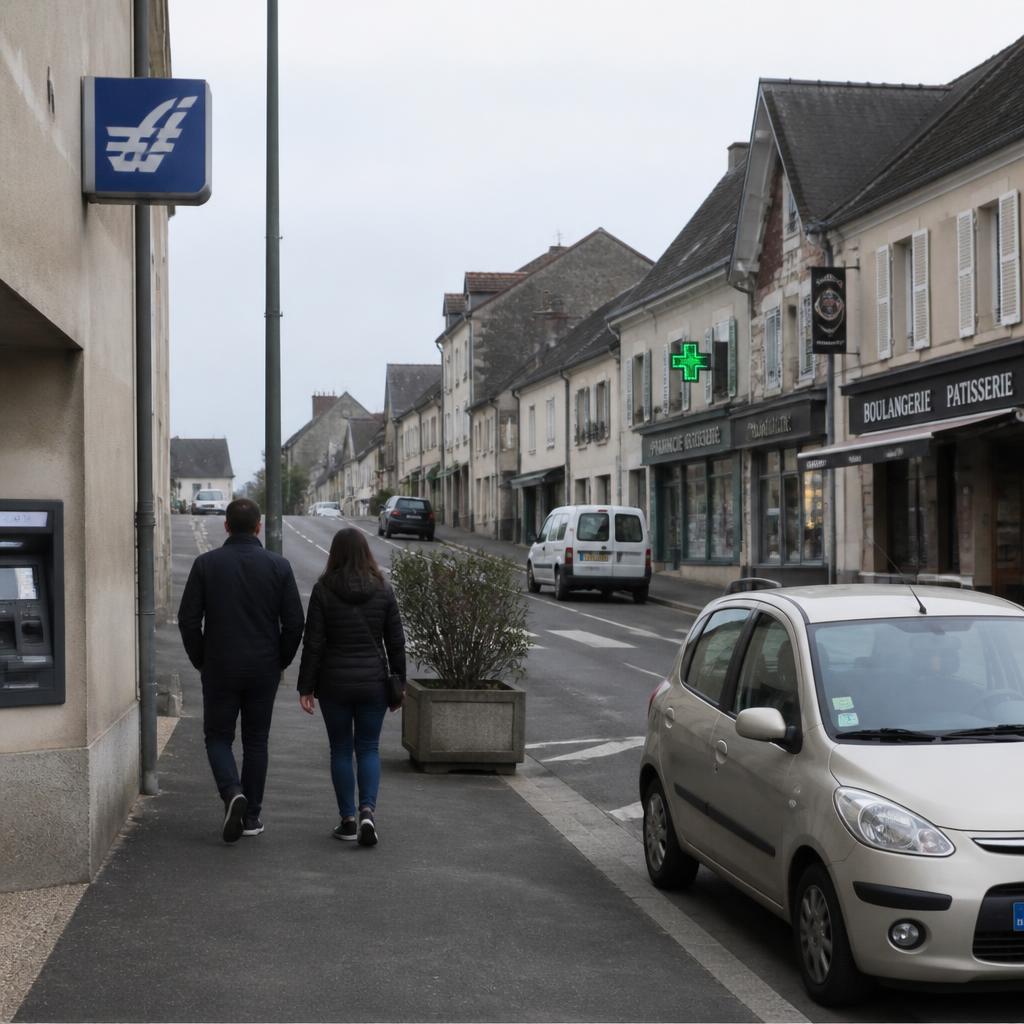
A shopping street in a French small town at midday: bakery, pharmacy, parked cars, two people walking on the pavement, a cash machine at the edge of the frame.
DECISION
Announce the gradual removal of 1,200 cash machines in rural areas
POPULATION
1.2 million rural customers, 12 coherent demographic segments
WHAT'S TESTED
5 communication and scheduling scenarios
HORIZON
12 weeks of projection after the announcement

THE PROBLEM

A rarely used service
can remain

very important.

The operating data is unambiguous: rural cash-machine usage is declining 4.2% a quarter, electronic payments are rising, remote banking is becoming the norm. Each machine costs an average of €38,000 in annual maintenance.

This data measures usage. It does not measure what the point represents: an occasional withdrawal option, a fallback, autonomy, a service for local shops, a signal that services are being maintained in the area.

The question put to the executive committee was therefore not how many times the machine is used, but what its disappearance changes — and how that disappearance will be told. Two industry precedents had led one network to restore half the machines it had removed, and another to trigger a reading of condescending abandonment relayed up to the national level.

WHAT'S THE SAME FOR EVERYONE

  • a European national banking network
  • 1,200 machines removed over 3 years, about 22% of the group's rural fleet
  • footfall declining 4.2% a quarter in towns with fewer than 3,500 residents
  • an average annual maintenance cost of €38,000 per machine
  • a projected saving above €42 million a year at maturity
  • a compensation investment estimated at €8 million in the first year
  • two industry precedents that produced a reversal and a reputational crisis

WHAT DIFFERS FOR EACH

  • actual use of the machine
  • mobility and vehicle availability
  • distance and accessibility of the next point
  • relationship to cash and digital services
  • local density of other services
  • local political sensitivity and media exposure

A VARIABLE: OPTION VALUE

“I rarely use it”
does not mean

“I can do without it.”

  1. 01FREQUENCYHow often is the machine used? Only transaction data answers this question.
  2. 02AVAILABILITYThe point exists, is reachable, works. This quality produces no transaction.
  3. 03OPTION“I can do it if I need to.” The possibility has value even when it is not exercised.
  4. 04AUTONOMYNot depending on someone else, a long trip, or fixed hours to access cash.
  5. 05PRESENCEA visible bank facility in town is also read as a sign that services are being maintained.
  6. 06DISAPPEARANCERemoval takes away all of these layers at once, not just the measured transaction.

The value of an infrastructure is not reducible to its usage rate. Part of that value lies in the fact that it remains available, including for those who no longer use it.

USAGE IS NOT VALUE

73% no longer withdraw.
Rejection stays

the majority view.

In the source case, 73% of rural segments had not used the machine for eighteen months, having switched to supermarket withdrawals or fully digital banking. This shift does not produce acceptance of the closure. It coexists with a structured rejection, one that the low-usage narrative reinforces rather than reduces.

WHAT A USAGE RATE MEASURES

Withdrawals made over a period. In the source case, 73% of rural segments had not used the machine for 18 months.

WHAT IT DOES NOT MEASURE

Rejection remains massive. It is not about the lost function, but about what the closure means.

WHAT CAN COEXIST

Paying entirely by card, not having withdrawn cash for a year and a half, and still opposing the removal of the point.

WHAT SHIFTS

Explaining low usage does not reduce rejection: this message validates the perception of indifference and worsens it.

A user/non-user split makes the decision impossible to inform. The case's 12 segments cross age, place of residence, banking habits, mobility, local political sensitivity and media exposure.

WHAT'S TESTED

The same removal.
Several ways

to announce it.

The executive committee had 5 communication scenarios tested, combining timing, the scope of the announcement, the channel used, and the presence or absence of a compensation scheme.

  1. 01BLUNT ANNOUNCEMENTThe whole plan presented at once, as a network rationalisation, via the national daily press.
  2. 02PHASED ANNOUNCEMENT BY SUB-REGIONThe same plan spread over time, place by place, with no featured compensation scheme.
  3. 03ANNOUNCEMENT PAIRED WITH A MOBILE SERVICERemoval announced alongside the rollout of a mobile banking service designed for these areas.
  4. 04ANNOUNCEMENT PAIRED WITH A POSTAL PARTNERSHIPCash access maintained through the branches of a major national postal operator.
  5. 05CASCADING ANNOUNCEMENTPrefects of the areas concerned, then mayors, then regional press, then national press, over six weeks.

2,400 synthetic customers, distributed proportionally across the 12 segments, were exposed to the 5 scenarios in randomised order to neutralise learning effects, with an average of 7 follow-up questions per person. Each scenario's media trajectory was then projected over 12 weeks, modelling likely relays: regional press, associations, local elected officials, shopkeeper unions, local social networks, national press.

The same closure
does not take away

the same thing

from everyone.

SIMULATED POPULATION

The reconstructed population covers 1.2 million retail customers of the network, calibrated on public data and proprietary segments. No identifiable data enters the system.

It is structured into 12 locally coherent demographic segments, cross-referencing age, place of residence, local political sensitivity, banking habits, relationship to rurality, and media exposure.

  • ESTABLISHED DIGITAL USAGE

    banking managed entirely remotely, withdrawals abandoned long ago, no reliance on the physical point

  • NON-USE WITH OPTION VALUE

    no withdrawal for eighteen months, yet opposed to removal: the possibility mattered more than the use

  • REGULAR CASH USE

    cash used for part of everyday spending, direct functional loss in case of closure

  • SHOPKEEPERS AND TRADESPEOPLE

    cash flows tied to their activity, dependence on the local point for change and deposits

  • CONSTRAINED MOBILITY

    no vehicle permanently available, schedules poorly compatible, dependence on someone else for transport

  • MULTI-BANKED CUSTOMERS

    several institutions, several possible points: the closure is absorbed without reorganisation

  • URBAN SENIORS

    no machine removed near them, yet strongly identifying with the fate of rural areas

  • LOW INVOLVEMENT

    no settled position: the reaction will depend on the narrative available at the time of the announcement

These configurations make part of the population's heterogeneity visible. The simulation covers synthetic individuals, not a handful of persona types.

REACTIONS

Usage was not
what decided the reaction.

  1. 01

    REJECTION IS NOT ECONOMIC, IT IS SYMBOLIC

    73% of rural segments had not used the machine for 18 months, having switched to supermarket withdrawals or fully digital banking. Yet rejection remains massive: the 47 motivations identified converge on the same structure. It is not the function that is at issue, it is the political signal of its disappearance. The rational message about low usage worsens the rejection, because it validates the perception of indifference.

  2. 02

    THE REACTION SPILLS BEYOND THE GEOGRAPHIC SCOPE

    Urban senior customers, living in cities where no machine would be removed, identify with the fate of rural populations: “today it's them, tomorrow it's us.” The reputational impact reaches 34% of the customer base, well beyond the areas targeted. Communicating only to the affected zones underestimates the real spread.

  3. 03

    THE ALTERNATIVE'S VALUE LIES IN WHAT IT ACKNOWLEDGES

    The most powerful lever identified is neither the gradual announcement nor the mobile service: it is the operational partnership with a major national postal operator, perceived as a public acknowledgment of the right to cash access. Announced last, the same scenario gets 45% acceptability; announced first, 67%. The scheme is identical, the reading is not.

  4. 04

    THE CHANNEL IS PART OF THE CONTENT

    A national announcement via the daily press gets 41% initial acceptability. The same decision announced in a cascade — prefects, then mayors, then regional press, then national press, over six weeks — gets 71%. Local elected officials relay the scheme as a negotiated regional agreement, not as a decision imposed from headquarters.

Two customers can receive the same announcement and draw two opposite conclusions. For one, “they're removing a machine nobody uses.” For the other, “they're leaving.” The bank talks about a network; part of the area hears a decision about its place.

ACCUMULATION

An isolated event,
or “yet another service

leaving.”

The same decision can be received on its own, or folded into a broader local narrative. The source case does not document the timeline of services closed in each town concerned. It does document the effect of the narrative, though: rejection is not about the lost function, but about what the closure says about the area.

  • AN ISOLATED EVENTThe closure is read for what it is: a rarely used piece of equipment disappearing, with or without an alternative.
  • A SERIESThe same closure can be read as one more instance in a story of successive service withdrawals.
  • WHAT CHANGES THE READINGIt is not the object removed, it is the narrative the decision joins at the moment it is announced.
  • WHAT THIS PRODUCESIn the source case, rural segments' rejection is not about the function: it is about the signal of abandonment.

BEFORE / AFTER

The decision does not remove an object.
It reshapes a space of possibilities.

BEFOREHOMEWITHDRAWAL POINTSHOPSSERVICESAFTERHOMESHOPSSERVICESNEXT POINT

A conceptual diagram, with no geographic claim. Before, the withdrawal point is part of the set of services reachable from home. After, the shops and services remain, but cash access moves to a more distant point.

This same change does not create the same constraint for everyone: it depends on vehicle availability, schedules, routes already travelled, and the alternatives genuinely accessible locally.

SAME DISTANCE, DIFFERENT VEHICLE

The trip to the next point is an ordinary detour for one person, and something to organise for another.

SAME DISTANCE, DIFFERENT SCHEDULES

A point accessible during working hours is not accessible to someone working those same hours elsewhere.

SAME DISTANCE, DIFFERENT ROUTES

If the next point sits on a route already travelled, the constraint nearly disappears.

SAME DISTANCE, DIFFERENT ALTERNATIVES

The local density of other services determines what remains possible once the machine is removed.

WHAT A WITHDRAWAL VOLUME SAYS

The intensity of use over a period. It indicates what was done, not what remains possible.

WHAT AN OPTION VALUE SAYS

What the disappearance takes from those who no longer used the point: a fallback, autonomy, a presence.

In a local shop, a shopkeeper behind a wooden counter serves a customer who came to buy a newspaper.
Around the banking point, the area keeps functioning through its other points of contact. It is within this human and commercial network that an alternative must become genuinely accessible in order to exist.

SECOND-ORDER EFFECTS

A closure does not only
change an operating cost.

USAGE

it can be near zero and the closure still stays contested

NARRATIVE

an operating decision can become a national political topic

SCOPE

34% of the customer base reacts, beyond the areas concerned

TIME

beyond 8 weeks without visible compensation, rejection becomes structural

Making these effects visible does not indicate which network policy to adopt. It indicates where an operating decision stops being read as one.

COMPARISON

Five scenarios,
read across four dimensions.

SCENARIONETWORK REDUCTIONACCESS MAINTAINEDACCEPTABILITYREPUTATIONAL RISK
Blunt announcement, whole plan presented at oncehighlowlowhigh
Phased announcement by sub-region, with no featured compensationhighlowmediumhigh
Removal paired with a mobile banking servicemediummediummediummedium
Removal paired with a postal partnership, announced up frontmediumhighhighmedium
Cascading announcement — prefects, mayors, press — with partnership and mobile servicemediumhighhighlow

A comparative reading drawn from the simulated reactions. No scenario is free of cost. A fast removal maximises economic efficiency and concentrates friction. A conservative approach protects local presence and keeps a fleet whose usage keeps declining. A differentiated strategy better protects the least substitutable situations, but requires place-by-place negotiation and pushes the targeted saving back by six months.

THE MOST ROBUST

Access alternative announced up front + prefect-mayor-press cascade + negotiated phasing + operational compensation within eight weeks

THE MOST FRAGILE

National rationalisation announcement with no visible alternative and no local relay

PROJECTION, THEN OBSERVATION

At twenty-four months,
a plan executed

without a national crisis.

The committee adopted the leading scenario: a cascading announcement over six weeks, prefects first, then mayors, then regional press, then national press. The partnership with a major national postal operator, operational from week six, was placed at the front of the narrative in every statement. The mobile banking service, sized to cover the 1,200 towns concerned with a weekly rotation, formed the second pillar of the scheme. The removal was phased over 30 months, accelerated where the postal partnership was operational soonest.

Over the first 24 months, no national media crisis was triggered. Three local episodes of protest were identified, in towns where the postal partnership exceeded the 8-week threshold measured in simulation, and were resolved through a targeted acceleration of the compensation scheme.

NATIONAL MEDIA CRISIS
none over the first 24 months, against a projected risk of 78% in the blunt-announcement scenario
LOCAL PROTESTS
3 episodes, in towns where the postal partnership exceeded the 8-week threshold
ATTRITION AMONG RURAL CUSTOMERS AGED 65 AND OVER
equivalent to the network's national rate, with no negative overperformance
ANNUAL SAVING
€39.5M, or 94% of the projected figure, with a 6-month lag tied to the negotiated phasing
LESSON

The bank was removing
a piece of equipment.

Part of the area

saw a possibility

disappear.

The machine was worth more than the number of withdrawals it recorded. 73% of rural segments had not used it for eighteen months and still opposed its removal: what the closure took away was not a use, it was an availability.

The measured gaps confirm it. The same plan gets 41% acceptability when announced nationally and 71% when announced through a regional cascade. The same compensation scheme gets 45% when mentioned at the end of the announcement and 67% when placed up front. The economic content is identical; what changes is what the decision says about the area.

TRADE-OFF

What the decision
retained.

TO CLOSE
The points where cash access is genuinely taken over by an operational alternative on site.
TO REPLACE
Access itself: branches of a major national postal operator, a weekly rotating mobile banking service.
TO ANNOUNCE FIRST
The postal partnership, at the front of the narrative in every statement, not at the end of the announcement.
TO HOLD TO
The 8-week threshold: compensation must be operational before rejection becomes structural.

POSSIBLE FUTURES

The same fleet.
Three ways to transform it.

RATIONALISE

Apply criteria based mainly on usage and operating cost

  • 1,200 machines removed over 3 years, about 22% of the rural fleet
  • a projected saving above €42M a year at maturity, simple to execute
  • 41% acceptability for a national announcement, 78% projected crisis risk for the blunt scenario
  • underestimates what the point represents for those who no longer used it

MAINTAIN

Largely preserve the existing network despite declining footfall

  • continuity of banking presence in the towns concerned
  • no reputational exposure linked to a closure announcement
  • keeping a fleet whose footfall declines 4.2% a quarter
  • €38,000 in annual maintenance per machine, with no return in usage

DIFFERENTIATE

Phased closure, operational alternatives and a regional cascading announcement

  • acceptability raised from 41% to 71% through the prefect-mayor-press cascade
  • postal partnership at the front of the narrative: 45% acceptability last, 67% first
  • phasing over 30 months, accelerated where the alternative is operational soonest
  • heavier to execute: place-by-place negotiation, a 6-month lag on the targeted saving

METHOD

Before recommending,
we made people react.

  1. DECISION
  2. POPULATION
  3. STRATEGIES
  4. DYNAMIC REACTIONS
  5. COMPARISON
  6. TRADE-OFF

This case adds a capability to the library: measuring option value. Some infrastructures matter even when rarely used, because they guarantee “I can do it if I need to.” Mobility, public services, health, finance, energy: usage data alone structurally underestimates what remains available is worth — and the signal sent by its disappearance.

A real case.
An unnamed banking network.

This case comes from a simulation run for a European national banking network. The company is not named, no identifiable data entered the system, and the detailed results remain the client's property. The scenario comparisons published here are qualitative; the quantitative figures cited are those documented by the client.

The simulation covers behavioural reactions to different announcement scenarios. It is neither a land-use planning assessment, nor a stance on banking policy, nor an individual prediction.

Your next decision

Which decision do you want to explore?

Describe your need. We can point you to the right level of support.

What if you tested
your next decision?

State your decision. See the future it produces.

Explore the product