APPARENT QUESTION
How can we spend less on APA ?
A saving within the program can create EHPAD expenditure, a family burden and a human rupture.
SOCIAL PROGRAMS · DEPARTMENTAL COUNCIL CASE: APA PROGRAM
For the department, it is a budget line growing by 6 % per year. For the beneficiary, it is the number of years they will be able to continue living at home.
The program covers 28,000 home-based APA beneficiaries at an annual cost of 168 M€. The question is not whether the support is useful, but which redesign contains the budget trajectory without bringing forward the date when people can no longer remain at home.
ANNUAL SPENDING
168 M€
TREND
+6 % per year
CONFIGURATIONS
6 redesigns tested
REDESIGNING A DEPARTMENTAL PROGRAM
Personalized autonomy allowance spending is rising by 6 % per year, driven by the department's aging population, and reaches €168 million annually amid budget pressure.
The risk is twofold. An overly restrictive redesign undermines aging at home and brings forward moves into EHPAD residential care, whose cost is several times higher than home-based APA. A redesign that is not structural enough fails to control the budget trajectory.
The deputy director-general used our system to test six differentiated redesign configurations.
THE FALSE TRADE-OFF
APPARENT QUESTION
How can we spend less on APA ?
A saving within the program can create EHPAD expenditure, a family burden and a human rupture.
REAL QUESTION
How can we minimize the consolidated cost of dependency while preserving aging at home ?
The evaluation scope becomes all costs shifted by the redesign, rather than the program's own budget.
Direct cost consolidated cost.
FIRST REVELATION
REVISION OF BENEFIT CAPS
STRONGER PREVENTION
« The restriction saved money within the program and spent more on its consequences. »
SECOND REVELATION
— home adapted: 82 % still at home at 60 months· · · no adaptation: 58 % move out by 60 months| end of the 24-month window
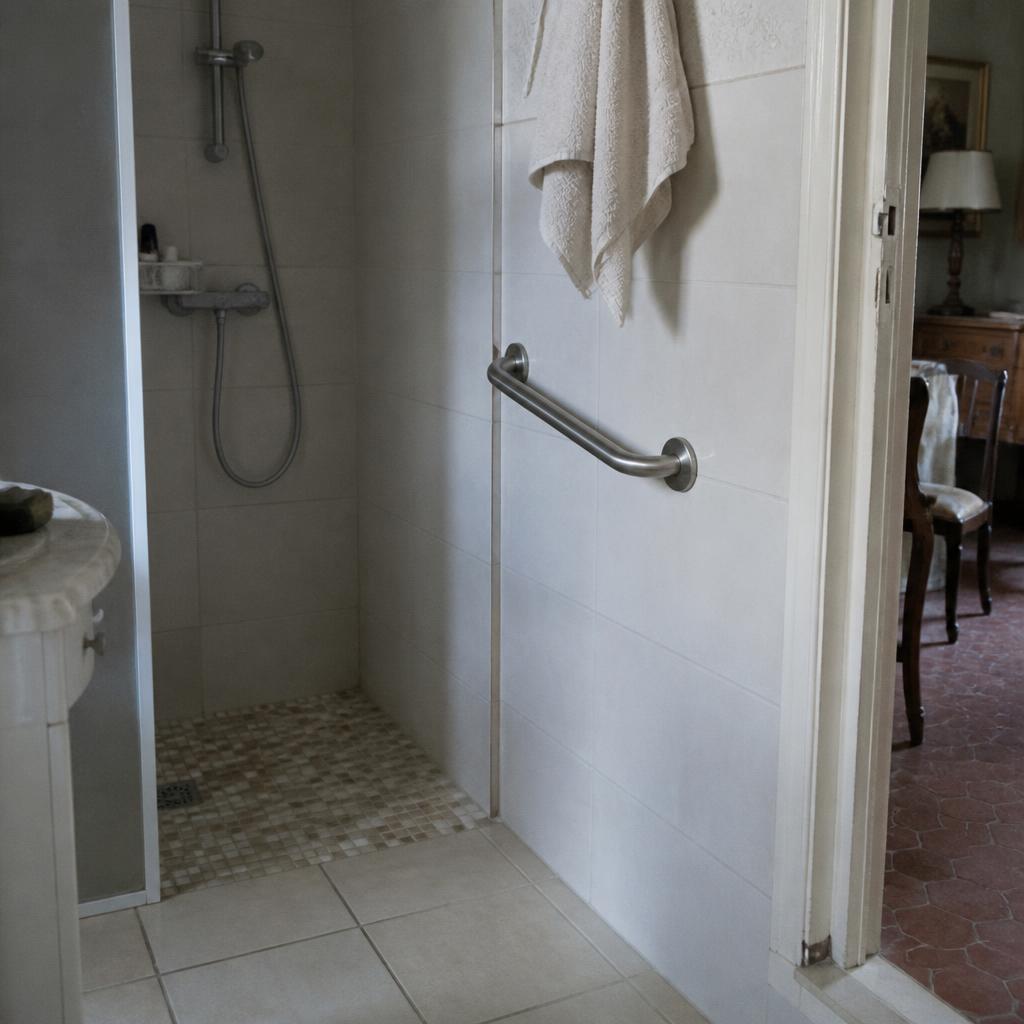
The strongest structural determinant of remaining at home at 5 years is neither the amount of the support plan nor the initial dependency level, but home adaptation within the first 24 months after entering the program.
Small adaptations major trajectory.
THIRD REVELATION
ISOLATED BENEFICIARIES
Fewer than one non-professional visit per week.
Risk of an earlier move multiplied by 2.4.
REGULAR SOCIAL SUPPORT
At least one non-professional visit per week : family, neighbors, community organization, volunteer mentoring.
Support that reduces isolation changes the trajectory at lower cost.
AUTONOMY MEDICAL ONLY
SIMULATED POPULATION
The synthetic population was calibrated using the department's proprietary data, the AGGIR scale, dependency histories and current support plans, together with national studies on dependency trajectories.
3,400 synthetic beneficiaries and family caregivers were interviewed across the 6 configurations, with dynamic follow-ups on tipping points : home adaptation, access to prevention programs, and moments when remaining at home breaks down.
OLDER PEOPLE AT HOME, FAMILY SUPPORT PRESENT
established dependency, regular family support, home often not adapted
OLDER PEOPLE AT HOME, FAMILY SUPPORT ABSENT
fewer than one non-professional visit per week, 2.4× higher risk of an earlier move out of the home
MODERATE DEPENDENCY, ADAPTABLE HOME
adaptation window open during the program's first 24 months
MODERATE DEPENDENCY, CONSTRAINED HOME
thresholds, bathroom facilities and lighting difficult to modify in the short term
OLDER COUPLES CARING FOR EACH OTHER
remaining at home supported by a family member who is also aging
BENEFICIARIES WITH A CLOSE FAMILY CAREGIVER
rising family burden, sustained tolerance but not unlimited
BENEFICIARIES IN ISOLATED HOMES
residential environment distant from services and community organizations
BENEFICIARIES IN URBAN CENTERS
higher density of services and potential visits
RECENT ENTRANTS TO THE PROGRAM
trajectory still open, highly sensitive to the first 24 months
These profiles reveal part of the population's heterogeneity. The simulation operates on synthetic individuals, not a handful of persona types.
THE 6 CONFIGURATIONS
The six configurations were tested against the same population to isolate the effect of each mechanism on aging at home, the program's own spending and the department's consolidated costs.
REVISION OF BENEFIT CAPS
−4 % spending over 36 months
+22 % moves into EHPAD residential care
STRONGER PREVENTION
−18 % net budget savings
over 36 months
Less support less spending.
METHOD
UPSTREAM PREVENTION DELIVERS GREATER SAVINGS THAN REVISING BENEFIT CAPS
Revising the caps generates 4 % savings over 36 months and 22 % more moves into EHPAD residential care. Stronger prevention generates 18 % net budget savings over the same period.
HOME ADAPTATION WITHIN 24 MONTHS IS THE KEY DETERMINANT OF REMAINING AT HOME AT 5 YEARS
82 % of beneficiaries whose homes are adapted within this window remain at home at 60 months. 58 % of beneficiaries without adaptations move into EHPAD residential care by 60 months.
REDUCING ISOLATION IS THE SECOND STRUCTURAL DETERMINANT
Fewer than one non-professional visit per week multiplies the risk of an earlier move by 2.4 compared with beneficiaries who have regular social support.
Imagine All The People does not ask a model to imagine what an older person might think of a support plan. Six redesign configurations are tested against a coherent, heterogeneous synthetic population, modeling moves into EHPAD residential care and consolidated costs before the decision is made.
STRATEGY SELECTED
THEN REALITY ARRIVED
SIMULATION
Stronger prevention : −18 % net budget savings over 36 months, versus −4 % and +22 % more moves under the cap-revision scenario.
OBSERVATION
Home adaptation at 24 months increased from 22 % to 74 %, early moves into EHPAD residential care fell by 18 %, home-based APA spending remained stable, and consolidated annual savings reached 24 M€. The program was referenced by the CNSA as a methodological model.
TAKEAWAY
« Two variables dominated the trajectory : adapting the home early enough and preventing isolation from becoming structural. »
This case is based on a completed simulation. The organization and location are not named where confidentiality requires it. The decision, configurations tested and findings are presented without revealing information that could identify the client.
Your next decision
Describe your need. We can point you to the right level of support.
State your decision. See the future it produces.